


Prevalence and associated factors of common mental disorders among adult patients attending HIV follow up service in Harar town, Eastern Ethiopia: a cross-sectional study
- PMID: 30795804
- PMCID: PMC6387475
- DOI: 10.1186/s40359-019-0281-4
Prevalence and associated factors of common mental disorders among adult patients attending HIV follow up service in Harar town, Eastern Ethiopia: a cross-sectional study
Abstract
Background: In developed countries, there are well documented mental health impacts of HIV/AIDS and patients' quality of life. Acquiring HIV/AIDS can be a serious psychological trauma and can predispose a person to different mental disorders. Co-occurring mental illness complicates diagnosis, help-seeking, quality of care provided, treatment outcomes and adherence. However, in Ethiopia, studies about mental health problems in HIV/AIDS treatment settings are limited. The purpose of the current study is to determine the prevalence and associated factors of common mental disorders among adult HIV/AIDS patients undergoing HIV service in Harar town, eastern Ethiopia. Conducting this study is important as baseline information for the concerned stakeholders including health professionals and policymakers and in general to improve the quality of care for HIV/AID patients.
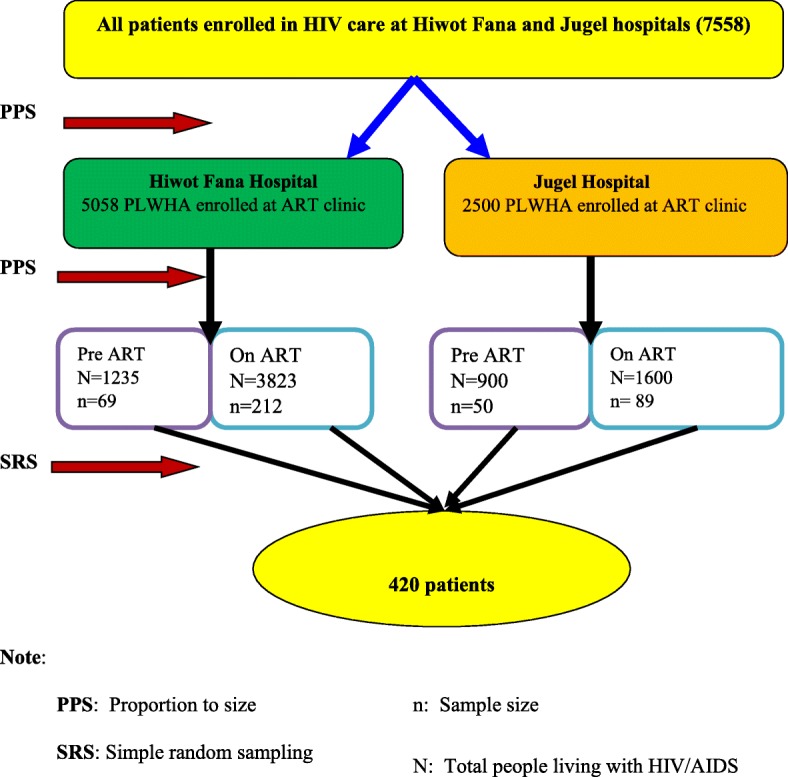
Methods: Institution based cross-sectional study was conducted. We collected data from 420 adult patients through a face to face interviewing technique using a standardized questionnaire and review of medical records. Bivariable and multivariable (binary logistic regression) analyses were used to check the association between common mental disorders (CMDs) and independent variables. Variables which have a p-value < 0.05 during bivariable regression were entered into multivariable (binary logistic regression) and finally which have a p-value of < 0.05 under multivariable (binary logistic regression) were identified as statistically significant association at 95% of confidence interval.
Results: All 420 patients were interviewed providing response rate 100%. The result revealed that (28.1%; 95% CI; 26.14, 30.06) of HIV/AIDS patients had CMD. In the final model, stage 4 HIV/AIDS (Adjusted Odds Ratio 3.37, 95% CI: 1.45, 7.83), family history of mental illness (AOR 2.65, 95% CI: 1.26, 5.54) and current drinking alcohol (AOR 5.1, 95% CI: 2.04, 12.79) were found having statistically significant association with CMD.
Conclusions: This study investigated the prevalence and associated factors of CMD among adults living with HIV/AIDS. HIV/AIDS stage, having family history of mental illness and current drinking alcohol were the main identified associated factors of CMD. These factors are important for the hospitals and other concerned bodies for providing prevention and appropriate intervention of common mental disorders among HIV/AIDS patients.
Keywords: Adult patients; Associated factors; CMDs; Ethiopia; HIV/AIDS; Prevalence.
Conflict of interest statement
Ethics approval and consent to participate
The study was conducted after approval obtained from the College of Health and Medical Sciences, Institutional Research Ethics Review Committee (IRERC) of Haramaya University. Written informed consent was obtained from the study participants after providing a clear explanation of the objective of the study. The collected data were kept confidential. Participants’ right to refuse and the chance to ask anything about the study was respected. The names of the participants were not written.
Consent for publication
Not applicable.
Competing interests
The authors declare that they have no competing interests.
Publisher’s Note
Springer Nature remains neutral with regard to jurisdictional claims in published maps and institutional affiliations.
Figures
References
-
- Baingana F, Thomas R, Comblain C. HIV/AIDS and. mental health. 2005.
-
- Altevogt, B., et al. Mental, neurological and substance use disorders in Sub-Saharan Africa: reducing the treatment gap, improving quality of care. Workshop summary. in Mental, neurological and substance use disorders in Sub-Saharan Africa: reducing the treatment gap, improving quality of care. Workshop summary. 2010. National Academies Press. - PubMed
-
- Lazarus, R. and M. Freeman, Primary-Level Mental Health Care for Common Mental Disorder in Resource-Poor Settings: Models & Practice. A literature review. Pretoria: Medical Research Council, 2009.
MeSH terms
LinkOut - more resources
Full Text Sources
Medical
