


Overcoming the Challenges of Water, Waste and Climate Change in Asian Cities
- PMID: 30796465
- PMCID: PMC6470110
- DOI: 10.1007/s00267-019-01137-y
Overcoming the Challenges of Water, Waste and Climate Change in Asian Cities
Abstract
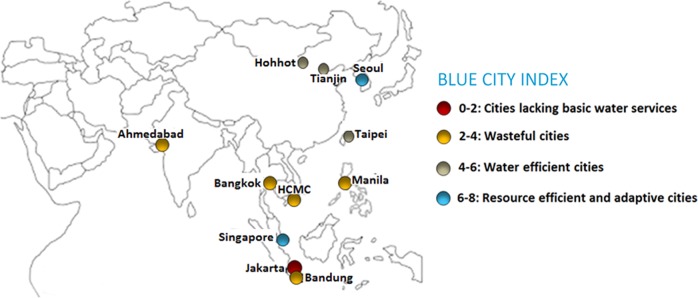
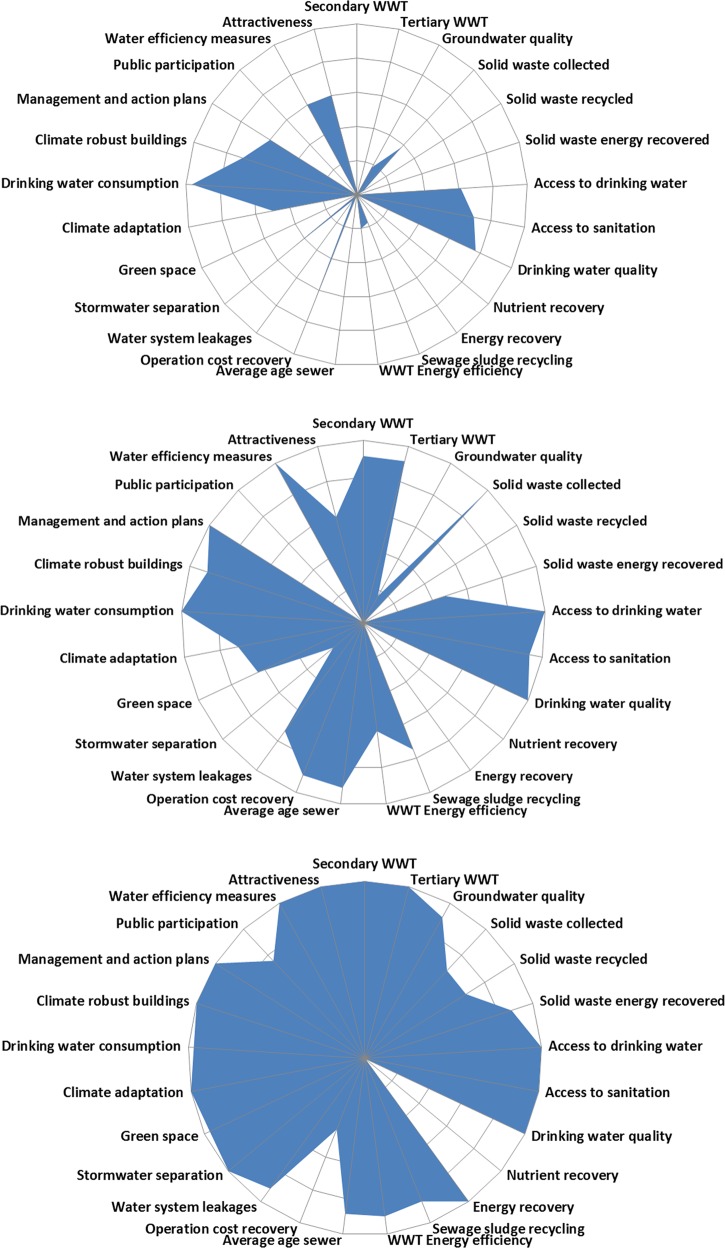
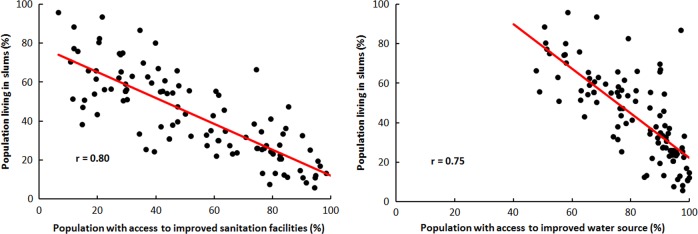
Unprecedented challenges in urban management of water, waste and climate change-amplified by urbanisation and economic growth-are growing in Asia. In this circumstance, cities need to be aware of threats and opportunities to improve their capacity in addressing these challenges. This paper identifies priorities, barriers and enablers of these capacities. Through the City Blueprint® Approach-an integrated baseline assessment of the urban water cycle-11 Asian cities are assessed. Three cities are selected for an in-depth governance capacity analysis of their challenges with a focus on floods. Solid waste collection and treatment and access to improved drinking water and sanitation can be considered priorities, especially in cities with considerable slum populations. These people are also disproportionately affected by the impacts of climate-related hazards. The high variation of water management performance among Asian cities shows high potential for city-to-city learning by sharing best practices in water technology and governance. Combining interventions, i.e., by exploring co-benefits with other sectors (e.g., transport and energy) will increase efficiency, improve resilience, and lower the cost. Although governance capacities varied among cities, management of available information, monitoring and evaluation showed to be reoccurring points for improvement. Cities are also expected to increase implementation capacities using better policy, stricter compliance and preparedness next to promoting community involvement. Consequently, the city transformation process can be more concrete, efficient and inclusive.
Keywords: Cities; Climate change; SDG6; Solid waste; Wastewater; Water governance; Water management.
Conflict of interest statement
The authors declare that they have no conflict of interest.
Figures


References
-
- Aartsen M, Koop SHA, Hegger D, Goswami B, Oost J, Van Leeuwen CJ (2017) Connecting water science and policy in the Global South: Lessons from a systematic water governance assessment in the city of Ahmedabad, India. Reg Environ Chang 10.1007/s10113-018-1363-1
-
- Abidin HZ, Gumilar I, Andreas H, Murdohardono D, Fukuda Y. On causes and impacts of land subsidence in Bandung basin, Indonesia. Environ Earth Sci. 2013;68:1545–1553. doi: 10.1007/s12665-012-1848-z. - DOI
-
- Biesbroek GR, Klostermann JEM, Termeer CJAM, Kabat P. On the nature of barriers to climate change adaptation. Reg Environ Chang. 2013;13(5):1119–1129. doi: 10.1007/s10113-013-0421-y. - DOI
-
- Dai L, Van Rijswick HFMW, Driessen PPJ, Keessen AM (2017) Governance of the sponge city programme in China with Wuhan as a case study. Int J Water Resour Develop. 10.1080/07900627.2017.1373637
Publication types
MeSH terms
Substances
Grants and funding
LinkOut - more resources
Full Text Sources
Medical
