


Polypyrimidine Tract-Binding Protein Regulates Enterovirus 71 Translation Through Interaction with the Internal Ribosomal Entry Site
- PMID: 30796736
- PMCID: PMC6420457
- DOI: 10.1007/s12250-019-00089-1
Polypyrimidine Tract-Binding Protein Regulates Enterovirus 71 Translation Through Interaction with the Internal Ribosomal Entry Site
Abstract
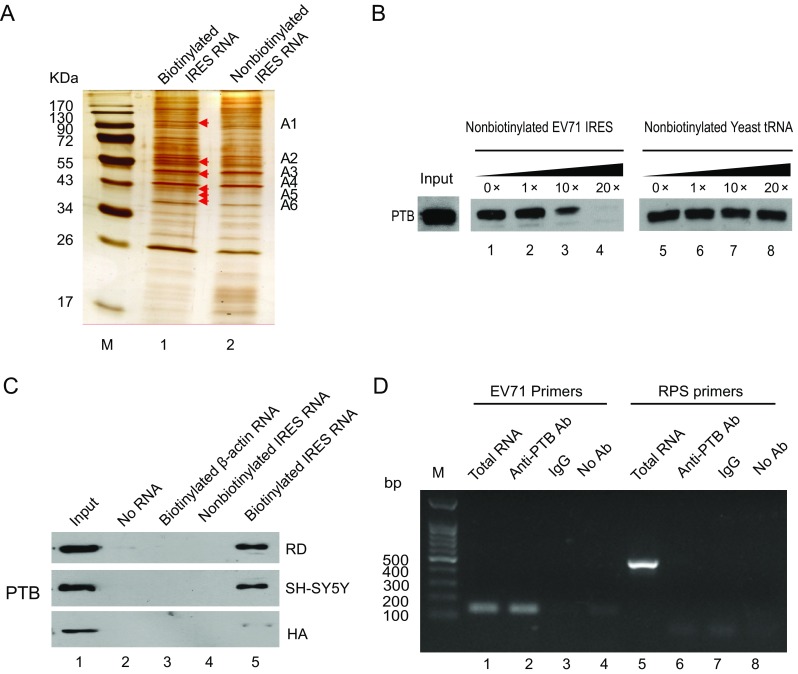
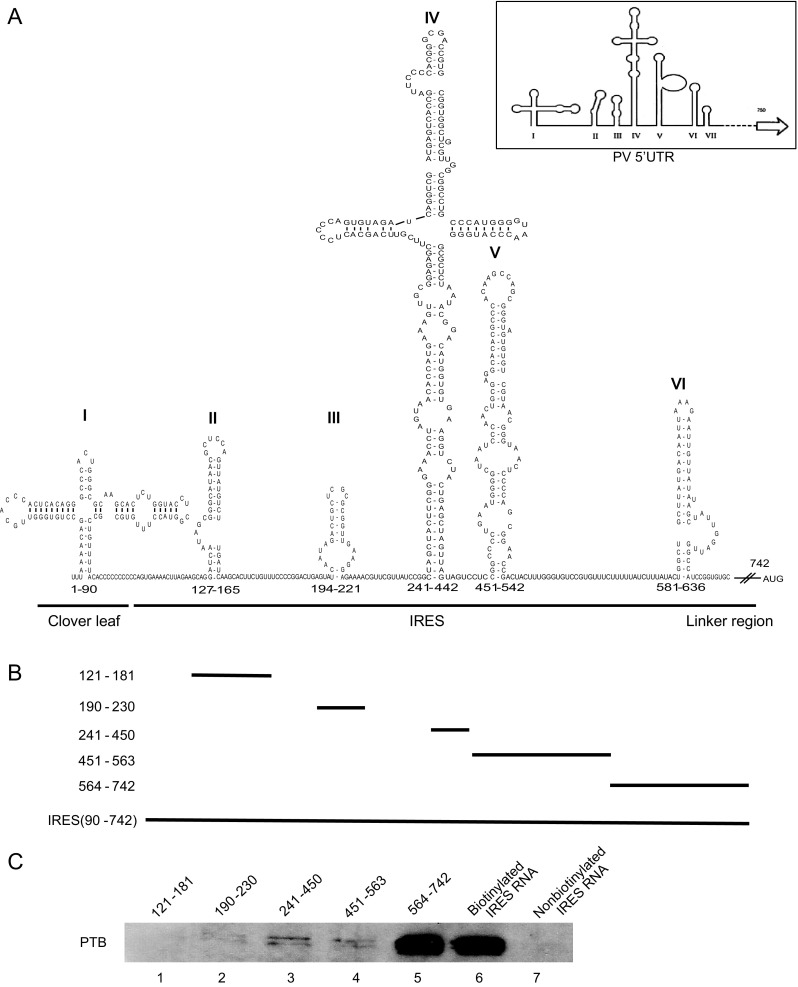
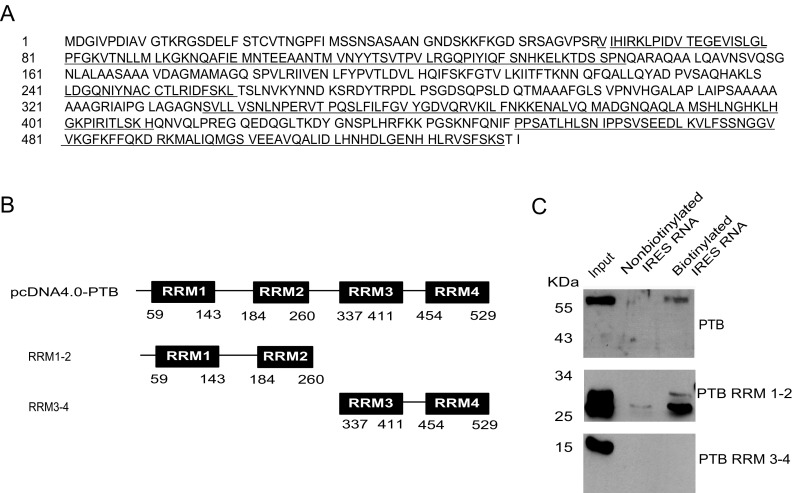
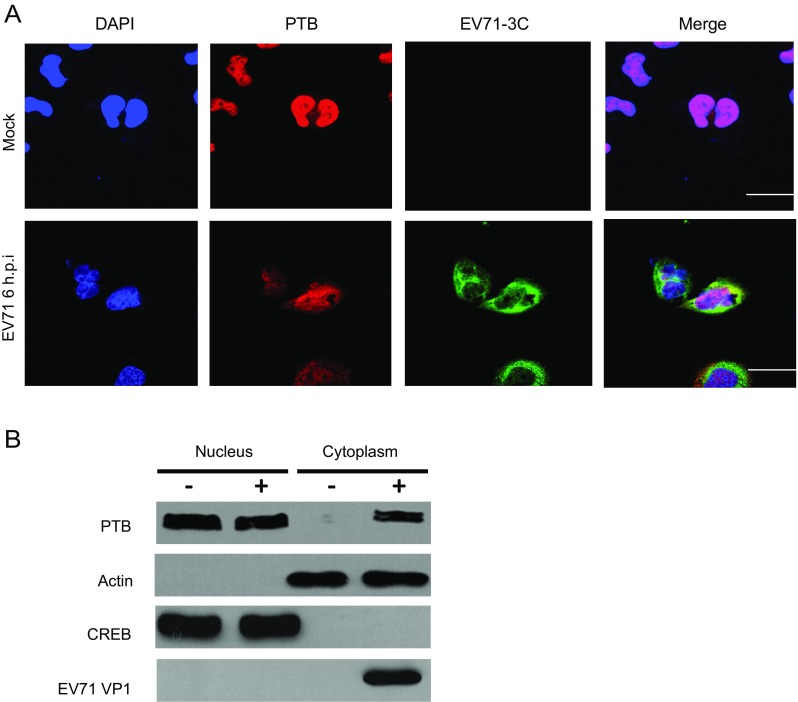
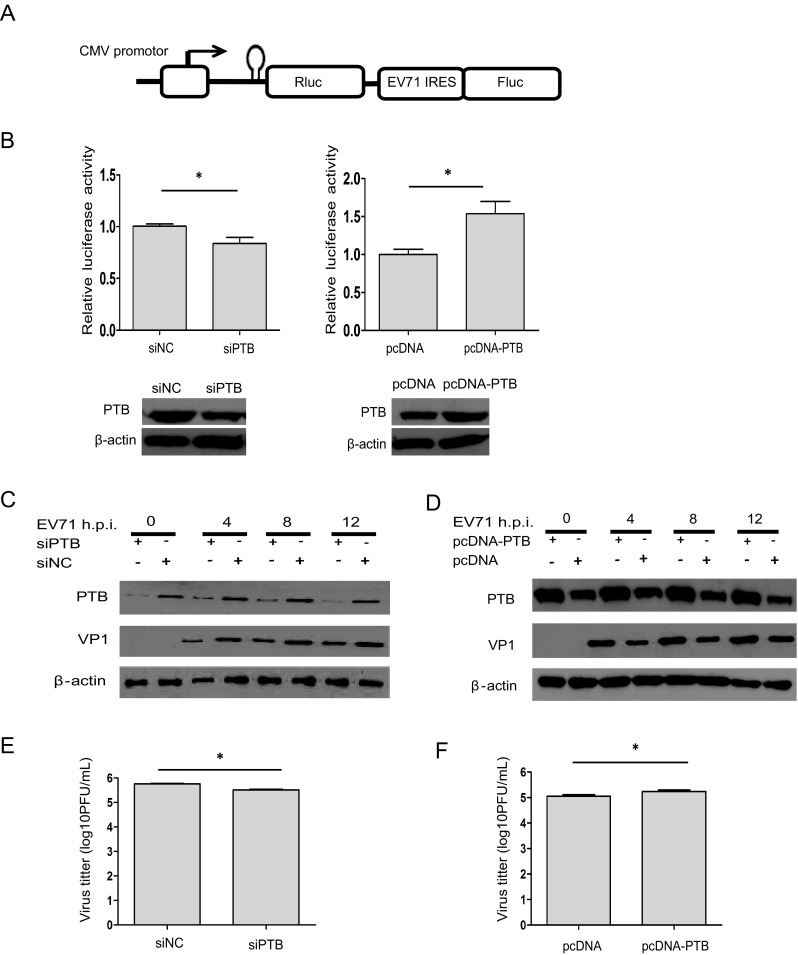
Enterovirus 71 (EV71), a major causative agent of hand, foot, and mouth disease, has caused periodic infection outbreaks in children in the Asia-Pacific region. In order to describe the largely unknown life cycle of EV71, the molecular basis of its virus-host interactions must first be determined. The 5' untranslated region of EV71 contains a cloverleaf-like structure and internal ribosomal entry site (IRES), which play an important role in transcription and translation of viral protein. We found that polypyrimidine tract-binding protein 1 (PTB) bound to the IRES of EV71. RNA recognition motifs 1 and 2 of PTB were responsible for its binding to the EV71 IRES. Moreover, PTB protein was shuttled from nucleus to cytoplasm after EV71 infection. Additionally, IRES activity and viral protein production were inhibited by PTB knockdown. These results suggest that PTB interacts with the EV71 IRES, and positively regulates viral protein translation.
Keywords: EV71; IRES; PTB; Translation.
Conflict of interest statement
Conflict of interest
The authors declare that they have no conflict of interest.
Animal and Human Rights Statement
The authors declare that they have no conflict of interest. This article does not contain any studies with human or animal subjects performed by any of the authors.
Figures
References
MeSH terms
Substances
LinkOut - more resources
Full Text Sources
Research Materials
