


Intranasal Losartan Decreases Perivascular Beta Amyloid, Inflammation, and the Decline of Neurogenesis in Hypertensive Rats
- PMID: 30796737
- PMCID: PMC6694377
- DOI: 10.1007/s13311-019-00723-6
Intranasal Losartan Decreases Perivascular Beta Amyloid, Inflammation, and the Decline of Neurogenesis in Hypertensive Rats
Abstract
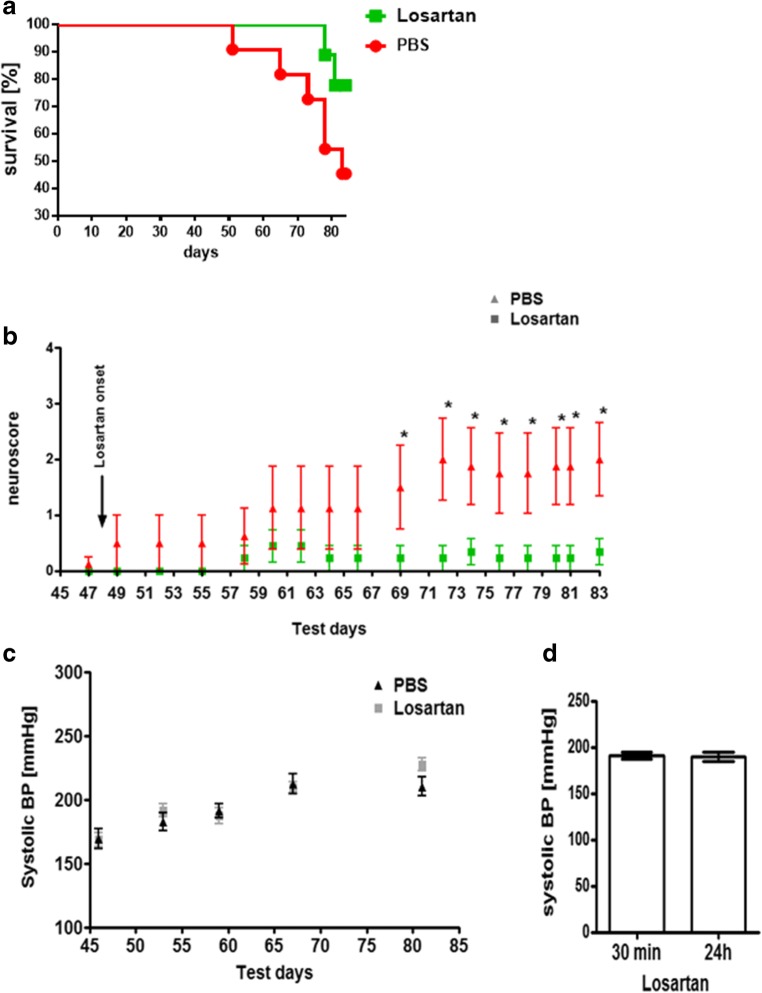
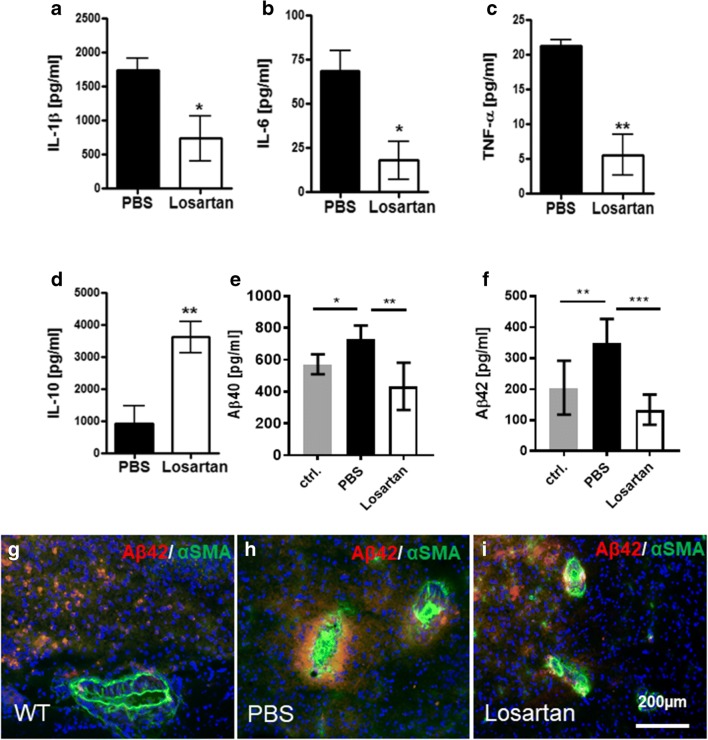
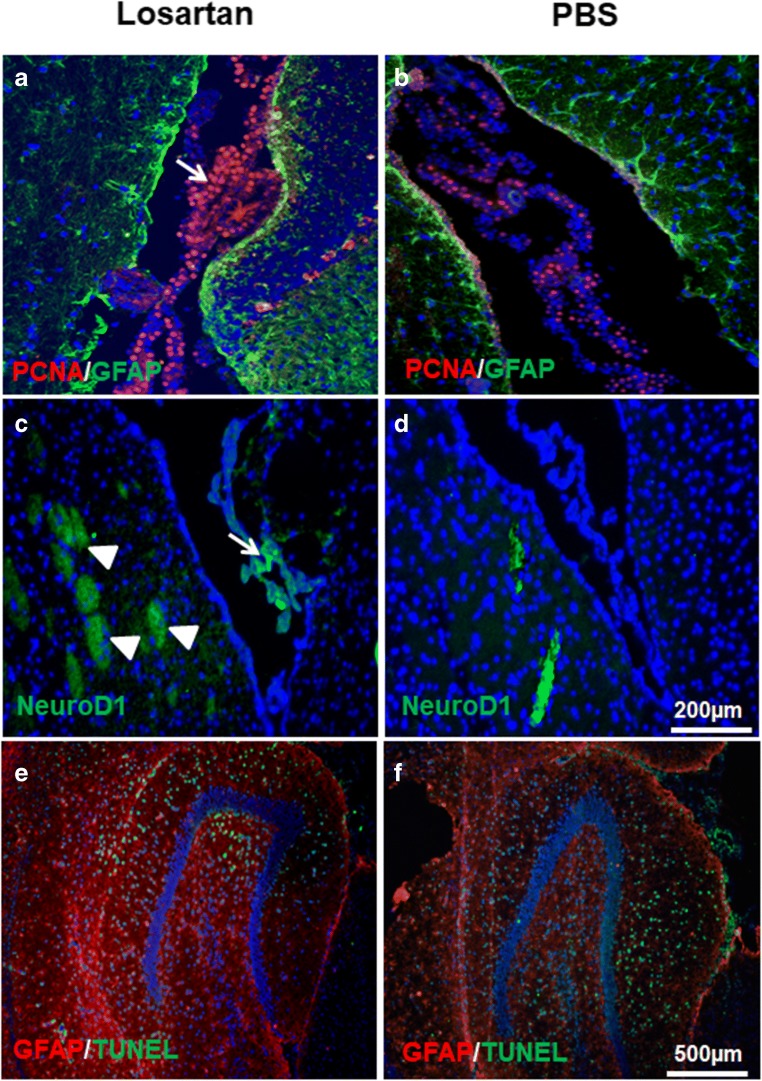
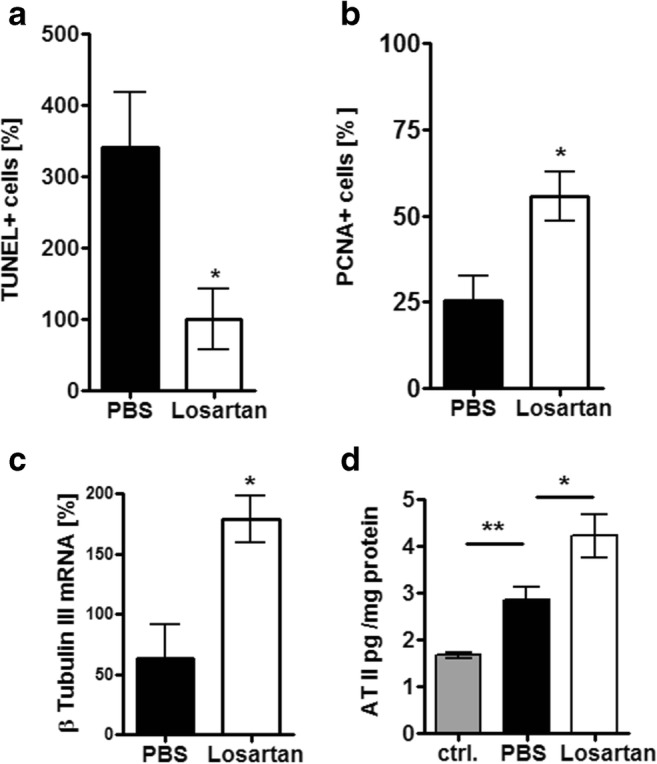
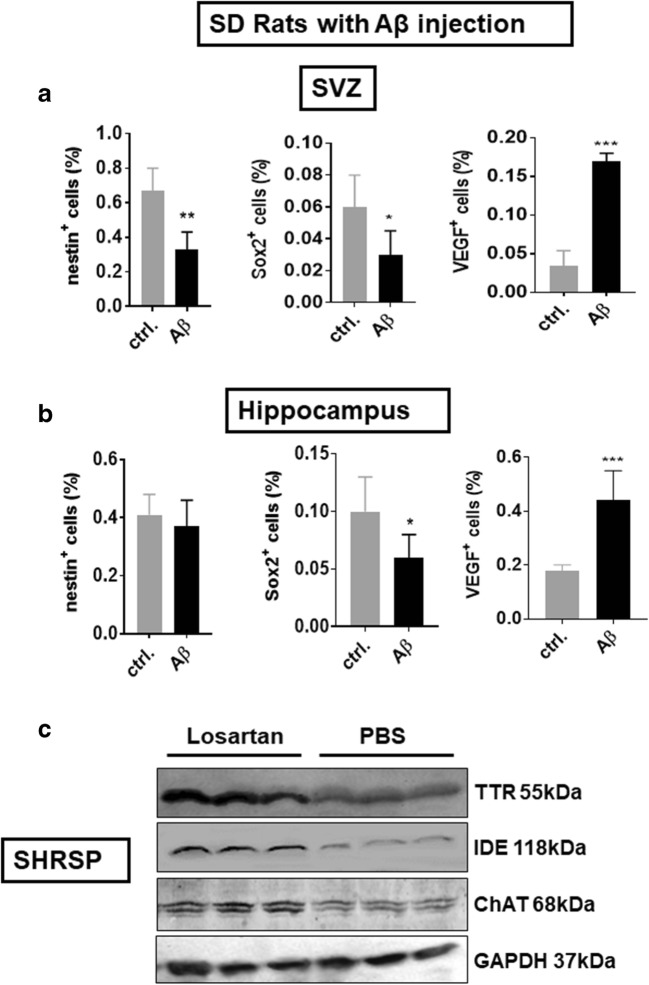
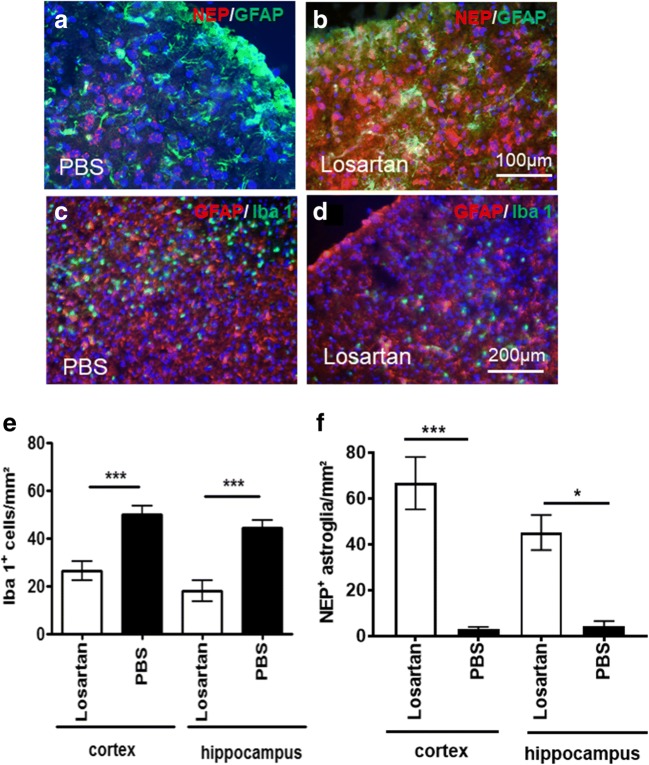
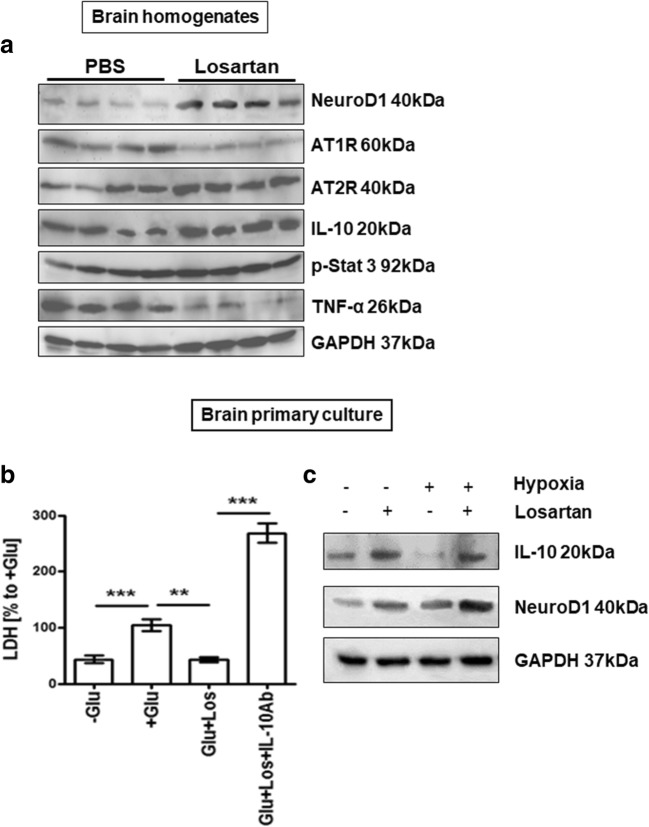
The contribution of the local angiotensin receptor system to neuroinflammation, impaired neurogenesis, and amyloid beta (Aβ) accumulation in Alzheimer's disease (AD) and in hypertension is consistent with the remarkable neuroprotection provided by angiotensin receptor blockers (ARBs) independent of their blood pressure-lowering effect. Considering the causal relationship between hypertension and AD and that targeting cerebrovascular pathology with ARBs does not necessarily require their systemic effects, we tested intranasal losartan in the rat model of chronic hypertension (spontaneously hypertensive stroke-prone rats, SHRSP). Intranasal losartan at a subdepressor dose decreased mortality, neuroinflammation, and perivascular content of Aβ by enhancing key players in its metabolism and clearance, including insulin-degrading enzyme, neprilysin, and transthyretin. Furthermore, this treatment improved neurologic deficits and increased brain IL-10 concentration, hippocampal cell survival, neurogenesis, and choroid plexus cell proliferation in SHRSP. Losartan (1 μM) also reduced LDH release from cultured astroglial cells in response to toxic glutamate concentrations. This effect was completely blunted by IL-10 antibodies. These findings suggest that intranasal ARB treatment is a neuroprotective, neurogenesis-inducing, and Aβ-decreasing strategy for the treatment of hypertensive stroke and cerebral amyloid angiopathy acting at least partly through the IL-10 pathway.
Keywords: Alzheimer’s disease; Angiotensin; Angiotensin receptor blocker; Cerebral amyloid angiopathy; Hemorrhagic stroke; Intranasal.
Conflict of interest statement
The authors declare that they have no conflict of interest.
Figures

References
-
- Joglar B, Rodriguez-Pallares J, Rodriguez-Perez AI, Rey P, Guerra MJ, Labandeira-Garcia JL. The inflammatory response in the MPTP model of Parkinson’s disease is mediated by brain angiotensin: relevance to progression of the disease. J Neurochem. 2009;109:656–69. doi: 10.1111/j.1471-4159.2009.05999.x. - DOI - PubMed
Publication types
MeSH terms
Substances
LinkOut - more resources
Full Text Sources
Medical
Research Materials
