


A critical review of the chest CT scans performed to detect asymptomatic synchronous metastasis in new and recurrent breast cancers
- PMID: 30797241
- PMCID: PMC6387737
- DOI: 10.1186/s12957-019-1584-x
A critical review of the chest CT scans performed to detect asymptomatic synchronous metastasis in new and recurrent breast cancers
Abstract
Background: Chest computed tomography (CTC) has now replaced chest X-ray (CXR) as the first choice of investigation to stage breast cancers in most centers in Australia. Routine staging is not recommended in early breast cancers (EBCs). This recommendation is based largely on the use of conventional tests like CXR as staging investigations (SIs). We looked at our experience with CTC in detecting asymptomatic synchronous distant metastasis (ASM) in new and recurrent breast cancers (RBCs).
Materials and methods: Breast cancer patients from Eastern Health Breast Unit during the period from January 2012 to March 2016 were included in the study. Cases were grouped into early, advanced, and recurrent breast cancers, and outcome of CTC was assessed in each group. Relative risk of potential risk factors (tumor size, axillary nodal status, presence of lymphovascular invasion and estrogen, and HER2 receptor status) with a positive result in CTC was determined.
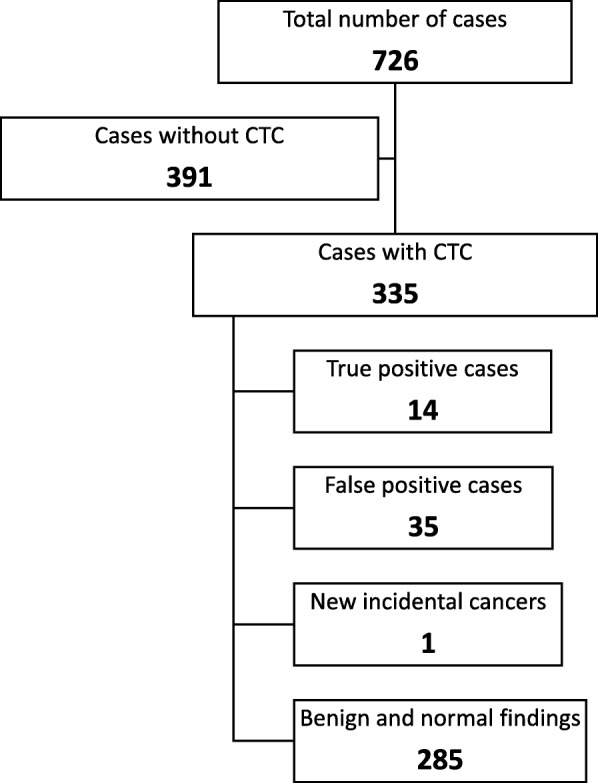
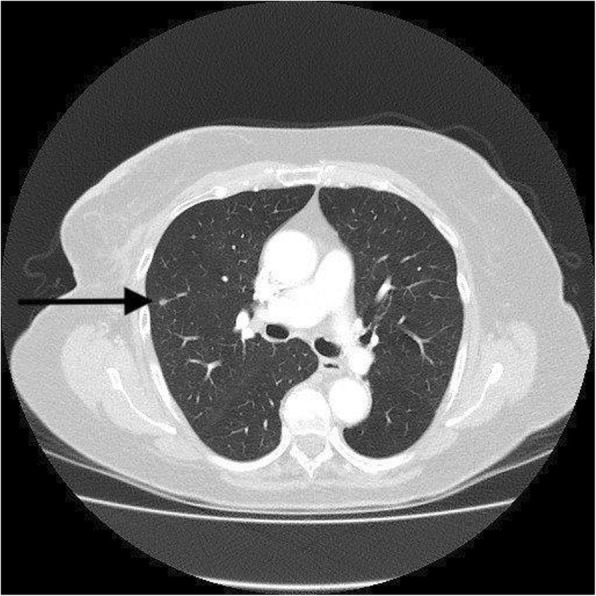
Results: Fourteen ASMs were detected from 335 CTCs giving an overall yield of 4% (95% CI 1.89-6.47). The overall false-positive rate was 10% due to 35 indeterminate findings that were found not to be metastases after further tests or observation. Even with selective use, CTCs have a low yield of 2% (95% CI - 0.19-4.19) in EBCs. Advanced breast cancers have a 9% incidence of ASMs. None of the clinically isolated locoregionally recurrent diseases were associated with detectable distant metastasis in CTC. The most common cause of indeterminate findings was small pulmonary nodules.
Conclusion: Even with selective use, CTC has a very low yield in EBCs. Advanced breast cancers can benefit from CTC in their initial evaluation due to the higher yield. Locoregional RBCs were not usually associated with detectable metastasis on CTC. The usefulness of CTC in all stages of breast cancer is further reduced by its high rate of false-positive results.
Conflict of interest statement
Ethics approval and consent to participate
This study was approved by the Office of Research and Ethics at Eastern Health Reference Number: QA28-2016 Dated 08/06/2016.
Consent for publication
We have obtained consent from patients where one’s individual data is used for publication.
Competing interests
The authors declare that they have no competing interests.
Publisher’s Note
Springer Nature remains neutral with regard to jurisdictional claims in published maps and institutional affiliations.
Figures
References
-
- Australian Institute of Health and Welfare & National Breast and Ovarian Cancer Centre. Breast cancer in Australia: an overview, 2009. Cancer series no. 50. Cat. no. CAN 46. Canberra: AIHW; 2009.
-
- Cancer Research UK. Breast (C50): 2013 Proportion of Cancers Diagnosed at Each Stage, All Ages, England. Available from: https://www.cancerresearchuk.org/health-professional/cancer-statistics/s.... Accessed Feb 2019.
Publication types
MeSH terms
LinkOut - more resources
Full Text Sources
Medical
Research Materials
Miscellaneous
