


SNAIL is induced by tamoxifen and leads to growth inhibition in invasive lobular breast carcinoma
- PMID: 30798422
- PMCID: PMC6625318
- DOI: 10.1007/s10549-019-05161-8
SNAIL is induced by tamoxifen and leads to growth inhibition in invasive lobular breast carcinoma
Abstract
Purpose: Invasive lobular carcinoma (ILC) is a histological subtype of breast cancer that is predominantly estrogen receptor alpha (ER)-positive (+) and is thus treated with endocrine therapies. Herein, we sought to understand the molecular underpinnings of the 4-hydroxytamoxifen (4OHT) resistance in ILC by assessing the potential role of the epithelial-to-mesenchymal transition transcription factor (EMT-TF) SNAIL (SNAI1).
Methods: Using a series of breast cancer cell lines, we measured the basal, estrogen and 4OHT-induced expression of SNAIL and other EMT-TF family members by quantitative reverse transcription-polymerase chain reaction and immunoblotting. Chromatin immunoprecipitation experiments were performed to assess ER binding to the SNAIL promoter. Cell proliferation, cell cycle and apoptosis were assessed in 2D cultures. 3D growth was assessed in Matrigel and Collagen I cultures.
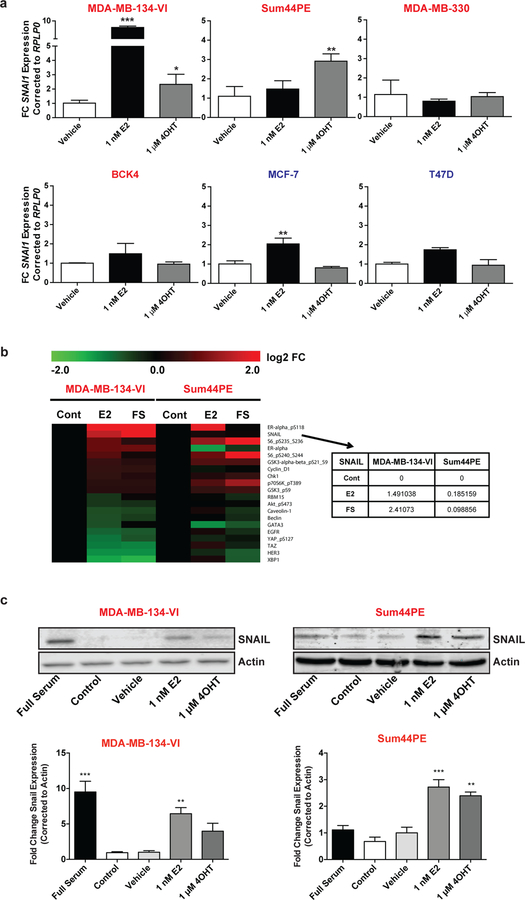
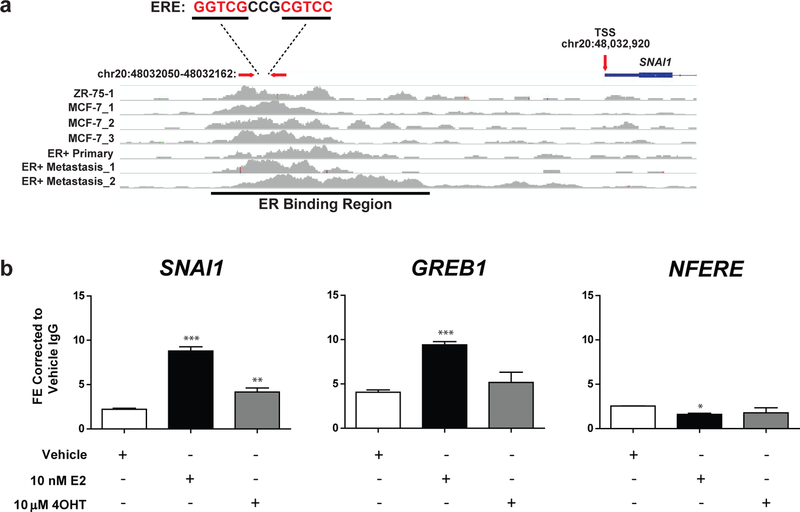
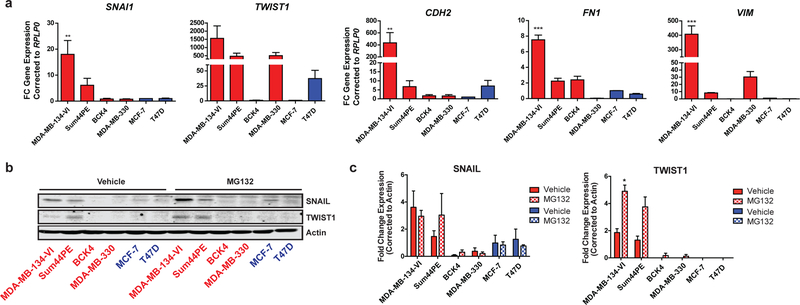
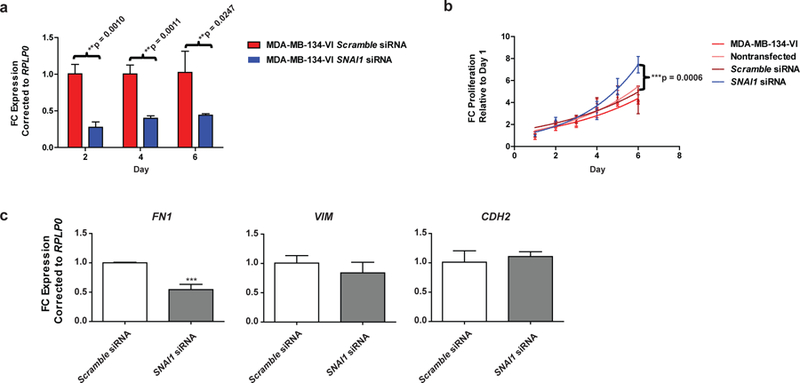
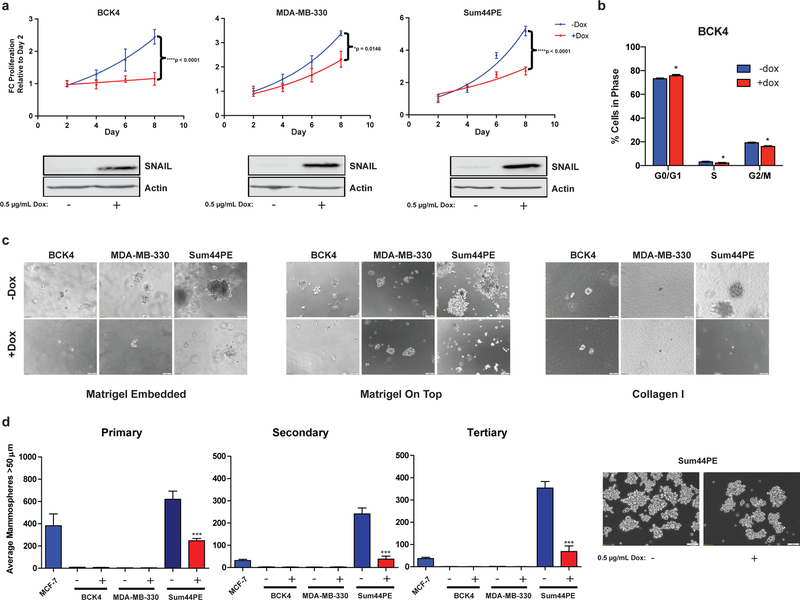
Results: Estrogen and 4OHT induced SNAIL expression, but not that of the other EMT-TF family members SLUG (SNAI2) and SMUC (SNAI3), with the 4OHT effect being specific to the lobular but not the ductal subtype. We observed estrogen and 4OHT-induced ER recruitment to the SNAI1 promoter and high endogenous basal levels of SNAIL and several EMT-TFs in ILC cell lines. While SNAIL knockdown had a minor impact on the 4OHT partial agonism in estrogen-depleted conditions, it led to a surprising increase in cell proliferation in full serum. In complementary experiments, inducible SNAI1 overexpression caused decreased proliferation, associated with a cell cycle arrest in G0/G1. Additionally, apoptosis was observed in BCK4 cells.
Conclusion: These data suggest a previously unrecognized role for SNAIL in ILC, substantiating a context-dependent behavior for this EMT-TF.
Keywords: Breast cancer; EMT; ER; Lobular; SNAIL; Tamoxifen.
Conflict of interest statement
Conflict of Interest
Dr. Timothy F. Burns serves on an Advisory Board for AbbVie, Inc., and Dr Oesterreich is member of External Scientific Advisory Board Panel of NSABP. The authors declare that they have no conflict of interest.
Figures
References
-
- Howlader N, N.A., Krapcho M, Miller D, Bishop K, Kosary CL, et al. SEER Cancer Statistics Review, 1975–2014 2017. April 2017; Based on November 2016 SEER data submission].
-
- Society AC Cancer Facts and Figures 2017 2017.
-
- Christgen M, et al. , Lobular breast cancer: Clinical, molecular and morphological characteristics. Pathol Res Pract, 2016. 212(7): p. 583–97. - PubMed
MeSH terms
Substances
Grants and funding
- P50CA090440/National Cancer Institute
- SAC160073/Susan G. Komen/United States
- LCD 257864/American Lung Association
- BC110619/U.S. Army
- 132939-RSG-18-185-01-TBG/American Cancer Society
- BC160764/U.S. Army
- Scholar Award/V Foundation for Cancer Research
- P50 CA090440/CA/NCI NIH HHS/United States
- P30 CA047904/CA/NCI NIH HHS/United States
- 2015097/Doris Duke Charitable Foundation/United States
- K99 CA193734/CA/NCI NIH HHS/United States
- F30 CA203154/CA/NCI NIH HHS/United States
- 1F30CA203154-01/National Cancer Institute
- SKF-15-099/Sidney Kimmel Foundation for Cancer Research
- P30CA047904/National Cancer Institute
- 1F31CA203055-01/National Cancer Institute
- F31 CA203055/CA/NCI NIH HHS/United States
- K99 CA193734/National Cancer Institute
LinkOut - more resources
Full Text Sources
Medical
Research Materials
Miscellaneous
