Validation of SwimCount™, a Novel Home-Based Device That Detects Progressively Motile Spermatozoa: Correlation with World Health Organization 5th Semen Analysis
- PMID: 30799559
- PMCID: PMC7076315
- DOI: 10.5534/wjmh.180095
Validation of SwimCount™, a Novel Home-Based Device That Detects Progressively Motile Spermatozoa: Correlation with World Health Organization 5th Semen Analysis
Abstract
Purpose: We evaluated the usefulness of a home-based device (SwimCount™) compared with World Health Organization (WHO) 5th semen analysis in screening for male fertility in Asian men.
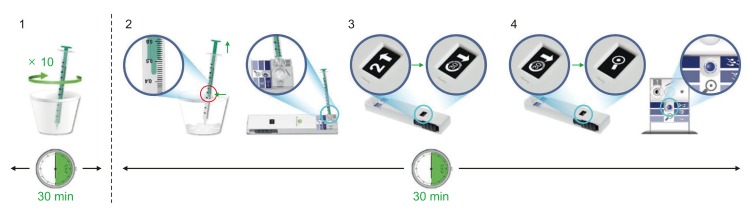
Materials and methods: One hundred Asian men who visited CHA Seoul Station Fertility Center for evaluation of fertility were included. Semen samples were analyzed and compared with the SwimCount™ results. An aliquot of 0.5 mL of the semen sample was added to the SwimCount™ and a WHO 5th semen analysis was performed. Results were categorized as low (<5×10⁶/mL), and normal to high (≥5×10⁶/mL) total progressively motile sperm concentration. Receiver operating characteristic curve analysis was performed to evaluate the accuracy of the SwimCount™.
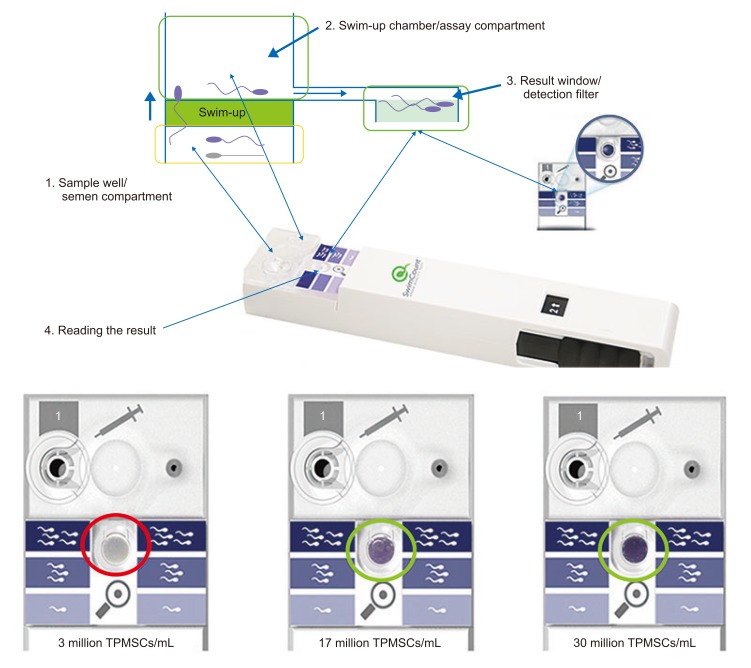
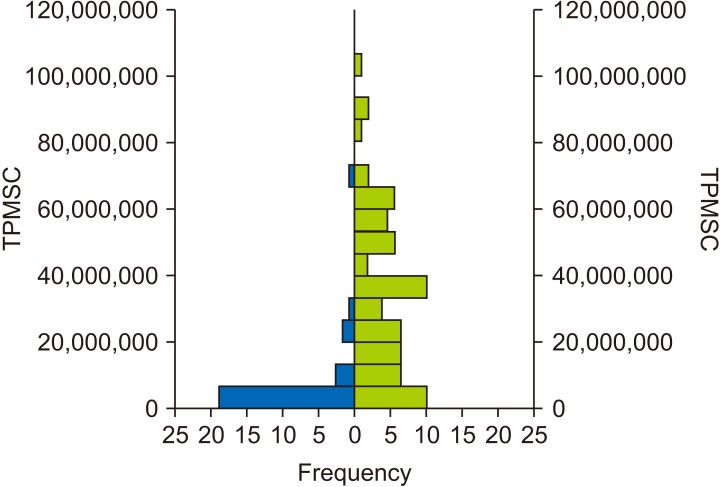
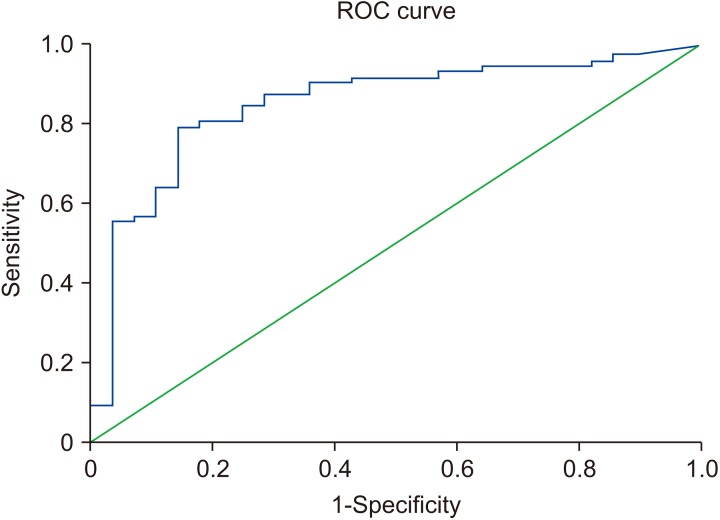
Results: The mean total progressively motile sperm concentration was 26.7×10⁶/mL. Semen analysis revealed that 28% of the samples were below the threshold count of 5 million/mL total progressively motile sperm concentration. The mean total progressively motile sperm concentration of the light color SwimCount™ result group determined by semen analysis was 7.5×10⁶/mL, and the mean total progressively motile sperm concentration of the moderate to dark color SwimCount™ result group was 34.2×10⁶/mL. An area under the receiver operating characteristic curve of 0.85 (95% confidence interval, 0.77-0.94; p<0.001) was obtained when the SwimCount™ was compared with semen analysis. The sensitivity and specificity were obtained at a cut off value of 5.0×10⁶/mL total progressively motile sperm concentration, giving a sensitivity and specificity of 87.5% and 73.4%.
Conclusions: We confirmed the reliability of the SwimCount™ as a home-based device for male fertility by evaluating the total progressively motile sperm concentration.
Keywords: Fertility; Sperm count; Sperm motility; Spermatozoa.
Copyright © 2020 Korean Society for Sexual Medicine and Andrology.
Conflict of interest statement
The authors have no potential conflicts of interest to disclose.
Figures
References
-
- De Jonge C. Semen analysis: looking for an upgrade in class. Fertil Steril. 2012;97:260–266. - PubMed
-
- World Health Organization. WHO laboratory manual for the examination and processing of human semen. 5th ed. Geneva: World Health Organization; 2010. http://www.who.int/iris/handle/10665/44261.
-
- Tomlinson M, Lewis S, Morroll D British Fertility Society. Sperm quality and its relationship to natural and assisted conception: British Fertility Society guidelines for practice. Hum Fertil (Camb) 2013;16:175–193. - PubMed
-
- Hamilton JA, Cissen M, Brandes M, Smeenk JM, de Bruin JP, Kremer JA, et al. Total motile sperm count: a better indicator for the severity of male factor infertility than the WHO sperm classification system. Hum Reprod. 2015;30:1110–1121. - PubMed