Review
. 2018 Jan 12;13(2):116-128.
doi: 10.1177/1559827617750576. eCollection 2019 Mar-Apr.

Summer Weight Gain and Fitness Loss: Causes and Potential Solutions

Affiliations
Review

Summer Weight Gain and Fitness Loss: Causes and Potential Solutions

R Glenn Weaver et al. Am J Lifestyle Med. .

Abstract

Over the past 3 decades, public health professionals have worked to stem the rising childhood obesity epidemic. Despite the field's best efforts, no progress has been made in reducing child obesity. One reason for this failure may be that obesity prevention and treatment efforts have predominately been delivered during the 9-month school year. However, recent evidence suggests that the summer, not the school year, is when unhealthy changes in body composition (ie, accelerated increases in percent body fat) and fitness losses occur. This unhealthy change in body composition and fitness loss during the summer could be explained by the "Structured Days Hypothesis," which posits that children engage in a greater number of unhealthy obesogenic behaviors on unstructured days when compared with structured days. Furthermore, the summer may be contributing to a widening "health gap" between children from low-income and middle- to upper-income families. During summer, fewer opportunities exist for children from low-income households to access healthy structured programs that do not require fees for participation. Moving forward, public health professionals should prioritize efforts to mitigate unhealthy changes in body composition and fitness loss during the summer by identifying ways to provide access to structured programming during this timeframe for children from low-income households.

Keywords: children; intervention; obesity; overweight; youth.


Conflict of interest statement

Declaration of Conflicting Interests: The author(s) declared no potential conflicts of interest with respect to the research, authorship, and/or publication of this article.

Figures
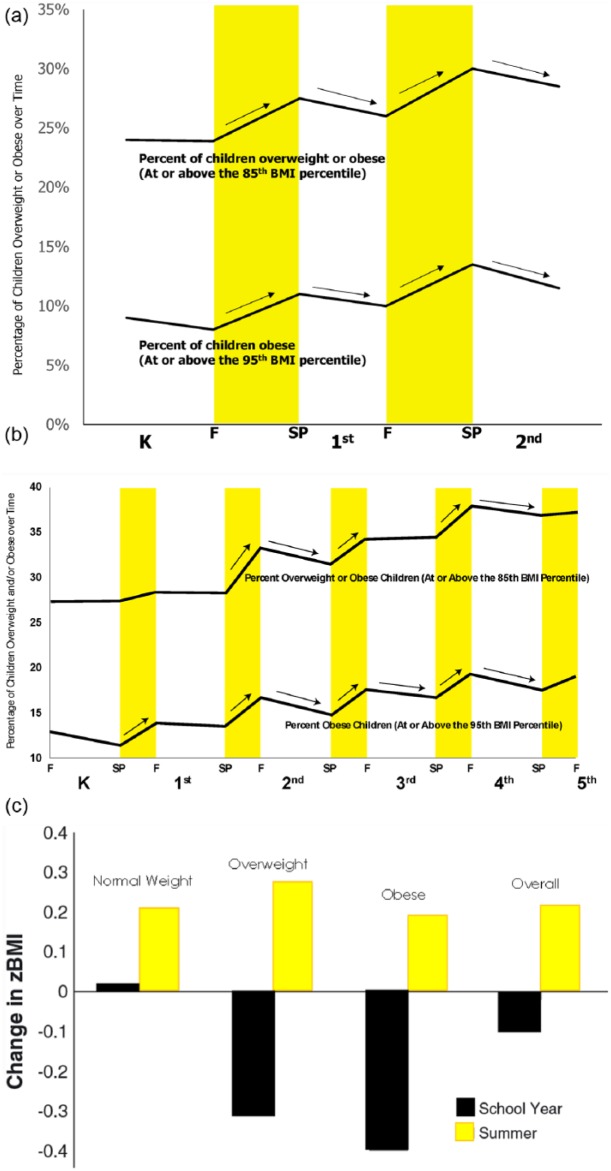
Figure 1.
Figure 1.
(a) Changes in school year versus summer prevalence of overweight and obesity from kindergarten to second grade in a nationally representative cohort of children (Source: von Hippel and Workman). (b) Changes in school year versus summer prevalence of overweight and obesity from first through fifth grades in a cohort of children attending one school district in Texas (Source: Chen et al). (c) Changes in school year versus summer BMI z-score by weight status (Source: Moreno et al).
Figure 2.
Figure 2.
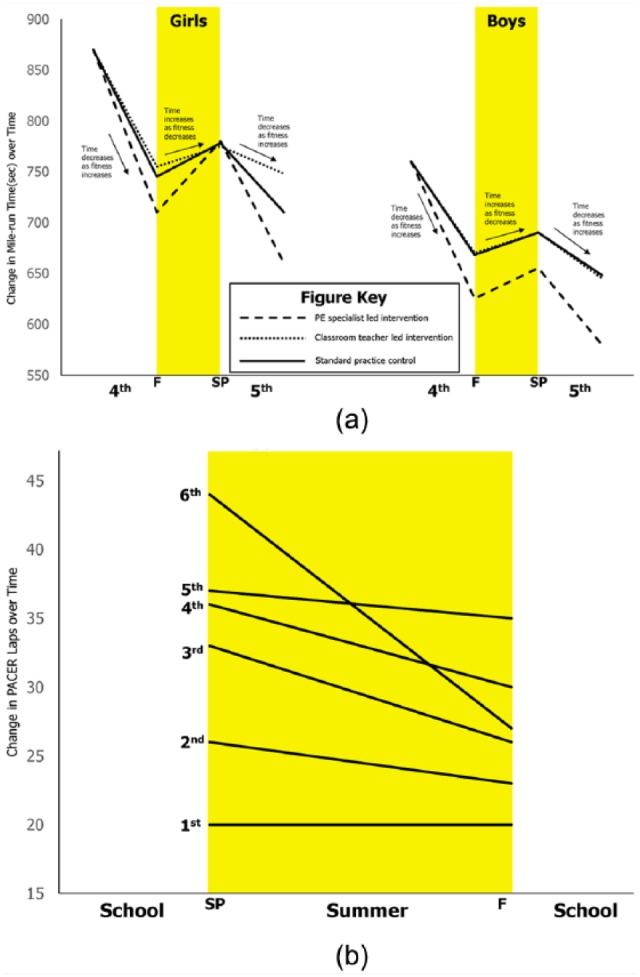
(a) Changes in fitness during the school year and summer from the SPARK study (Source: Sallis et al). (b) Changes in fitness during the school year and summer in one school district in Utah (Source: Fu et al).
Figure 3.
Figure 3.
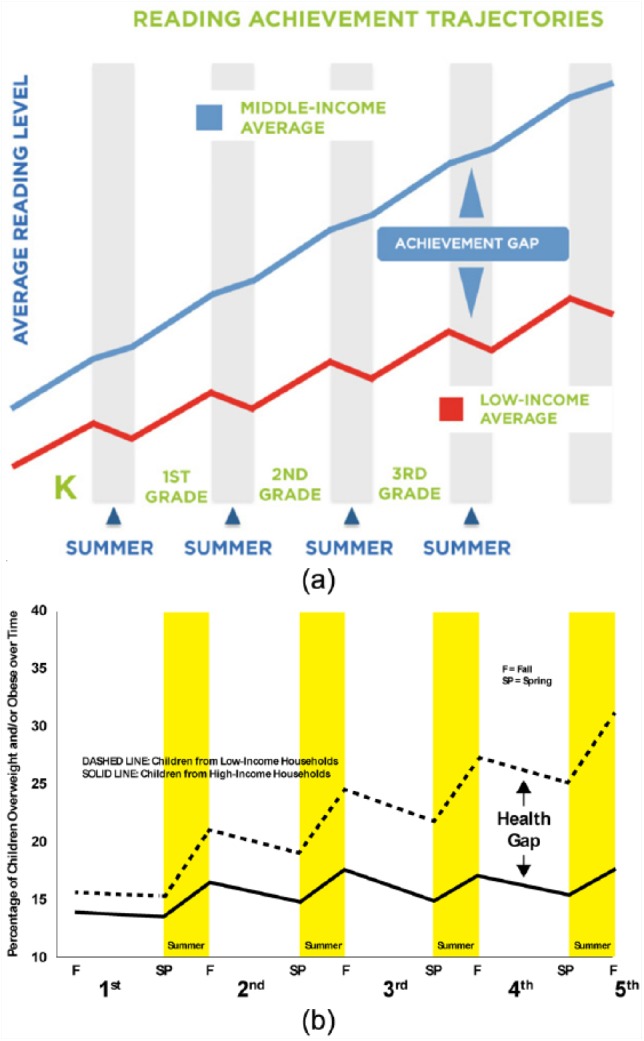
(a) Achievement gap (Source: California Department of Education. A Blueprint for Great Schools). (b) Health gap hypothesis for accelerated weight gain.
Figure 4.
Figure 4.
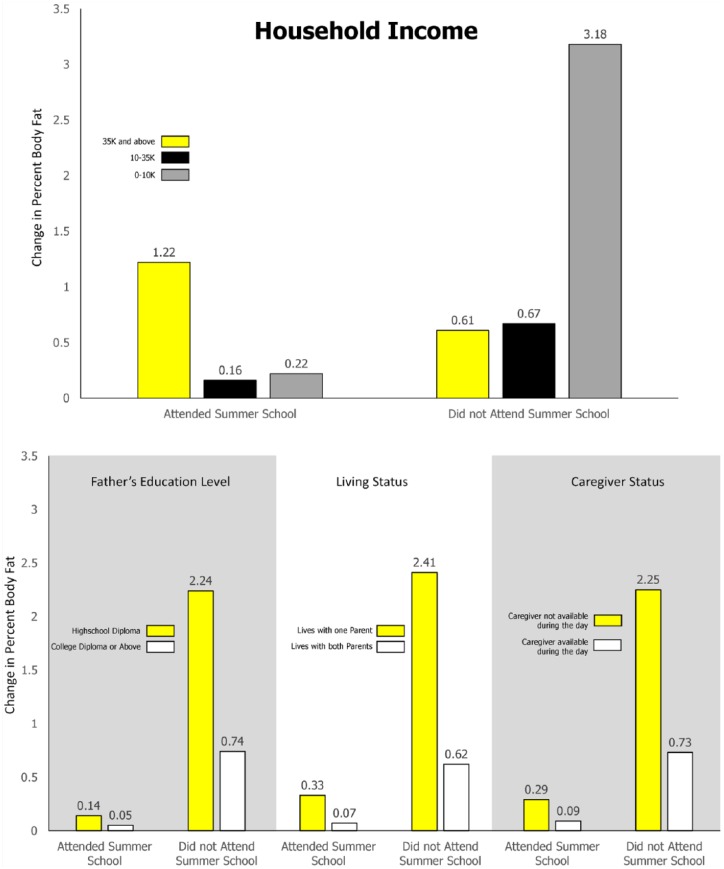
Differences in percent body fat change between children that attend and do not attend 5-week summer program by income level and family status (Source: Park and Lee).
Figure 5.
Figure 5.
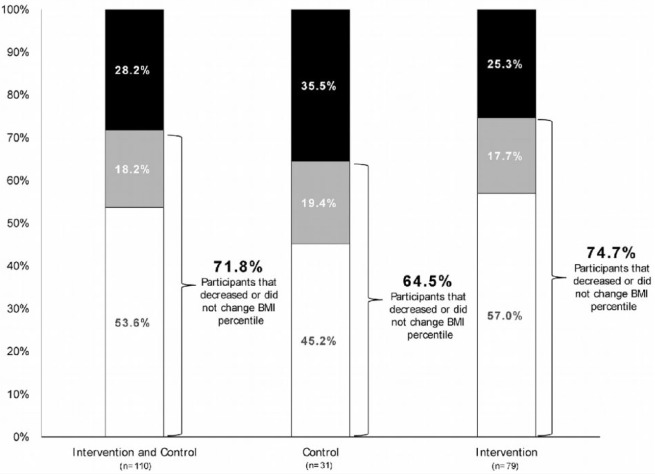
Changes in BMI percentile in a 7-week migrant education program (Source: Kilanowski JF, Gordon NH. Making a difference in migrant summer school: testing a healthy weight intervention. Public Health Nurs. 2015;32(5):421-429).
Figure 6.
Figure 6.
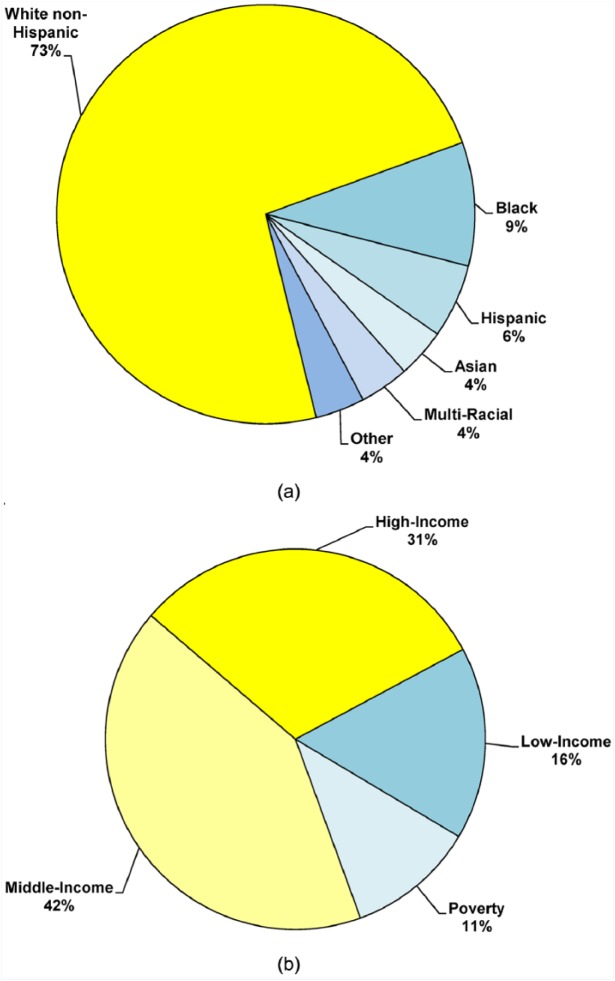
(a) Demographic break down of children attending summer day camps. (b) Income break down of families with children attending summer day camps (Source: American Camp Association).
Figure 7.
Figure 7.
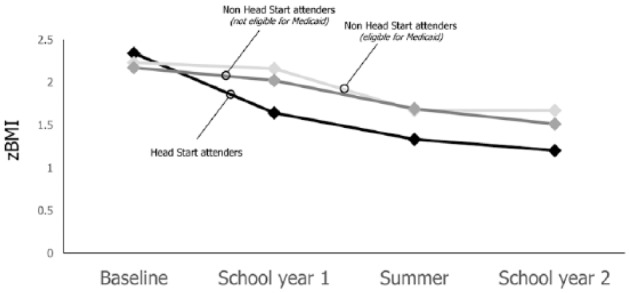
Changes in BMI z-scores in children that attended and did not attend Head Start (Source: Lumeng et al).

References

    1. Cote AT, Harris KC, Panagiotopoulos C, Sandor GG, Devlin AM. Childhood obesity and cardiovascular dysfunction. J Am Coll Cardiol. 2013;62:1309-1319. - PubMed
    1. Bacha F, Gidding SS. Cardiac abnormalities in youth with obesity and type 2 diabetes. Curr Diab Rep. 2016;16:62. - PubMed
    1. Mohanan S, Tapp H, McWilliams A, Dulin M. Obesity and asthma: pathophysiology and implications for diagnosis and management in primary care. Exp Biol Med (Maywood). 2014;239:1531-1540. - PMC - PubMed
    1. Narang I, Mathew JL. Childhood obesity and obstructive sleep apnea. J Nutr Metab. 2012;2012:134202. - PMC - PubMed
    1. Pollock NK. Childhood obesity, bone development, and cardiometabolic risk factors. Mol Cell Endocrinol. 2015;410:52-63. - PMC - PubMed

LinkOut - more resources