


The Adenoids but Not the Palatine Tonsils Serve as a Reservoir for Bacteria Associated with Secretory Otitis Media in Small Children
- PMID: 30801022
- PMCID: PMC6372837
- DOI: 10.1128/mSystems.00169-18
The Adenoids but Not the Palatine Tonsils Serve as a Reservoir for Bacteria Associated with Secretory Otitis Media in Small Children
Abstract
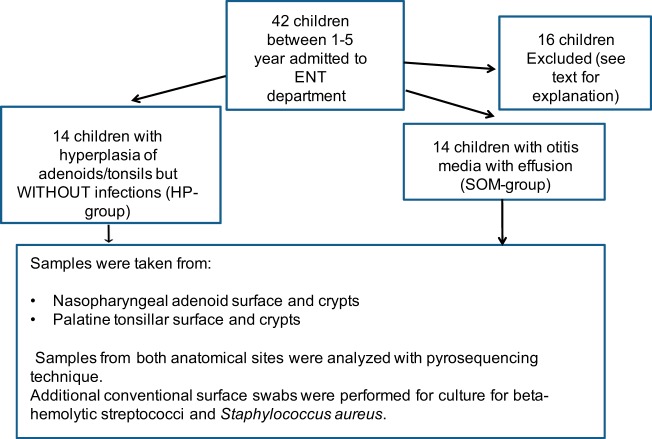
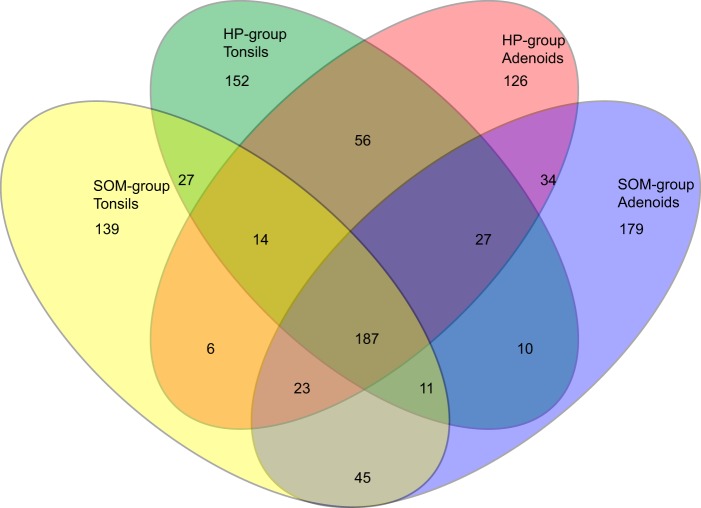
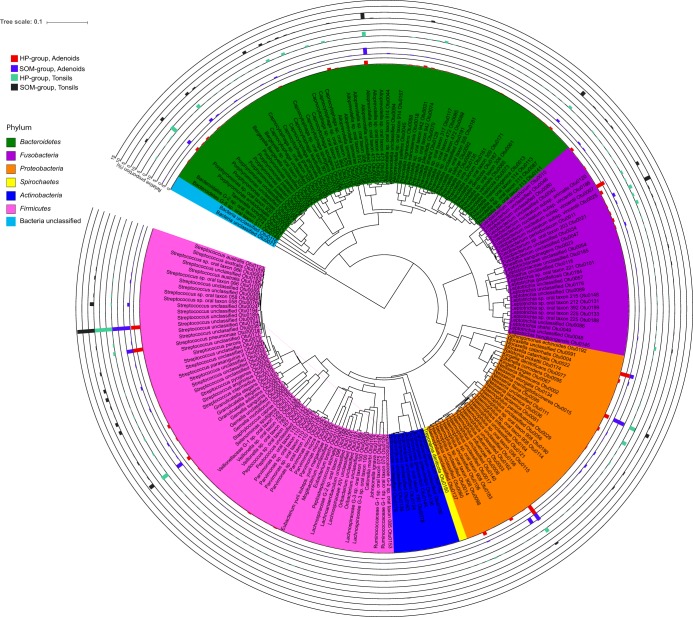
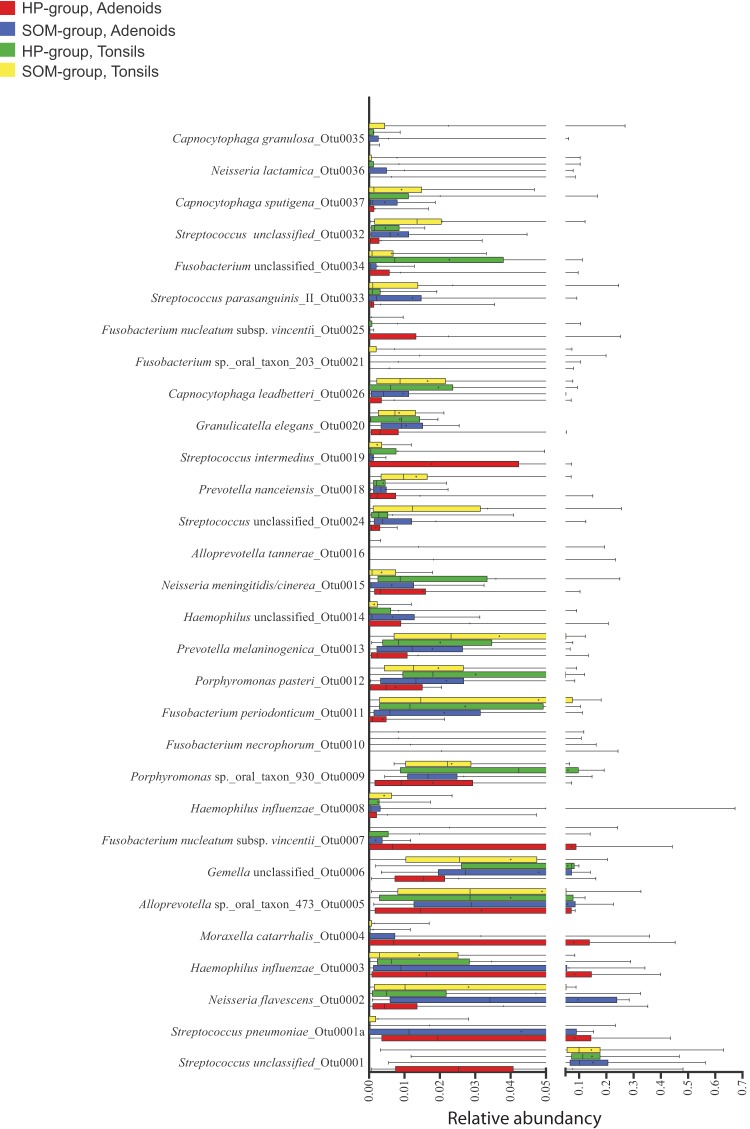
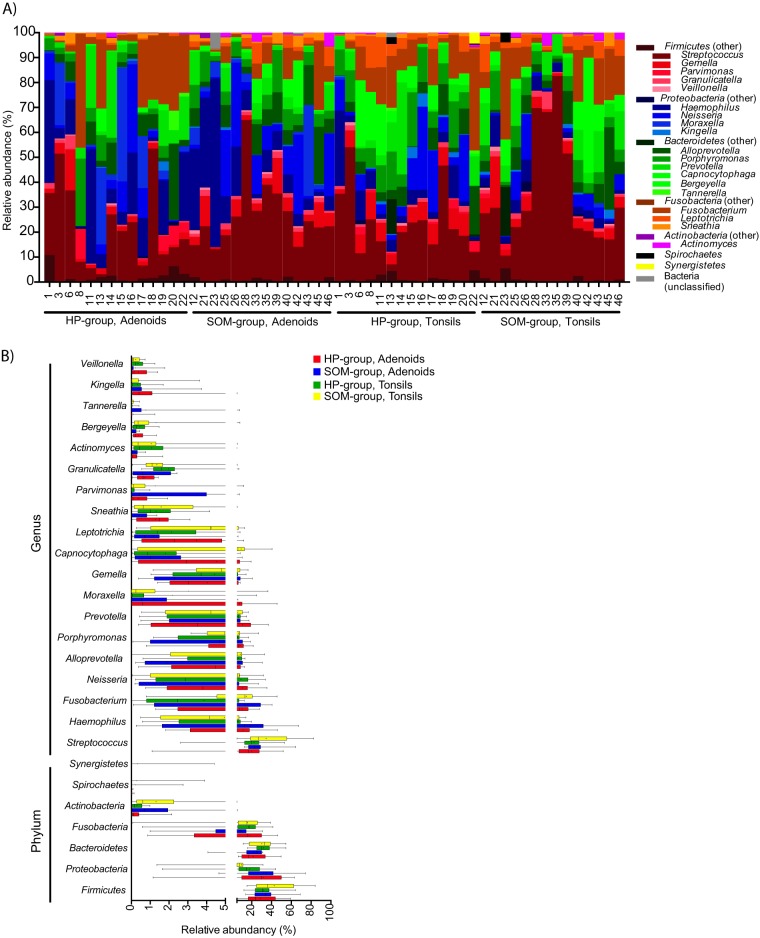
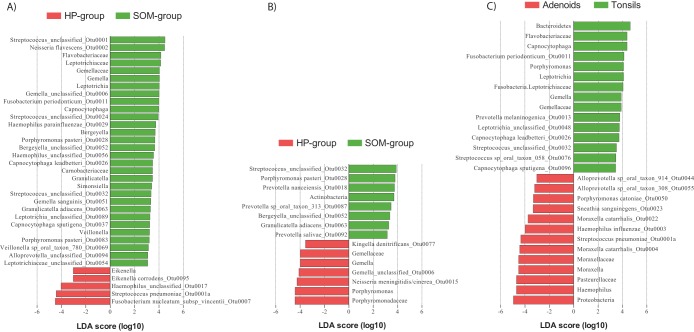
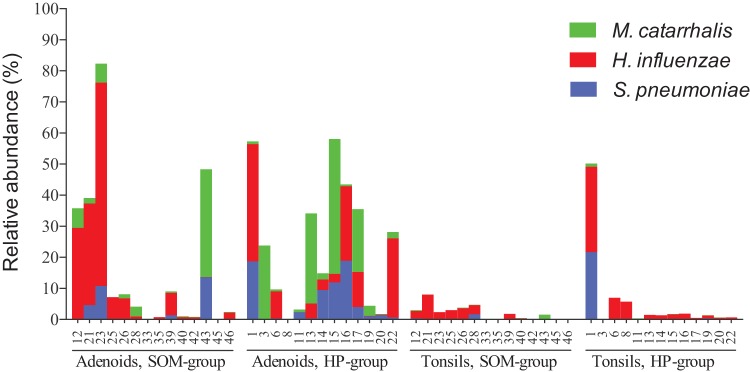
Acute otitis media (AOM), secretory otitis media (SOM), and acute pharyngotonsillitis are the most frequent reasons for visits to general practitioners, pediatricians, and otolaryngologists. Microbial colonization of the epithelial lining of Waldeyer's lymphatic tissues, consisting of the palatine tonsils, lingual tonsils, adenoids, and Eustachian tube tonsil, is a well-known clinical challenge during infancy due to frequent episodes of upper respiratory tract infections. However, no previous studies have investigated the combined role of the palatine tonsils and the adenoids as a reservoir for pathogens associated with SOM in small children. We analyzed the combined crypt microbiome of the palatine tonsils and adenoids from 14 small children with hyperplasia of the tonsils or adenoids and 14 small children with SOM using 16S rRNA gene pyrosequencing. Our study demonstrated a significant difference between the microbiome of the adenoids and that of the palatine tonsils in the two groups but not between the two anatomical locations within the two groups. In particular, the potential pathogens Streptococcus pneumoniae, Haemophilus influenzae, and Moraxella catarrhalis were almost exclusively found in the adenoids of both patient groups, indicating that the adenoids and not the palatine tonsils are the main reservoir for potential pathogens leading to AOM and SOM. IMPORTANCE Our findings that the microbiome differs between crypts of the adenoids and crypts of the palatine tonsils, including the relative abundances of potential pathogens such as Haemophilus influenzae, Streptococcus pneumoniae, and Moraxella catarrhalis, may be the stepping stone for further investigation of individual microbiomes in a longitudinal design that includes recording of the fluctuating health status of the child. Such studies may have the potential to lead to new preventive measurements such as implantation of protective nonpathogens at the nasopharynx as an alternative to adenoidectomy.
Keywords: 16S rRNA genes; adenoids; adenotonsillectomy; microbiome; otitis media with effusion; tonsils.
Figures

References
-
- Brygge K, Sorensen CH, Colding H, Ejlertsen T, Hojbjerg T, Bruun B. 1998. Ribotyping of strains of Moraxella (Branhamella) catarrhalis cultured from the nasopharynx and middle ear of children with otitis media. Acta Otolaryngol 118:381–385. - PubMed
-
- Virolainen E, Suonpaa J, Puhakka H. 1982. Bacterial-flora in the nasopharynx before and after the treatment of acute otitis-media in children. Acta Otolaryngol 93:97–99. doi: 10.3109/00016488209108483. - DOI
LinkOut - more resources
Full Text Sources
