


Latin American and Caribbean consensus on noninvasive central nervous system neuromodulation for chronic pain management (LAC2-NIN-CP)
- PMID: 30801041
- PMCID: PMC6370142
- DOI: 10.1097/PR9.0000000000000692
Latin American and Caribbean consensus on noninvasive central nervous system neuromodulation for chronic pain management (LAC2-NIN-CP)
Abstract
Introduction: Chronic pain (CP) is highly prevalent and generally undertreated health condition. Noninvasive brain stimulation may contribute to decrease pain intensity and influence other aspects related to CP.
Objective: To provide consensus-based recommendations for the use of noninvasive brain stimulation in clinical practice.
Methods: Systematic review of the literature searching for randomized clinical trials followed by consensus panel. Recommendations also involved a cost-estimation study.
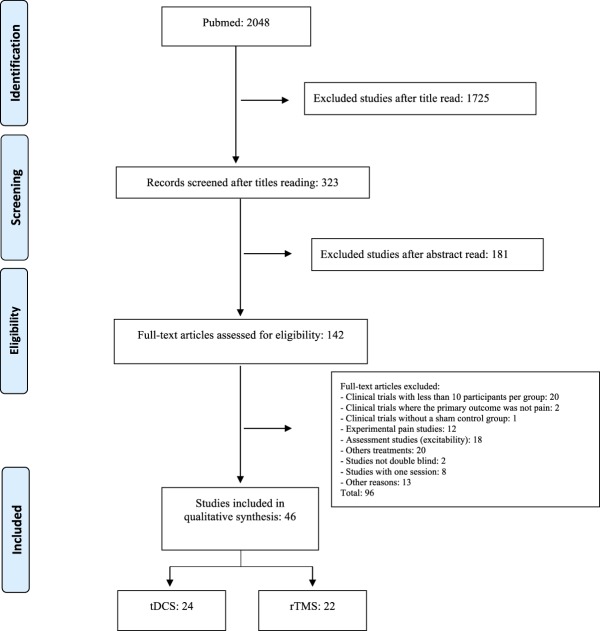
Results: The systematic review wielded 24 transcranial direct current stimulation (tDCS) and 22 repetitive transcranial magnetic stimulation (rTMS) studies. The following recommendations were provided: (1) Level A for anodal tDCS over the primary motor cortex (M1) in fibromyalgia, and level B for peripheral neuropathic pain, abdominal pain, and migraine; bifrontal (F3/F4) tDCS and M1 high-definition (HD)-tDCS for fibromyalgia; Oz/Cz tDCS for migraine and for secondary benefits such as improvement in quality of life, decrease in anxiety, and increase in pressure pain threshold; (2) level A recommendation for high-frequency (HF) rTMS over M1 for fibromyalgia and neuropathic pain, and level B for myofascial or musculoskeletal pain, complex regional pain syndrome, and migraine; (3) level A recommendation against the use of anodal M1 tDCS for low back pain; and (4) level B recommendation against the use of HF rTMS over the left dorsolateral prefrontal cortex in the control of pain.
Conclusion: Transcranial DCS and rTMS are recommended techniques to be used in the control of CP conditions, with low to moderate analgesic effects, and no severe adverse events. These recommendations are based on a systematic review of the literature and a consensus made by experts in the field. Readers should use it as part of the resources available to decision-making.
Keywords: Mixed pain; Neuropathic pain; Nociceptive pain; rTMS; tDCS.
Conflict of interest statement
Sponsorships or competing interests that may be relevant to content are disclosed at the end of this article.
Figures
References
-
- Ahmed MA, Mohamed SA, Sayed D. Long-term antalgic effects of repetitive transcranial magnetic stimulation of motor cortex and serum beta-endorphin in patients with phantom pain. Neurol Res 2011;33:953–8. - PubMed
-
- Angulo J, Gonzalez R, Hernandez L, Hernandez-Ortiz A, Jaque J, Lara-Solares A, Robles San Roman M, Vacas J. Musculoskeletal chronic pain: Latin-American expert panel review based on scientific evidence [in Spanish]. Drugs Today (Barc) 2011;47(suppl C):1–31. - PubMed
-
- Antal A, Kriener N, Lang N, Boros K, Paulus W. Cathodal transcranial direct current stimulation of the visual cortex in the prophylactic treatment of migraine. Cephalalgia 2011;31:820–8. - PubMed
-
- Antal A, Terney D, Kuhnl S, Paulus W. Anodal transcranial direct current stimulation of the motor cortex ameliorates chronic pain and reduces short intracortical inhibition. J Pain Symptom Manage 2010;39:890–903. - PubMed
-
- Araujo LQ, Macintyre CR, Vujacich C. Epidemiology and burden of herpes zoster and post-herpetic neuralgia in Australia, Asia and South America. Herpes 2007;14(suppl 2):40–4. - PubMed
Publication types
LinkOut - more resources
Full Text Sources
Research Materials
Miscellaneous