


Alterations of acoustic features of 50 kHz vocalizations by nicotine and phencyclidine in rats
- PMID: 30801260
- PMCID: PMC6610687
- DOI: 10.1097/FBP.0000000000000463
Alterations of acoustic features of 50 kHz vocalizations by nicotine and phencyclidine in rats
Abstract
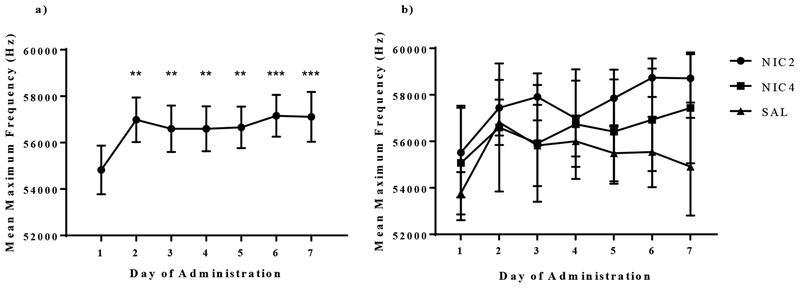
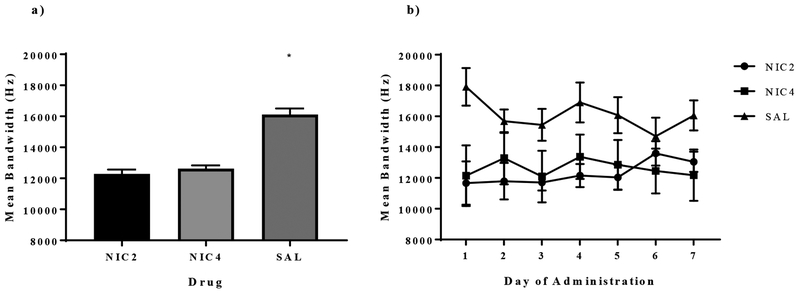
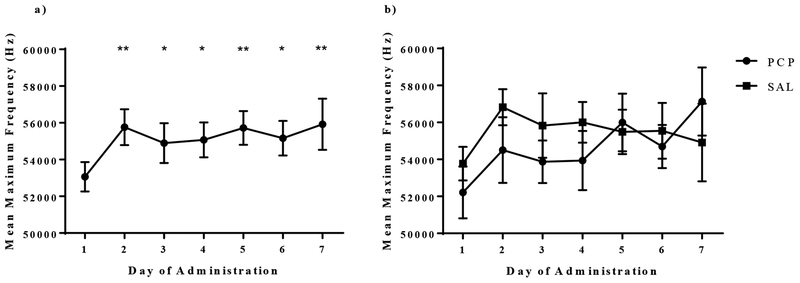
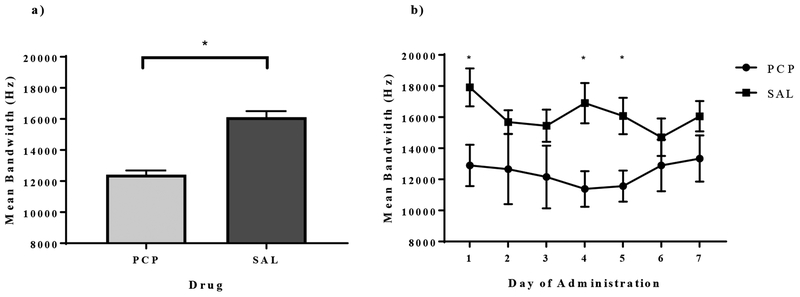
Ultrasonic vocalizations are widely used to examine affective states in rats, yet relatively few studies explore the acoustic features of vocalizations, especially in relation to drug exposure, and no studies have explored alterations in acoustic features over time. The goal of this study was to examine nicotine- and phencyclidine-induced alterations of bandwidth, duration, and frequency of 50 kHz vocalizations. The minimum and maximum frequency, bandwidth, and duration of calls were examined after 7 days of daily subcutaneous administration of phencyclidine (2.0 mg/kg) and nicotine (0.2 and 0.4 mg/kg) in male Sprague-Dawley rats. Bandwidth was significantly decreased in rats treated with both nicotine (0.2 and 0.4 mg/kg) and phencyclidine. Maximum frequency was lowest on the first day of exposure compared with all other days and was not altered by drug exposure. Call duration was not affected by time or drug exposure. These findings suggest the importance of studying alterations in acoustic features in time, especially those induced by drug exposure.
Conflict of interest statement
Conflicts of Interest: none declared
Figures
References
-
- Berridge KC and Robinson TE (1998). What is the role of dopamine in reward: hedonic impact, reward learning, or incentive salience? Brain Research Reviews, 28(3), 309–369. - PubMed
-
- Brudzynski SM (2005). Principles of rat communication: quantitative parameters of ultrasonic calls in rats. Behavior Genetics, 35(1), 85–92. - PubMed
-
- Brudzynski SM (2007). Ultrasonic calls of rats as indicator variables of negative or positive states: acetylcholine–dopamine interaction and acoustic coding. Behavioural Brain Research, 182(2), 261–273. - PubMed
-
- Burgdorf J, Knutson B, and Panksepp J (2000). Anticipation of rewarding electrical brain stimulation evokes ultrasonic vocalization in rats. Behavioral Neuroscience, 114(2), 320. - PubMed
Publication types
MeSH terms
Substances
Grants and funding
LinkOut - more resources
Full Text Sources
Miscellaneous
