


HIV treatment outcomes following antiretroviral therapy initiation and monitoring: A workplace program in Papua, Indonesia
- PMID: 30802257
- PMCID: PMC6388914
- DOI: 10.1371/journal.pone.0212432
HIV treatment outcomes following antiretroviral therapy initiation and monitoring: A workplace program in Papua, Indonesia
Abstract
Background: Papua Province, Indonesia is experiencing an on-going epidemic of Human Immunodeficiency Virus (HIV) infection, with an estimated 9-fold greater prevalence than the overall national rate. This study reviewed the treatment outcomes of an HIV-infected cohort on Antiretroviral Therapy (ART) and the predictors in terms of immunological recovery and virological response.
Methods: ART-naïve individuals in a workplace HIV program in southern Papua were retrospectively analyzed. Patients were assessed at 6, 12 and 36 months after ART initiation for treatment outcomes, and risk factors for virological suppression (viral load (VL) <1,000 copies/ml), poor immune response (CD4 <200 cells/mm3) and immunological failure (CD4 <100 cells/ mm3) after at least 6 months on ART, using a longitudinal Generalized Estimating Equations multivariate model.
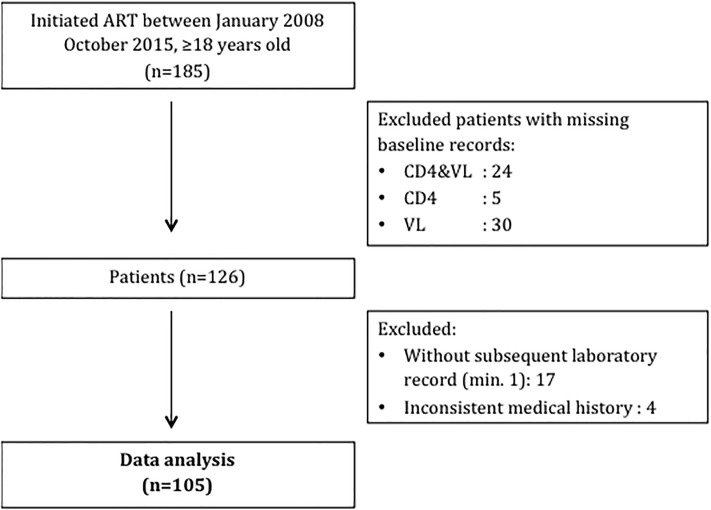
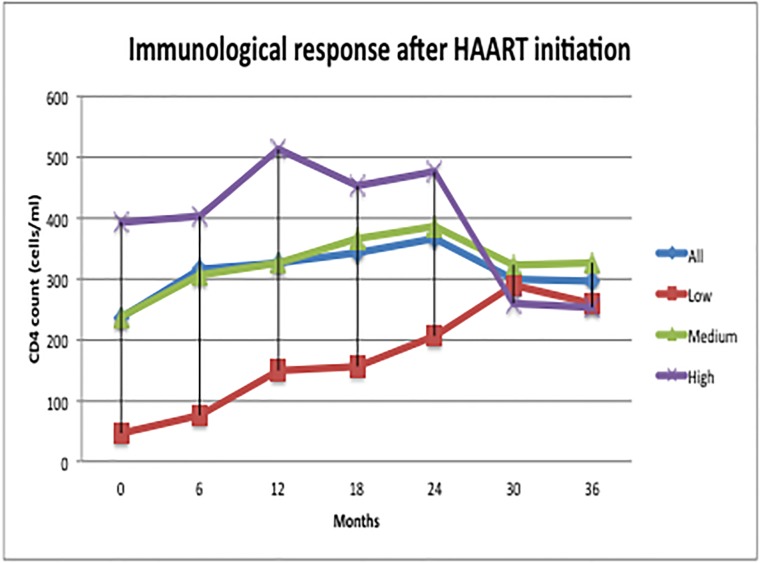
Results: Assessment of 105 patients were included in the final analysis with a median age of 34 years, 88% male, median baseline CD4 236 cells/ mm3, and VL 179,000 copies/ml. There were 74, 73, and 39 patients at 6, 12, and 36 months follow-up, respectively, with 5 deaths over the entire period. For the three observation periods, 68, 80, and 75% of patents achieved virological suppression, poor immune responders decreased from 15, 16 to 10%, whilst 15, 16, 10% met the immunological failure criteria, respectively. Using multivariate analysis, the independent predictor for viral suppression at 12 and 36 months was ≥1 log decrease in VL at 6 months (OR 19.25, p<0.001). Higher baseline CD4 was significantly correlated with better immunological outcomes, and lower likelihood of experiencing immunological failure (p <0.001).
Conclusion: Virological response at six months after beginning ART is the strongest predictor of viral suppression at 12 and 36 months, and may help in identifying patients needing additional adherence therapy support. Higher baseline CD4 positively affects the immunological outcomes of patients. The findings indicate HIV control programs should prioritize the availability of VL testing and begin ART regardless of CD4 counts in infected patients.
Conflict of interest statement
The authors have declared that no competing interests exist.
Figures
References
-
- World Health Organization. Consolidated guidelines on the use of antiretroviral drugs for treating and preventing HIV infection: recommendations for a public health approach. World Health Organ; 2016;155 p. - PubMed
-
- Ford N, Meintjes G, Pozniak A, Bygrave H, Hill A, Peter T, et al. The future role of CD4 cell count for monitoring antiretroviral therapy. Lancet Infect Dis. Elsevier Ltd; 2015;15(2):241–7. - PubMed
-
- KPAD Mimika. Mimika District HIV-AIDS Situation Report 2015. KPAD Mimika; 2015;1:1–8,15–17, 33–4.
Publication types
MeSH terms
Associated data
LinkOut - more resources
Full Text Sources
Medical
Research Materials
Miscellaneous
