


Hybridization is a recurrent evolutionary stimulus in wild yeast speciation
- PMID: 30804385
- PMCID: PMC6389940
- DOI: 10.1038/s41467-019-08809-7
Hybridization is a recurrent evolutionary stimulus in wild yeast speciation
Erratum in
-
Author Correction: Hybridization is a recurrent evolutionary stimulus in wild yeast speciation.Nat Commun. 2019 May 13;10(1):2199. doi: 10.1038/s41467-019-09702-z. Nat Commun. 2019. PMID: 31086180 Free PMC article.
Abstract
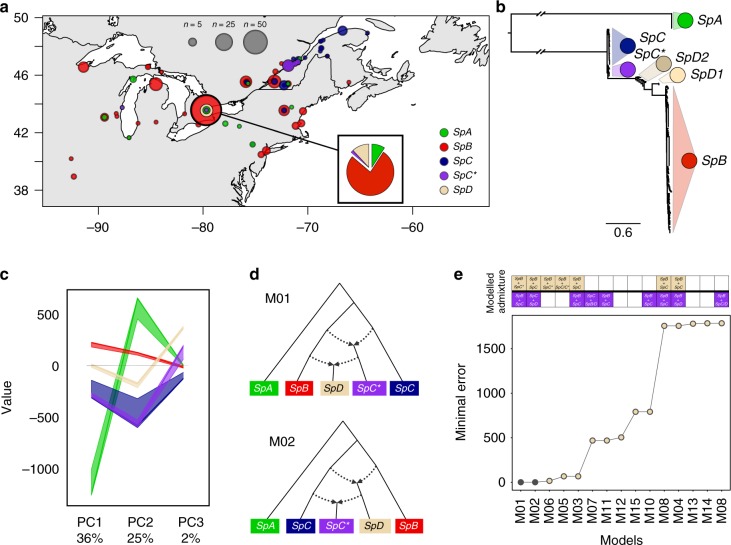
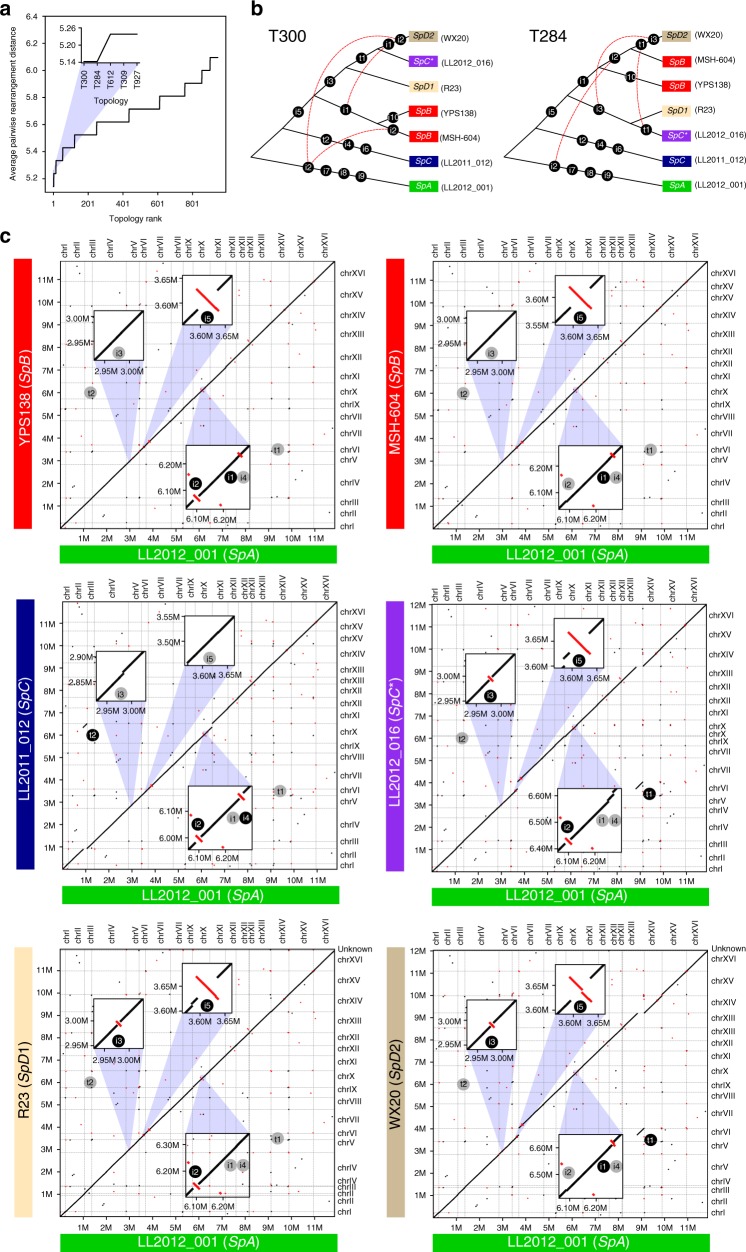
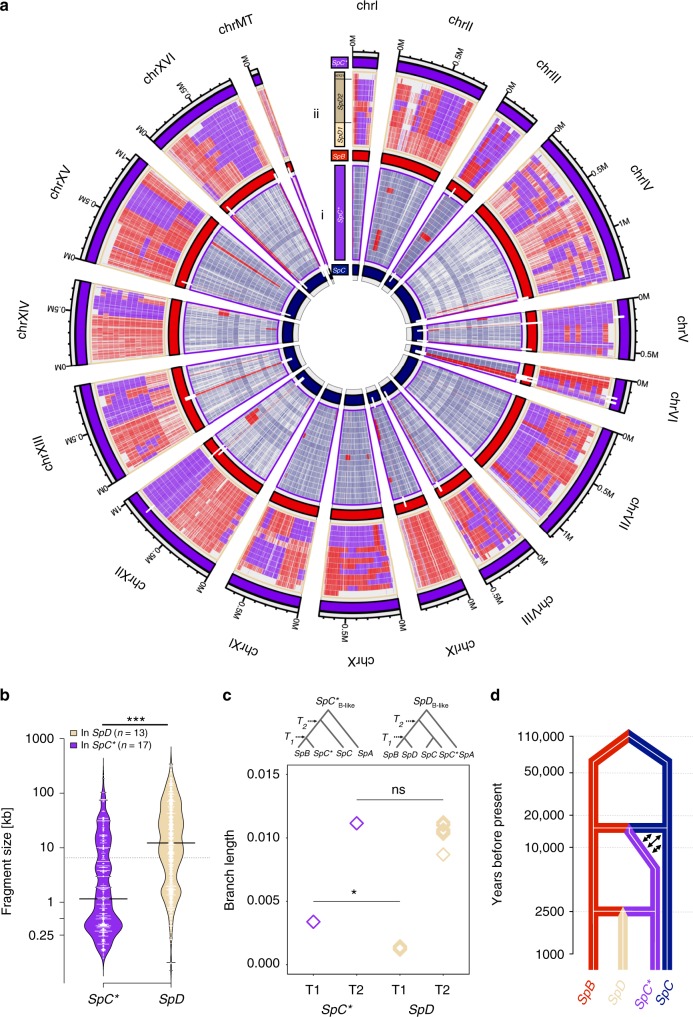
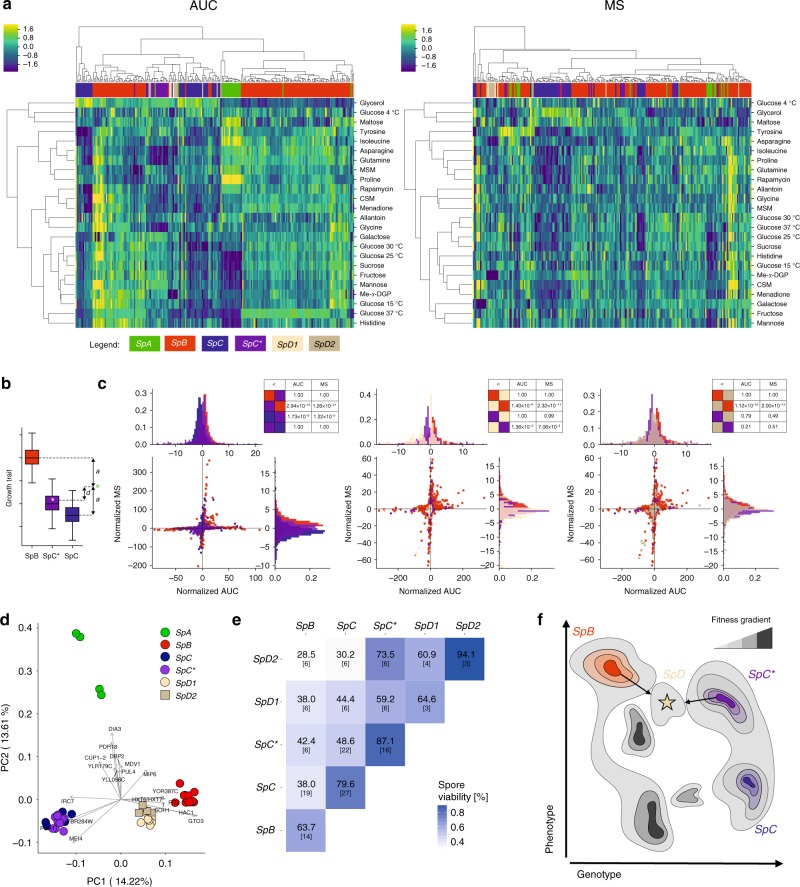
Hybridization can result in reproductively isolated and phenotypically distinct lineages that evolve as independent hybrid species. How frequently hybridization leads to speciation remains largely unknown. Here we examine the potential recurrence of hybrid speciation in the wild yeast Saccharomyces paradoxus in North America, which comprises two endemic lineages SpB and SpC, and an incipient hybrid species, SpC*. Using whole-genome sequences from more than 300 strains, we uncover the hybrid origin of another group, SpD, that emerged from hybridization between SpC* and one of its parental species, the widespread SpB. We show that SpD has the potential to evolve as a novel hybrid species, because it displays phenotypic novelties that include an intermediate transcriptome profile, and partial reproductive isolation with its most abundant sympatric parental species, SpB. Our findings show that repetitive cycles of divergence and hybridization quickly generate diversity and reproductive isolation, providing the raw material for speciation by hybridization.
Conflict of interest statement
The authors declare no competing interests.
Figures
References
-
- Anderson E, Stebbins GL. Hybridization as an evolutionary stimulus. Evolution. 1954;8:378–388. doi: 10.1111/j.1558-5646.1954.tb01504.x. - DOI
Publication types
MeSH terms
LinkOut - more resources
Full Text Sources
