


Origin and evolution of the octoploid strawberry genome
- PMID: 30804557
- PMCID: PMC6882729
- DOI: 10.1038/s41588-019-0356-4
Origin and evolution of the octoploid strawberry genome
Erratum in
-
Author Correction: Origin and evolution of the octoploid strawberry genome.Nat Genet. 2019 Apr;51(4):765. doi: 10.1038/s41588-019-0380-4. Nat Genet. 2019. PMID: 30842601 Free PMC article.
Abstract
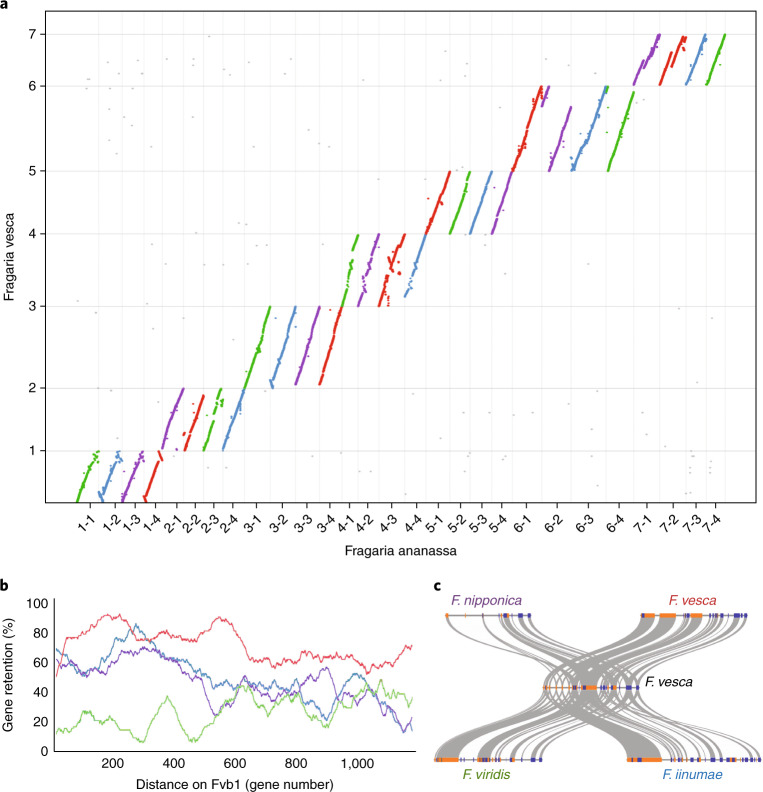
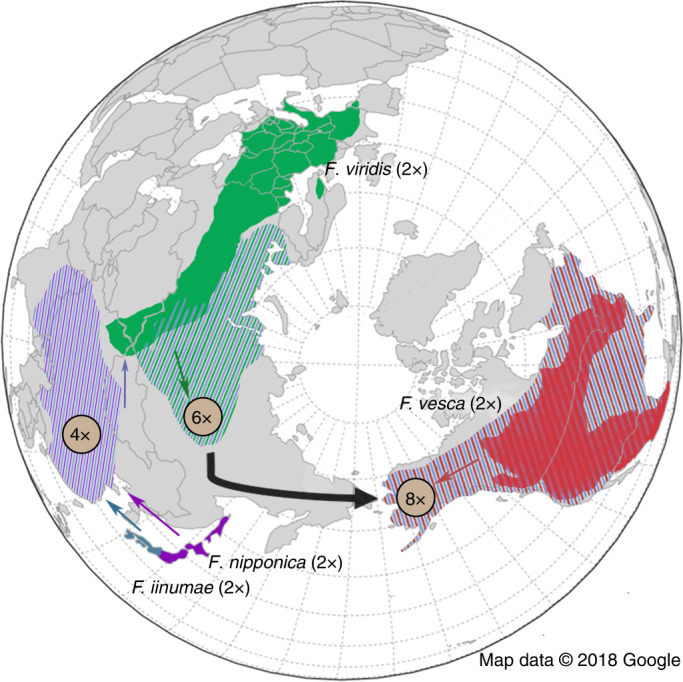
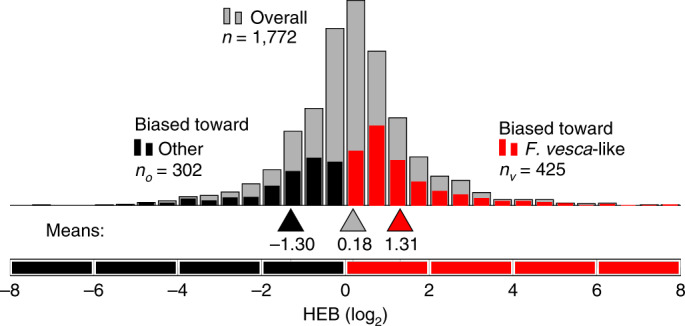
Cultivated strawberry emerged from the hybridization of two wild octoploid species, both descendants from the merger of four diploid progenitor species into a single nucleus more than 1 million years ago. Here we report a near-complete chromosome-scale assembly for cultivated octoploid strawberry (Fragaria × ananassa) and uncovered the origin and evolutionary processes that shaped this complex allopolyploid. We identified the extant relatives of each diploid progenitor species and provide support for the North American origin of octoploid strawberry. We examined the dynamics among the four subgenomes in octoploid strawberry and uncovered the presence of a single dominant subgenome with significantly greater gene content, gene expression abundance, and biased exchanges between homoeologous chromosomes, as compared with the other subgenomes. Pathway analysis showed that certain metabolomic and disease-resistance traits are largely controlled by the dominant subgenome. These findings and the reference genome should serve as a powerful platform for future evolutionary studies and enable molecular breeding in strawberry.
Conflict of interest statement
The authors declare no competing interests.
Figures
Comment in
-
The origin and evolution of a favorite fruit.Nat Genet. 2019 Mar;51(3):372-373. doi: 10.1038/s41588-019-0365-3. Nat Genet. 2019. PMID: 30820045 No abstract available.
-
Revisiting the origin of octoploid strawberry.Nat Genet. 2020 Jan;52(1):2-4. doi: 10.1038/s41588-019-0543-3. Epub 2019 Dec 16. Nat Genet. 2020. PMID: 31844319 No abstract available.
-
Reply to: Revisiting the origin of octoploid strawberry.Nat Genet. 2020 Jan;52(1):5-7. doi: 10.1038/s41588-019-0544-2. Epub 2019 Dec 16. Nat Genet. 2020. PMID: 31844320 Free PMC article. No abstract available.
References
-
- Duchesne, A.-N. Histoire Naturelle des Fraisiers Contenant les Vues d’Économie Réunies à la Botanique, et Suivie de Remarques Particulières sur Plusieurs Points qui ont Rapport à l’Histoire Naturelle Générale, par M. Duchesne Fils. (Didot le Jeune, Paris, 1766).
-
- Njuguna, W., Liston, A., Cronn, R., Ashman, T.-L. & Bassil, N. Insights into phylogeny, sex function and age of Fragaria based on whole chloroplast genome sequencing. Mol. Phylogenet. Evol.66, 17–29 (2013). - PubMed
-
- McClintock, B. The significance of responses of the genome to challenge. Science226, 792–801 (1984). - PubMed
-
- Folta, K. M. & Gardiner, S. E. Genetics and Genomics of Rosaceae (Springer, New York, 2009).
Publication types
MeSH terms
LinkOut - more resources
Full Text Sources
Other Literature Sources
