Meta-Analysis
. 2019 Mar;51(3):481-493.
doi: 10.1038/s41588-018-0321-7. Epub 2019 Feb 25.

New genetic signals for lung function highlight pathways and chronic obstructive pulmonary disease associations across multiple ancestries

Nick Shrine #  1 Anna L Guyatt #  1 A Mesut Erzurumluoglu #  1 Victoria E Jackson  1   2   3 Brian D Hobbs  4   5 Carl A Melbourne  1 Chiara Batini  1 Katherine A Fawcett  1 Kijoung Song  6 Phuwanat Sakornsakolpat  4   7 Xingnan Li  8 Ruth Boxall  9   10 Nicola F Reeve  1 Ma'en Obeidat  11 Jing Hua Zhao  12 Matthias Wielscher  13 Stefan Weiss  14 Katherine A Kentistou  15   16 James P Cook  17 Benjamin B Sun  18 Jian Zhou  19 Jennie Hui  20   21   22   23 Stefan Karrasch  24   25   26 Medea Imboden  27   28 Sarah E Harris  29   30 Jonathan Marten  31 Stefan Enroth  32 Shona M Kerr  31 Ida Surakka  33   34 Veronique Vitart  31 Terho Lehtimäki  35 Richard J Allen  1 Per S Bakke  36 Terri H Beaty  37 Eugene R Bleecker  8 Yohan Bossé  38   39 Corry-Anke Brandsma  40 Zhengming Chen  9 James D Crapo  41   42 John Danesh  18   43   44   45 Dawn L DeMeo  4   5 Frank Dudbridge  1 Ralf Ewert  46 Christian Gieger  47 Amund Gulsvik  36 Anna L Hansell  48   49   50 Ke Hao  51 Joshua D Hoffman  6 John E Hokanson  52 Georg Homuth  14 Peter K Joshi  15 Philippe Joubert  39   53 Claudia Langenberg  54 Xuan Li  11 Liming Li  55 Kuang Lin  9 Lars Lind  56 Nicholas Locantore  57 Jian'an Luan  54 Anubha Mahajan  58 Joseph C Maranville  59 Alison Murray  60 David C Nickle  59   61 Richard Packer  1 Margaret M Parker  4 Megan L Paynton  1 David J Porteous  29   30 Dmitry Prokopenko  4 Dandi Qiao  4 Rajesh Rawal  47   62 Heiko Runz  59 Ian Sayers  63 Don D Sin  11   64 Blair H Smith  65 María Soler Artigas  66   67   68 David Sparrow  69   70 Ruth Tal-Singer  57 Paul R H J Timmers  15 Maarten Van den Berge  71 John C Whittaker  72 Prescott G Woodruff  73 Laura M Yerges-Armstrong  6 Olga G Troyanskaya  74   75 Olli T Raitakari  76   77 Mika Kähönen  78 Ozren Polašek  15   79 Ulf Gyllensten  32 Igor Rudan  15 Ian J Deary  29   80 Nicole M Probst-Hensch  27   28 Holger Schulz  24   26 Alan L James  20   81   82 James F Wilson  15   31 Beate Stubbe  46 Eleftheria Zeggini  83   84 Marjo-Riitta Jarvelin  13   85   86   87   88 Nick Wareham  54 Edwin K Silverman  4   5 Caroline Hayward  31 Andrew P Morris  17   58 Adam S Butterworth  18   45 Robert A Scott  72 Robin G Walters  9 Deborah A Meyers  8 Michael H Cho  4   5 David P Strachan  89 Ian P Hall #  63 Martin D Tobin #  90   91 Louise V Wain #  92   93 Understanding Society Scientific Group
Affiliations
Meta-Analysis

New genetic signals for lung function highlight pathways and chronic obstructive pulmonary disease associations across multiple ancestries

Nick Shrine et al. Nat Genet. 2019 Mar.

Erratum in

  • Author Correction: New genetic signals for lung function highlight pathways and chronic obstructive pulmonary disease associations across multiple ancestries.
    Shrine N, Guyatt AL, Erzurumluoglu AM, Jackson VE, Hobbs BD, Melbourne CA, Batini C, Fawcett KA, Song K, Sakornsakolpat P, Li X, Boxall R, Reeve NF, Obeidat M, Zhao JH, Wielscher M; Understanding Society Scientific Group; Weiss S, Kentistou KA, Cook JP, Sun BB, Zhou J, Hui J, Karrasch S, Imboden M, Harris SE, Marten J, Enroth S, Kerr SM, Surakka I, Vitart V, Lehtimäki T, Allen RJ, Bakke PS, Beaty TH, Bleecker ER, Bossé Y, Brandsma CA, Chen Z, Crapo JD, Danesh J, DeMeo DL, Dudbridge F, Ewert R, Gieger C, Gulsvik A, Hansell AL, Hao K, Hoffman JD, Hokanson JE, Homuth G, Joshi PK, Joubert P, Langenberg C, Li X, Li L, Lin K, Lind L, Locantore N, Luan J, Mahajan A, Maranville JC, Murray A, Nickle DC, Packer R, Parker MM, Paynton ML, Porteous DJ, Prokopenko D, Qiao D, Rawal R, Runz H, Sayers I, Sin DD, Smith BH, Artigas MS, Sparrow D, Tal-Singer R, Timmers PRHJ, Van den Berge M, Whittaker JC, Woodruff PG, Yerges-Armstrong LM, Troyanskaya OG, Raitakari OT, Kähönen M, Polašek O, Gyllensten U, Rudan I, Deary IJ, Probst-Hensch NM, Schulz H, James AL, Wilson JF, Stubbe B, Zeggini E, Jarvelin MR, Wareham N, Silverman EK, Hayward C, Morris AP, Butterworth AS, Scott RA, Walters RG, Meyers DA, Ch… See abstract for full author list ➔ Shrine N, et al. Nat Genet. 2019 Jun;51(6):1067. doi: 10.1038/s41588-019-0438-3. Nat Genet. 2019. PMID: 31110354
  • Author Correction: New genetic signals for lung function highlight pathways and chronic obstructive pulmonary disease associations across multiple ancestries.
    Shrine N, Guyatt AL, Erzurumluoglu AM, Jackson VE, Hobbs BD, Melbourne CA, Batini C, Fawcett KA, Song K, Sakornsakolpat P, Li X, Boxall R, Reeve NF, Obeidat M, Zhao JH, Wielscher M; Understanding Society Scientific Group; Weiss S, Kentistou KA, Cook JP, Sun BB, Zhou J, Hui J, Karrasch S, Imboden M, Harris SE, Marten J, Enroth S, Kerr SM, Surakka I, Vitart V, Lehtimäki T, Allen RJ, Bakke PS, Beaty TH, Bleecker ER, Bossé Y, Brandsma CA, Chen Z, Crapo JD, Danesh J, DeMeo DL, Dudbridge F, Ewert R, Gieger C, Gulsvik A, Hansell AL, Hao K, Hoffman JD, Hokanson JE, Homuth G, Joshi PK, Joubert P, Langenberg C, Li X, Li L, Lin K, Lind L, Locantore N, Luan J, Mahajan A, Maranville JC, Murray A, Nickle DC, Packer R, Parker MM, Paynton ML, Porteous DJ, Prokopenko D, Qiao D, Rawal R, Runz H, Sayers I, Sin DD, Smith BH, Artigas MS, Sparrow D, Tal-Singer R, Timmers PRHJ, Van den Berge M, Whittaker JC, Woodruff PG, Yerges-Armstrong LM, Troyanskaya OG, Raitakari OT, Kähönen M, Polašek O, Gyllensten U, Rudan I, Deary IJ, Probst-Hensch NM, Schulz H, James AL, Wilson JF, Stubbe B, Zeggini E, Jarvelin MR, Wareham N, Silverman EK, Hayward C, Morris AP, Butterworth AS, Scott RA, Walters RG, Meyers DA, Ch… See abstract for full author list ➔ Shrine N, et al. Nat Genet. 2024 May;56(5):1032-1033. doi: 10.1038/s41588-024-01752-4. Nat Genet. 2024. PMID: 38641645 No abstract available.

Abstract

Reduced lung function predicts mortality and is key to the diagnosis of chronic obstructive pulmonary disease (COPD). In a genome-wide association study in 400,102 individuals of European ancestry, we define 279 lung function signals, 139 of which are new. In combination, these variants strongly predict COPD in independent populations. Furthermore, the combined effect of these variants showed generalizability across smokers and never smokers, and across ancestral groups. We highlight biological pathways, known and potential drug targets for COPD and, in phenome-wide association studies, autoimmune-related and other pleiotropic effects of lung function-associated variants. This new genetic evidence has potential to improve future preventive and therapeutic strategies for COPD.


Conflict of interest statement

Competing Interests Statement

The following authors report potential conflicts of interest:

K. Song: Kijoung Song is an employee of GlaxoSmithKline and may own company stock.

Z. Chen: reports grants from GSK and Merck.

J. Danesh: John Danesh reports personal fees and non-financial support from Merck Sharp & Dohme (MSD) and Novartis, and grants from British Heart Foundation, European Research Council, MSD, NIHR, NHS Blood and Transplant, Novartis, Pfizer, UK MRC, Wellcome Trust, and AstraZeneca.

J. Hoffman: Joshua D. Hoffman is an employee of GlaxoSmithKline and may own company stock.

N. Locantore: Nicholas Locantore is an employee and shareholder of GSK.

J. Maranville: Joseph C. Maranville was a Merck employee during this study, and is now a Celgene employee.

D. Nickle: David C Nickle has been a Merck & Co. employee during this study and is now an employee at Biogen Inc.

H. Runz: Heiko Runz has been a Merck & Co. employee during this study and is now an employee at Biogen Inc.

I. Sayers: Ian Sayers has received support from GSK and BI.

R. Tal-Singer: Ruth Tal-Singer is an employee and shareholder of GlaxoSmithKline.

M. van den Berge: Maarten van den Berge reports grants paid to the University from Astra Zeneca, TEVA, GSK, Chiesi, outside the submitted work.

J. Whittaker: John C. Whittaker is an employee of GlaxoSmithKline and may own company stock.

L. Yerges-Armstrong: Laura M. Yerges-Armstrong is an employee of GlaxoSmithKline and may own company stock.

H. Schulz: Helmholtz Center Munich funded by the German Federal Ministry of Education and Research (BMBF) and by the State of Bavaria, Competence Network Asthma and COPD (ASCONET), network COSYCONET (subproject 2, BMBF FKZ 01GI0882) funded by the German Federal Ministry of Education and Research (BMBF)

E. Silverman: In the past three years, Edwin K. Silverman received honoraria from Novartis for Continuing Medical Education Seminars and grant and travel support from GlaxoSmithKline.

A. Butterworth: Adam S. Butterworth reports grants from Merck, Pfizer, Novartis, Biogen and AstraZeneca and personal fees from Novartis.

R. Scott: Robert A Scott is an employee and shareholder in GlaxoSmithKline.

R. Walters: Robin G. Walters reports that the China Kadoorie Biobank study has received grant support from GSK.

M. Cho: Michael H. Cho has received grant support from GSK.

I. Hall: Ian P. Hall has funded research collaborations with GSK, Boehringer Ingelheim and Orion.

M. Tobin: Martin D. Tobin receives funding from GSK for a collaborative research project, outside of the submitted work.

L. Wain: Louise V. Wain receives funding from GSK for a collaborative research project, outside of the submitted work.

Figures

Figure 1:
Figure 1:. Study design
Tier 1 signals had P<5×10⁻⁹ in UK Biobank and P<10−3 in SpiroMeta with consistent direction of effect. Tier 2 signals had P<5×10⁻⁹ in the meta-analysis of UK Biobank and SpiroMeta with P<10−3 in UK Biobank and P<10−3 in SpiroMeta with consistent directions of effect. Signals with P<5×10⁻⁹ in the meta-analysis of UK Biobank and SpiroMeta, and that had consistent directions of effect but did not meet P<10−3 in both cohorts were reported as Tier 3.
Figure 2:
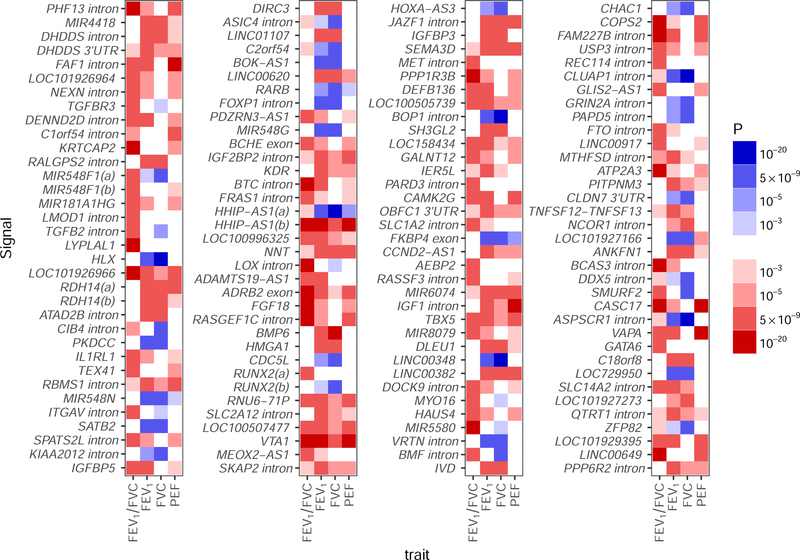
Figure 2:. Strength and direction of association across four lung function traits for 139 novel signals:
Signals are in chromosome and genomic position order from top to bottom then left to right. Red indicates a decrease in the lung function trait; blue indicates an increase. All effects are aligned to the allele associated with decreased FEV1/FVC, hence the FEV1/FVC column is only red or white. P-values are from the meta-analysis of UK Biobank and SpiroMeta (n=400,102). The scale points are thresholds used for (i) confirmation in 2-stage analysis and 1-stage analysis (P<10−3); (ii) confirmation of association of previous signals (P<10−5); (iii) signal selection in 2-stage and 1-stage analysis (P<5×10⁻⁹); capped at (P<10−20). FEV1, forced expired volume in 1 second; FVC, forced vital capacity; PEF, peak expiratory flow
Figure 3:
Figure 3:. Association of weighted genetic risk score (wGRS) with COPD and FEV1/FVC.
a. Association of the wGRS with FEV1/FVC and COPD in UK Biobank (UKB) and China Kadoorie Biobank (CKB) (Supplementary Table 19). Left-hand axis: standard deviation (SD) change in FEV1/FVC per SD increase in wGRS (light grey bars, N=total sample size). Right-hand axis: the translation of this effect to COPD (GOLD stage 2–4) odds ratio (OR) per SD increase in wGRS in the same individuals for UKB ancestries with >100 COPD cases (dark grey bars, N=number of cases + number of controls. Whiskers represent 95% confidence intervals. Some variants in the wGRS were discovered in UKB Europeans, therefore UKB Europeans are shown for reference only (far left, ‘Discovery sample’). All other ancestral groups are independent to UKB Europeans. b. OR for COPD per SD increase in wGRS in six study groups. COPD was defined using GOLD 2–4 criteria (Supplementary Table 21: means and SDs of risk scores). The vertical black line indicates the null effect (OR=1). The point estimate of each study is represented by a box proportional to study weight; whiskers represent 95% confidence intervals. The diamond represents a fixed effect meta-analysis of the five European-ancestry groups, the width of which represents the 95% confidence interval (I2 statistic=0). c. OR for COPD according to deciles of the wGRS, with decile 1 (the 10% of individuals with the lowest GRS) as the reference group. Each point represents a meta-analysis of results for a given comparison (e.g. decile 2 vs reference, decile 3 vs reference, etc.) in five external European-ancestry study groups (COPDGene, ECLIPSE, GenKOLS, SPIROMICS, NETT-NAS). Deciles were calculated and models were run in each group separately. Error bars show 95% confidence intervals (Supplementary Table 22).
Figure 4:
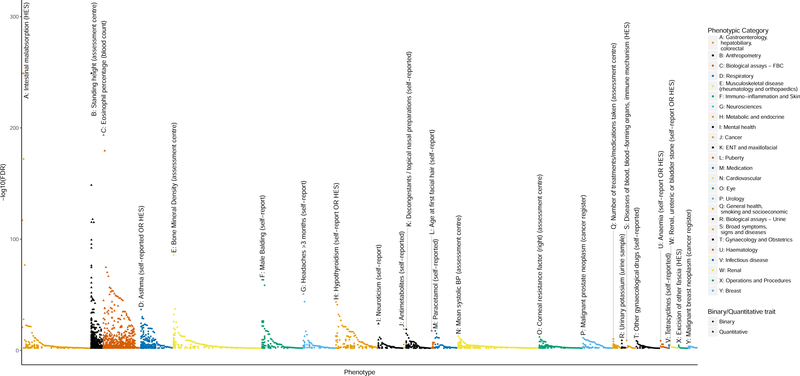
Figure 4:. Individual PheWAS with 279 variants (traits passing FDR 1% threshold)
Separate association of 279 variants with 2,411 traits (FDR<1%) in UK Biobank (n up to 379,337). In each category, the trait with the strongest association, i.e. highest –log10(FDR), is shown first, followed by other traits in that category in descending order of –log10(FDR). Categories are colour-coded, and outcomes are denoted with a circular or triangular point, according to whether they were coded as binary or quantitative. The top association per-category is labelled with its rsID number, and a plain English label describing the trait. The letter at the beginning of each label allows easy cross-reference with the categories labelled in the legend. Zoomed in versions of each category with visible trait names and directionality are available in Supplementary Figure 10. These plots have signed log10(FDR) values, where a positive values indicates that a positive SNP-trait association is concordant with the risk allele for reduced lung function (as measured by lower FEV1/FVC). Tabulated results of all SNP-trait PheWAS associations associated at an FDR of<1% are available in Supplementary Table 23.
Figure 5:
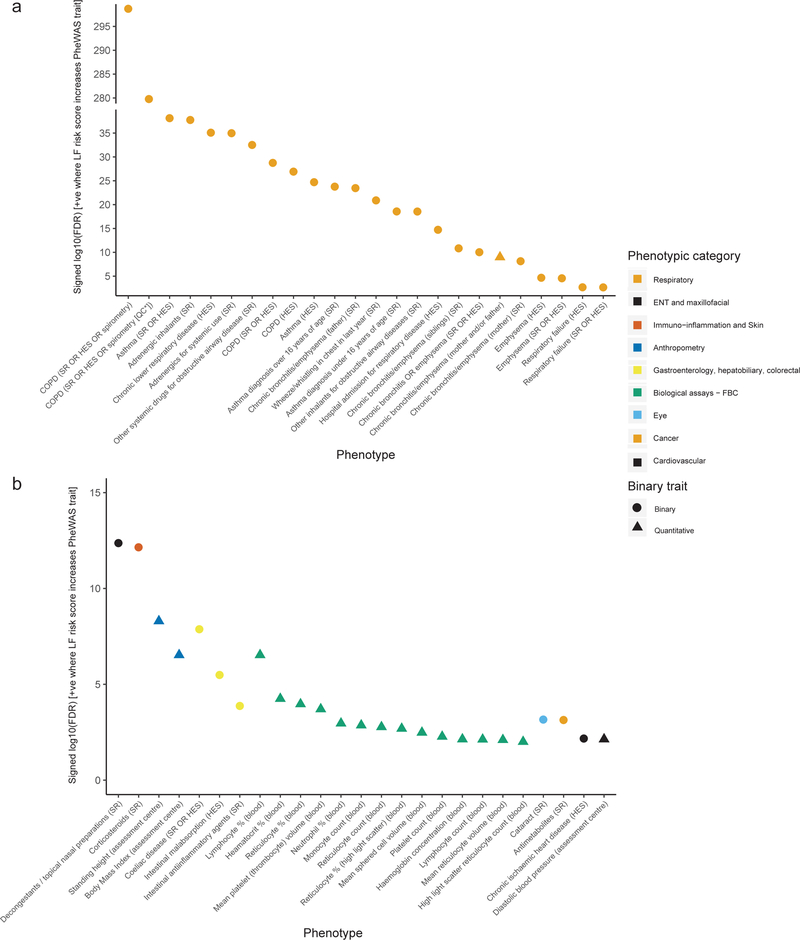
Figure 5:. PheWAS with genetic risk score (traits passing FDR 1% threshold)
Association of 279 variant weighted genetic risk score with 2,453 traits (FDR<1%) in UK Biobank (n up to 379,337). In each panel, the category with the strongest association, i.e. highest –log10(FDR), is shown first, followed by all other associations in that category, ordered by descending order of –log10(FDR). Sample sizes varied across traits and are available in Supplementary Table 25, along with the full summary statistics for each association, plus details of categorisation and plain English labels for each trait. Trait categories are colour coded, and outcomes are denoted with a circular or triangular point, according to whether they were coded as binary or quantitative. The sign of the log10(FDR) value is positive where an increase in the risk score (i.e. greater risk of COPD, reduced lung function) is associated with a positive effect estimate for that trait. *QC refers to spirometry passing ERS/ATS criteria. SR=self-report; HES=Hospital Episode Statistics. a. Associations with respiratory traits. b.Associations with all other traits. ENT=Ear, Nose and Throat; FBC=Full Blood Count.

References

    1. Young RP, Hopkins R & Eaton TE Forced expiratory volume in one second: not just a lung function test but a marker of premature death from all causes. Eur Respir J 30, 616–22 (2007). - PubMed
    1. Global, regional, and national age-sex specific mortality for 264 causes of death, 1980–2016: a systematic analysis for the Global Burden of Disease Study 2016. Lancet 390, 1151–1210 (2017). - PMC - PubMed
    1. Global, regional, and national incidence, prevalence, and years lived with disability for 328 diseases and injuries for 195 countries, 1990–2016: a systematic analysis for the Global Burden of Disease Study 2016. Lancet 390, 1211–1259 (2017). - PMC - PubMed
    1. Hobbs BD et al. Genetic loci associated with chronic obstructive pulmonary disease overlap with loci for lung function and pulmonary fibrosis. Nat Genet 49, 426–432 (2017). - PMC - PubMed
    1. Salvi SS & Barnes PJ Chronic obstructive pulmonary disease in non-smokers. Lancet 374, 733–43 (2009). - PubMed

Publication types

Grants and funding