


Genetic landscape of chronic obstructive pulmonary disease identifies heterogeneous cell-type and phenotype associations
- PMID: 30804561
- PMCID: PMC6546635
- DOI: 10.1038/s41588-018-0342-2
Genetic landscape of chronic obstructive pulmonary disease identifies heterogeneous cell-type and phenotype associations
Abstract
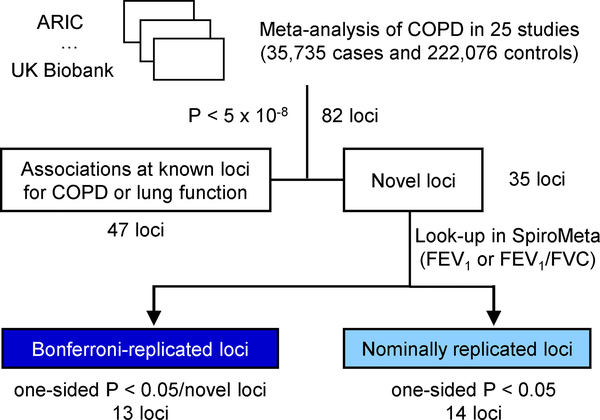
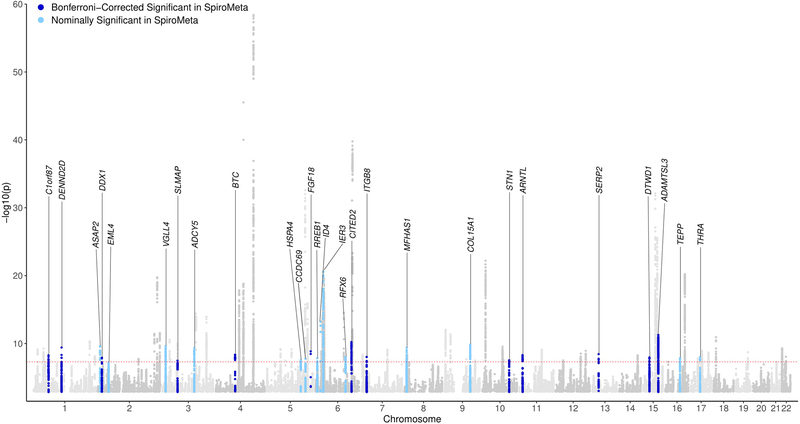
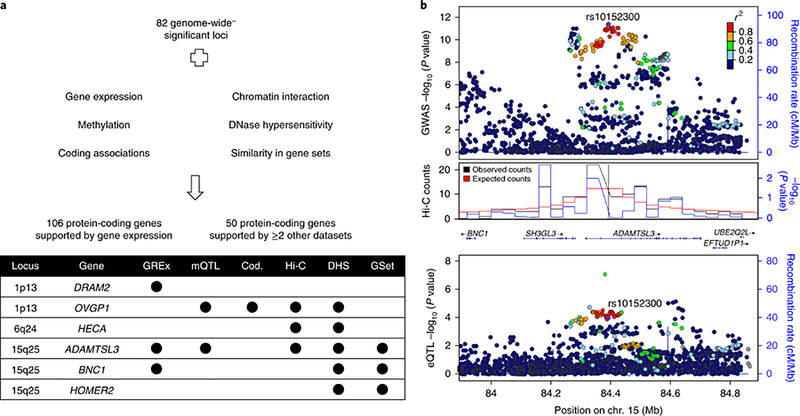
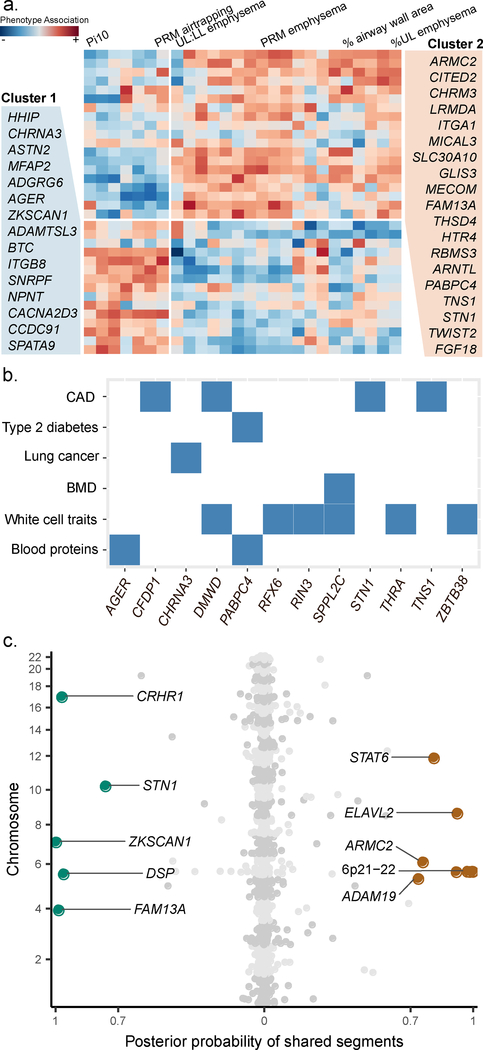
Chronic obstructive pulmonary disease (COPD) is the leading cause of respiratory mortality worldwide. Genetic risk loci provide new insights into disease pathogenesis. We performed a genome-wide association study in 35,735 cases and 222,076 controls from the UK Biobank and additional studies from the International COPD Genetics Consortium. We identified 82 loci associated with P < 5 × 10⁻⁸; 47 of these were previously described in association with either COPD or population-based measures of lung function. Of the remaining 35 new loci, 13 were associated with lung function in 79,055 individuals from the SpiroMeta consortium. Using gene expression and regulation data, we identified functional enrichment of COPD risk loci in lung tissue, smooth muscle, and several lung cell types. We found 14 COPD loci shared with either asthma or pulmonary fibrosis. COPD genetic risk loci clustered into groups based on associations with quantitative imaging features and comorbidities. Our analyses provide further support for the genetic susceptibility and heterogeneity of COPD.
Figures
References
-
- GBD 2015 Chronic Respiratory Disease Collaborators. Global, regional, and national deaths, prevalence, disability-adjusted life years, and years lived with disability for chronic obstructive pulmonary disease and asthma, 1990–2015: a systematic analysis for the Global Burden of Disease Study 2015. Lancet. Respir. Med 5, 691–706 (2017). - PMC - PubMed
-
- Global Health Estimates 2016: Deaths by Cause, Age, Sex, by Country and by Region, 2000–2016. (2018).
Publication types
MeSH terms
Grants and funding
- MR/N024842/1/MRC_/Medical Research Council/United Kingdom
- G1000861/MRC_/Medical Research Council/United Kingdom
- MC_PC_12010/MRC_/Medical Research Council/United Kingdom
- R01 HL089856/HL/NHLBI NIH HHS/United States
- MR/K026992/1/MRC_/Medical Research Council/United Kingdom
- R01 HL135142/HL/NHLBI NIH HHS/United States
- P01 HL105339/HL/NHLBI NIH HHS/United States
- R01 HL137927/HL/NHLBI NIH HHS/United States
- R01 HL097163/HL/NHLBI NIH HHS/United States
- 202849/Z/16/Z/WT_/Wellcome Trust/United Kingdom
- P01 HL132825/HL/NHLBI NIH HHS/United States
- R01 HL084323/HL/NHLBI NIH HHS/United States
- MC_UU_00007/10/MRC_/Medical Research Council/United Kingdom
- R01 HL113264/HL/NHLBI NIH HHS/United States
- MC_QA137853/MRC_/Medical Research Council/United Kingdom
- MR/N011317/1/MRC_/Medical Research Council/United Kingdom
- R01 HL111024/HL/NHLBI NIH HHS/United States
- U01 HL089856/HL/NHLBI NIH HHS/United States
- K08 HL136928/HL/NHLBI NIH HHS/United States
- K01 HL129039/HL/NHLBI NIH HHS/United States
- T32 HL007085/HL/NHLBI NIH HHS/United States
- MR/S003762/1/MRC_/Medical Research Council/United Kingdom
- G0700704/MRC_/Medical Research Council/United Kingdom
- R33 HL120770/HL/NHLBI NIH HHS/United States
- MC_PC_17228/MRC_/Medical Research Council/United Kingdom
- BB/F019394/1/BB_/Biotechnology and Biological Sciences Research Council/United Kingdom
LinkOut - more resources
Full Text Sources
Other Literature Sources
Medical
