


A Systemic Review of Functional Near-Infrared Spectroscopy for Stroke: Current Application and Future Directions
- PMID: 30804877
- PMCID: PMC6371039
- DOI: 10.3389/fneur.2019.00058
A Systemic Review of Functional Near-Infrared Spectroscopy for Stroke: Current Application and Future Directions
Abstract
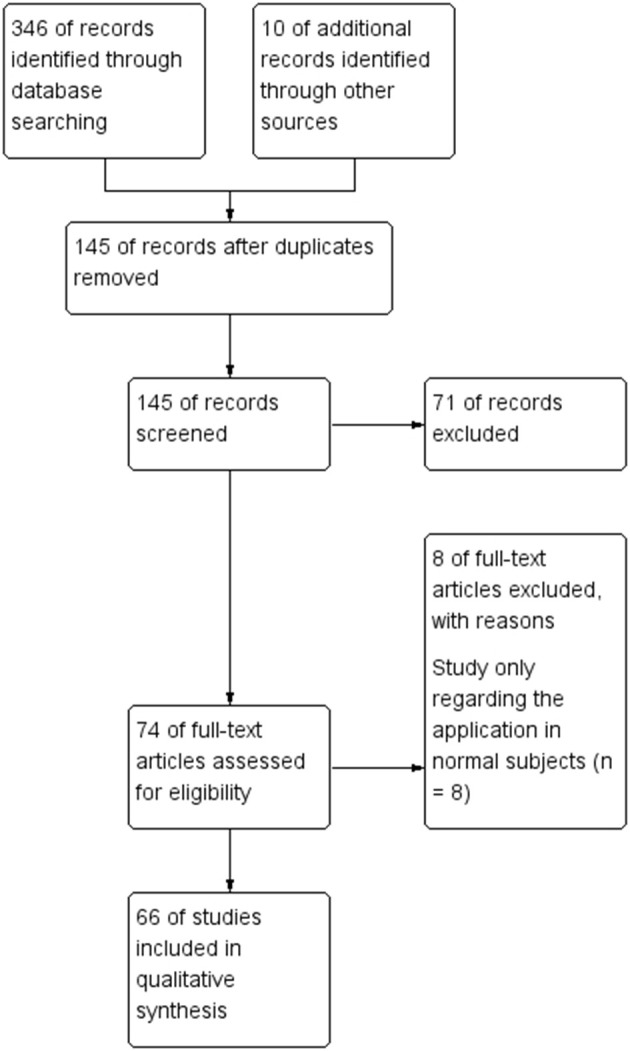
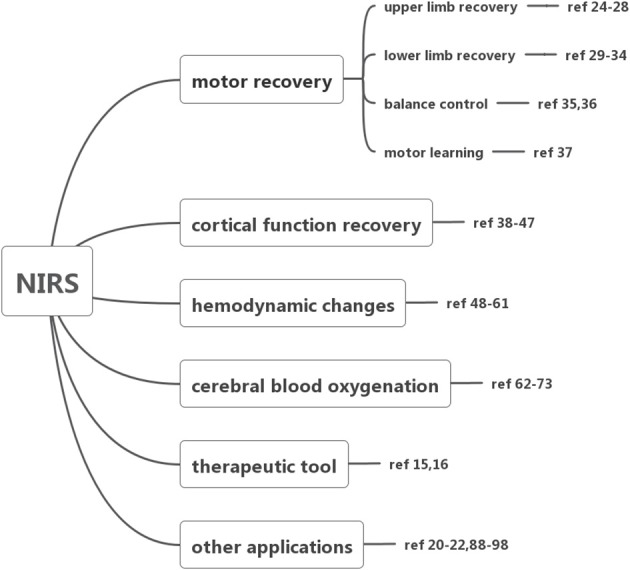
Background: Survivors of stroke often experience significant disability and impaired quality of life. The recovery of motor or cognitive function requires long periods. Neuroimaging could measure changes in the brain and monitor recovery process in order to offer timely treatment and assess the effects of therapy. A non-invasive neuroimaging technique near-infrared spectroscopy (NIRS) with its ambulatory, portable, low-cost nature without fixation of subjects has attracted extensive attention. Methods: We conducted a comprehensive literature review in order to review the use of NIRS in stroke or post-stroke patients in July 2018. NCBI Pubmed database, EMBASE database, Cochrane Library and ScienceDirect database were searched. Results: Overall, we reviewed 66 papers. NIRS has a wide range of application, including in monitoring upper limb, lower limb recovery, motor learning, cortical function recovery, cerebral hemodynamic changes, cerebral oxygenation, as well as in therapeutic method, clinical researches, and evaluation of the risk for stroke. Conclusions: This study provides a preliminary evidence of the application of NIRS in stroke patients as a monitoring, therapeutic, and research tool. Further studies could give more emphasize on the combination of NIRS with other techniques and its utility in the prevention of stroke.
Keywords: cortical function; motor recovery; near-infrared spectroscopy; stroke; systemic review.
Figures
References
-
- Schweizer TA, Schweizer TA, Fachgebiete H. The behavioral consequences of stroke (2013).
LinkOut - more resources
Full Text Sources
Other Literature Sources
