


Shared Medical and Environmental Risk Factors in Dry Eye Syndrome, Sjogren's Syndrome, and B-Cell Non-Hodgkin Lymphoma: A Case-Control Study
- PMID: 30805374
- PMCID: PMC6360537
- DOI: 10.1155/2019/9060842
Shared Medical and Environmental Risk Factors in Dry Eye Syndrome, Sjogren's Syndrome, and B-Cell Non-Hodgkin Lymphoma: A Case-Control Study
Abstract
Objectives: To assess whether there are shared exposures associated with Sjogren's syndrome (SS), dry eye syndrome (DES), and B-cell non-Hodgkin lymphoma (B-NHL), in order to determine whether they are etiologically related.
Methods: In a clinic-based case-control study, 702 participants (91 SS, 120 DES, 211 (age and sex frequency-matched) controls, and 280 B-NHL cases) were recruited and interviewed regarding exposures, medical history, and family history.
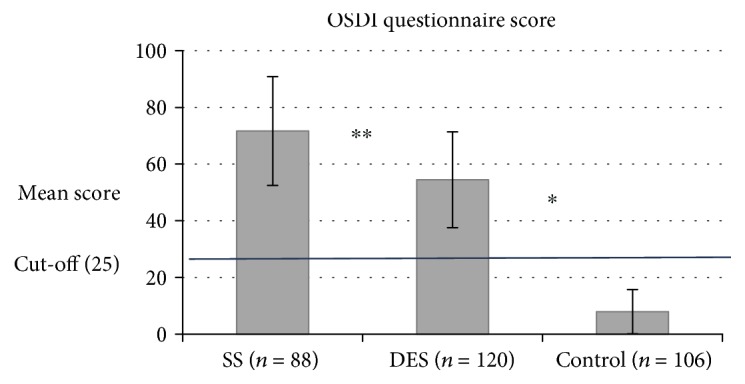
Results: Female predominance was noted in SS (ratio 9.2 : 1). Eye dryness was severest in SS compared to DES and controls (P < 0.001). Compared to controls, alcohol consumption was inversely associated with NHL, DES, and SS (odds ratio (OR) = 0.47, 95% confidence interval (CI): 0.31-0.71; OR = 0.54, 95% CI: 0.33-0.88; and OR = 0.26, 95% CI: 0.14-0.49, respectively), while a previous history of infection requiring hospitalization was positively associated with all three conditions: NHL (OR = 1.92; 95% CI: 1.23-2.99), DES (OR = 3.29; 95% CI: 1.97-5.47), and SS (OR = 4.74; 95% CI: 2.66-8.44). NHL patients were more likely to report first-degree relatives with hematologic cancer, while having first-degree relatives with an autoimmune disease (AID) was associated with SS (OR = 5.25; 95% CI: 2.59-10.63) and DES (OR = 3.55; 95% CI: 1.83-6.91) compared to controls.
Conclusions: Some exposures are associated with all three conditions (such as an inverse association with alcohol consumption and a positive association with serious past infection), while a family history of AID appears to be shared by DES and SS, but not NHL subjects. Shared risk factors for all three conditions indicate possible mutual etiological pathways.
Figures
References
MeSH terms
LinkOut - more resources
Full Text Sources
Medical
Miscellaneous
