


Regulatory mechanisms in postsynaptic phosphorylation networks
- PMID: 30807903
- PMCID: PMC7018365
- DOI: 10.1016/j.sbi.2019.01.003
Regulatory mechanisms in postsynaptic phosphorylation networks
Abstract
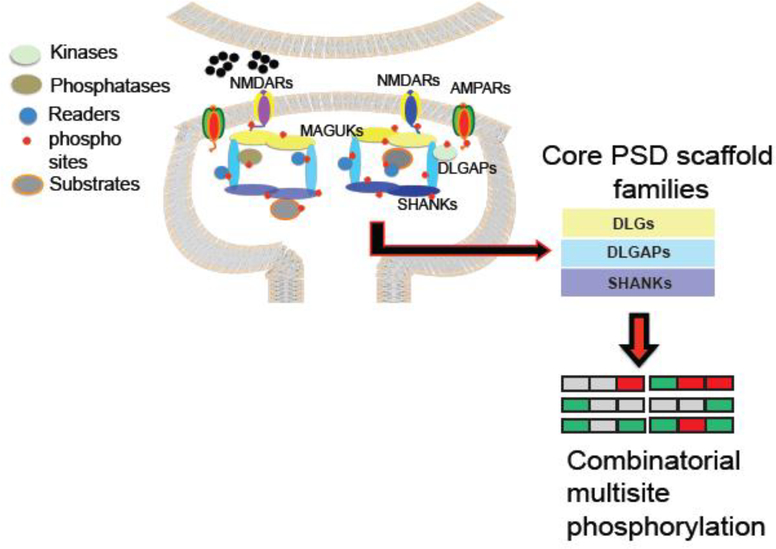
The modulation of the postsynaptic signaling machinery by protein phosphorylation has attracted much interest since it is key for the understanding of the regulation of a variety of synaptic functions. While advances in mass spectrometry have allowed us to begin performing large-scale analysis of protein phosphorylation in components of the PSD, the systematic collection of datasets and their functional significance within the context of regulatory signaling networks is in its infancy. Here, we will focus on the composition of the PSD phosphoproteome describing kinase, phosphatase, and protein domain modules involved in the regulation of phosphorylation signaling. We will discuss the impact of synaptic plasticity mechanisms such as long-term potentiation (LTP) in mammalian kinomes and describe the general rules of signaling organization in the PSD phosphoproteome.
Copyright © 2019 Elsevier Ltd. All rights reserved.
Figures


References
-
- Collins MO, Husi H, Yu L, Brandon JM, Anderson CN, Blackstock WP, Choudhary JS, Grant SG: Molecular characterization and comparison of the components and multiprotein complexes in the postsynaptic proteome. J Neurochem 2006, 97 Suppl 1:16–23. - PubMed
-
- Cheng D, Hoogenraad CC, Rush J, Ramm E, Schlager MA, Duong DM, Xu P, Wijayawardana SR, Hanfelt J, Nakagawa T, et al. : Relative and absolute quantification of postsynaptic density proteome isolated from rat forebrain and cerebellum. Mol Cell Proteomics 2006, 5:1158–1170. - PubMed
Publication types
MeSH terms
Substances
Grants and funding
LinkOut - more resources
Full Text Sources
