


Socio-demographic patterns in hospital admissions and accident and emergency attendances among young people using linkage to NHS Hospital Episode Statistics: results from the Avon Longitudinal Study of Parents and Children
- PMID: 30808346
- PMCID: PMC6390368
- DOI: 10.1186/s12913-019-3922-7
Socio-demographic patterns in hospital admissions and accident and emergency attendances among young people using linkage to NHS Hospital Episode Statistics: results from the Avon Longitudinal Study of Parents and Children
Abstract
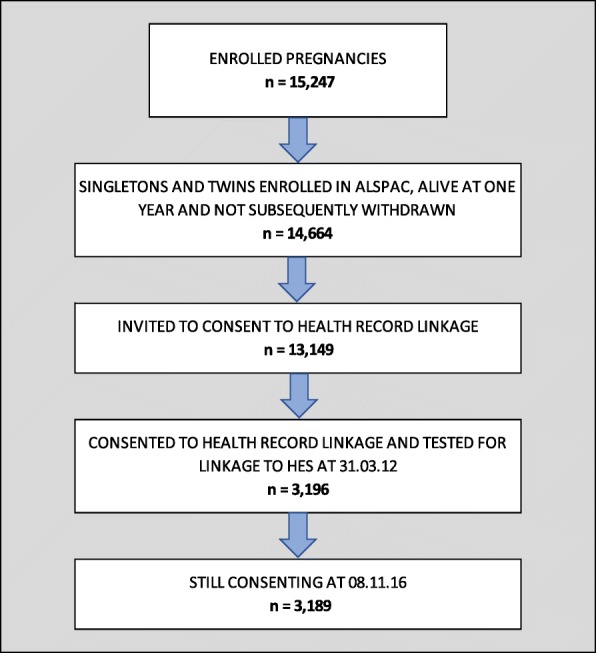
Background: In England emergency hospital admissions among children are increasing and the under 25s are the most frequent attenders of A&E departments. Children of lower socio-economic status (SES) have poorer health outcomes and higher hospital admission rates. NHS Hospital Episode Statistics (HES) are increasingly being used for research but lack detailed data on individual characteristics such as SES. We report the results of an Avon Longitudinal Study of Parents and Children (ALSPAC) study that linked the data of 3,189 consenting participants to HES. We describe rates of hospital admission, emergency readmissions, and A&E attendances and examine socio-demographic correlates of these.
Methods: Subjects were singletons and twins enrolled in ALSPAC who had provided consent for linkage to their health records by the study cut-off date (31.02.12). Linkage was carried out by the Health and Social Care Information Centre (now NHS Digital). We examined rates of admissions between birth and age 20 and A&E attendances between 14 and 20 years. Socio-demographic information collected in ALSPAC questionnaires during pregnancy were used to examine factors associated with admissions, emergency readmissions (an emergency admission within 30 days of discharge) and A&E attendances.
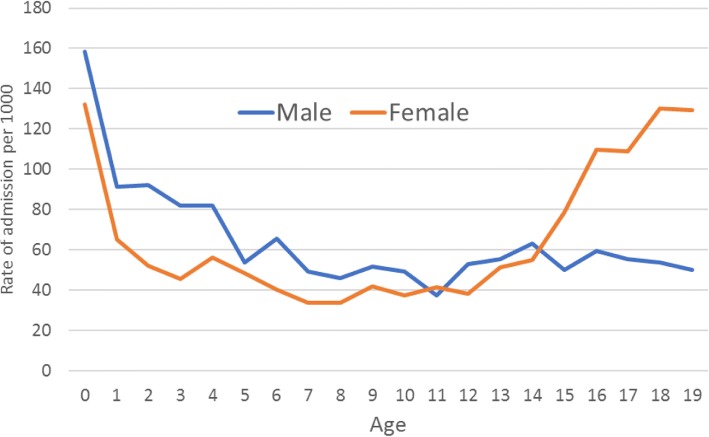
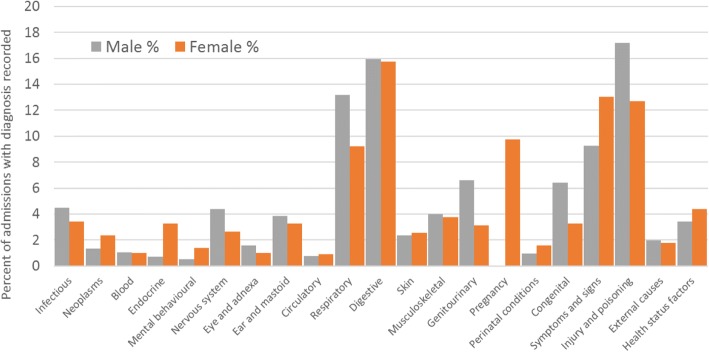
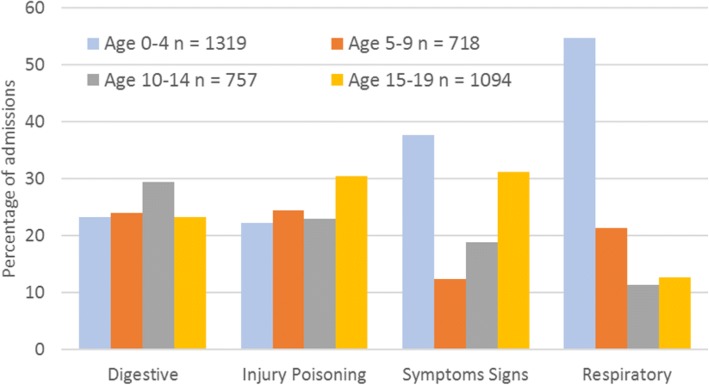
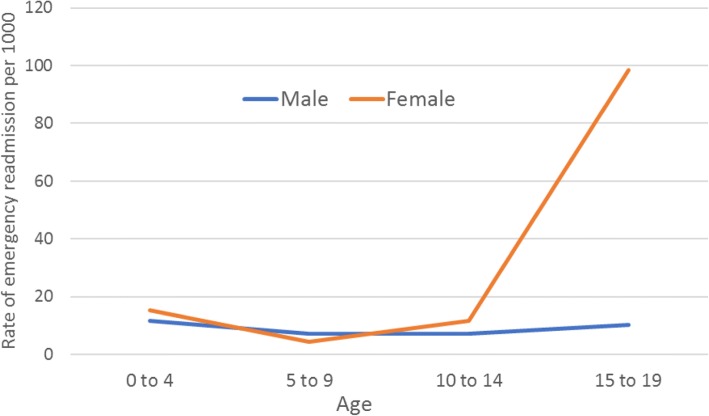
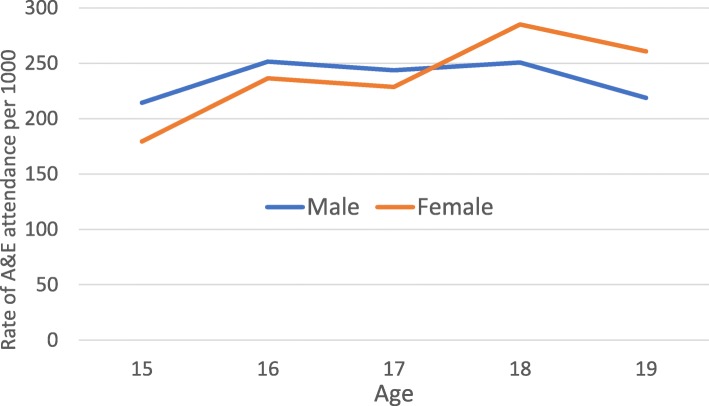
Results: Excluding birth records, we found at least one admission for 1,792/3,189 (56.2%) participants and 4,305 admissions in total. Admission rates were highest in the first year of life. Among males, admissions declined until about age 5 and then remained relatively stable; conversely, among females, they increased sharply from the age of 15. ICD 10 chapters for diseases of the digestive system and injury and poisoning accounted for the largest proportions of admissions (15.8 and 14.5%, respectively). Tooth decay was the highest single cause of admission for those aged 5-9 years. Overall, 1,518/3,189 (47.6%) of participants attended A&E at least once, with a total of 3,613 attendances between age 14 and 20 years. Individuals from more deprived backgrounds had higher rates of admissions, readmissions and A&E attendances.
Conclusions: Linkage between cohort studies such as ALSPAC and HES data provides unique opportunities for detailed insights into socio-demographic and other determinants of hospital activity, which can inform secondary care demand management in the NHS.
Keywords: ALSPAC; Accident and emergency attendance; Children and young people; Hospital admissions; NHS; Record linkage; Socio-economic status.
Conflict of interest statement
Ethics approval and consent to participate
Ethical approval for the study was obtained from the ALSPAC Ethics and Law Committee and the Local Research Ethics Committees. Health Research Authority ethics approval for this linkage was given by the North West (Haydock) Committee, reference number: 10/H1010/70. Written informed consent was obtained from all participants.
Consent for publication
Not applicable.
Competing interests
The authors declare they have no competing interests.
Publisher’s Note
Springer Nature remains neutral with regard to jurisdictional claims in published maps and institutional affiliations.
Figures
References
-
- Maguire D, Dunn P, McKenna H: How hospital activity in the NHS in England has changed over time. The Kings Fund 2016. https://www.kingsfund.org.uk/publications/hospital-activity-funding-changes. Accessed 15 September 2017.
-
- NHS Digital. Hospital Accident and Emergency Activity, Secondary Care Analysis. 2015. http://www.content.digital.nhs.uk/catalogue/PUB23070 Accessed 18 August ....
-
- Keeble E, Kossarova L. Focus on: Emergency hospital care for children and young people, QualityWatch Research Report. The Health Foundation and Nuffield Trust 2017. https://www.nuffieldtrust.org.uk/research/focus-on-emergency-hospital-ca... Accessed 18 August 2017.
MeSH terms
Grants and funding
LinkOut - more resources
Full Text Sources
