


Scar overlapping suture for treating chronic tendinous mallet finger in children
- PMID: 30808392
- PMCID: PMC6390556
- DOI: 10.1186/s13018-019-1106-0
Scar overlapping suture for treating chronic tendinous mallet finger in children
Abstract
Purpose: To evaluate the effect of scar overlapping suture for treating chronic tendinous mallet finger deformity in children.
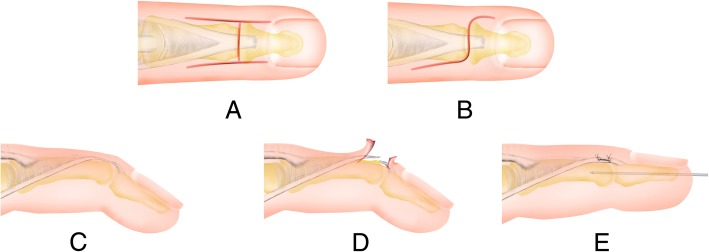
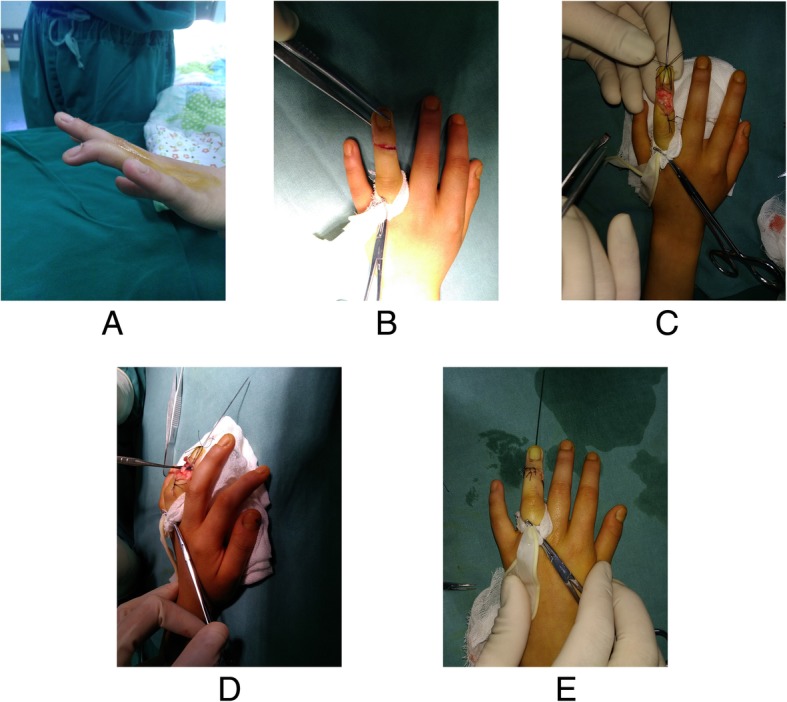
Methods: Six patients younger than 18 years were investigated retrospectively. The active extensor lags of the distal interphalangeal joint (DIPJ) were all more than 40°, and the passive ranges of DIPJ motion were normal. They were all treated surgically by scar overlapping suture technique, featuring careful overlapping suture of the extensor scar and temporary transarticular Kirschner wire fixation of the DIPJ.
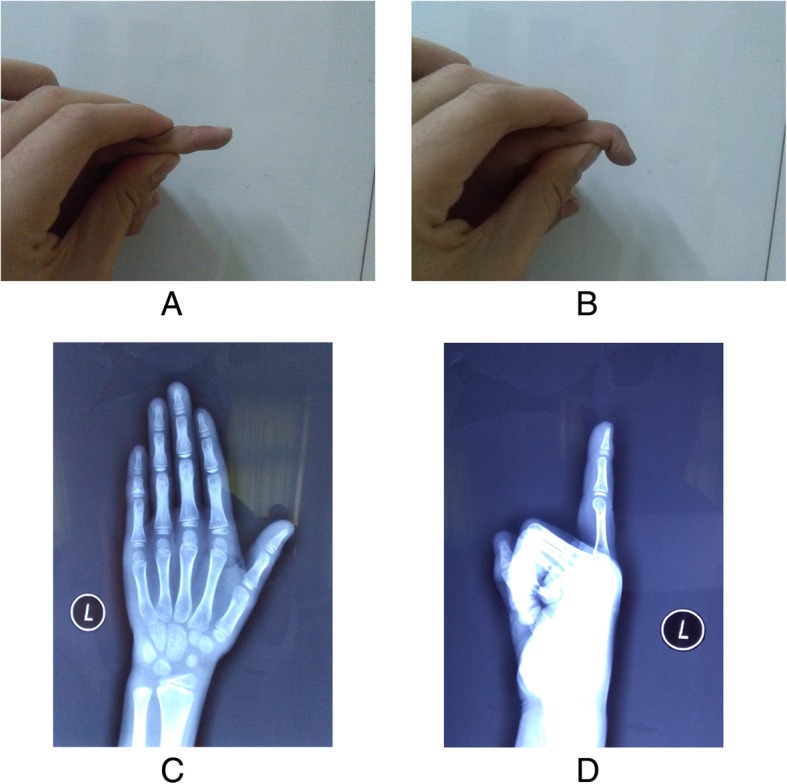
Results: Average follow-up was 3.1 years (ranging from 2 to 5 years). All patients made significant improvement in DIPJ activity. Three patients achieved full active DIPJ extension, whereas one patient had a 10° extensor lag and two patients had 5° extensor lags. All patients achieved normal active flexion ranges and full passive motion ranges of DIPJ compared with their uninjured side. There was no bone dysplasia, pain, or deformity recurrence.
Conclusions: Scar overlapping suture for treating chronic tendinous mallet finger in children is safe and effective. According to the Crawford criteria, all patients were graded as excellent.
Keywords: Children; Mallet finger; Tendon repair.
Conflict of interest statement
Ethics approval and consent to participate
This study follows verbal consent from Institutional Review Board of Hebei Medical University. As this study has a retrospective design, the need for informed consent was waived by the Institutional Review Board.
Consent for publication
Not applicable
Competing interests
The authors declare that they have no competing interests.
Publisher’s Note
Springer Nature remains neutral with regard to jurisdictional claims in published maps and institutional affiliations.
Figures
References
MeSH terms
LinkOut - more resources
Full Text Sources
Medical
