


Sialyllactose and Galactooligosaccharides Promote Epithelial Barrier Functioning and Distinctly Modulate Microbiota Composition and Short Chain Fatty Acid Production In Vitro
- PMID: 30809221
- PMCID: PMC6380229
- DOI: 10.3389/fimmu.2019.00094
Sialyllactose and Galactooligosaccharides Promote Epithelial Barrier Functioning and Distinctly Modulate Microbiota Composition and Short Chain Fatty Acid Production In Vitro
Erratum in
-
Corrigendum: Sialyllactose and Galactooligosaccharides Promote Epithelial Barrier Functioning and Distinctly Modulate Microbiota Composition and Short Chain Fatty Acid Production In Vitro.Front Immunol. 2019 Apr 10;10:762. doi: 10.3389/fimmu.2019.00762. eCollection 2019. Front Immunol. 2019. PMID: 31024573 Free PMC article.
Abstract
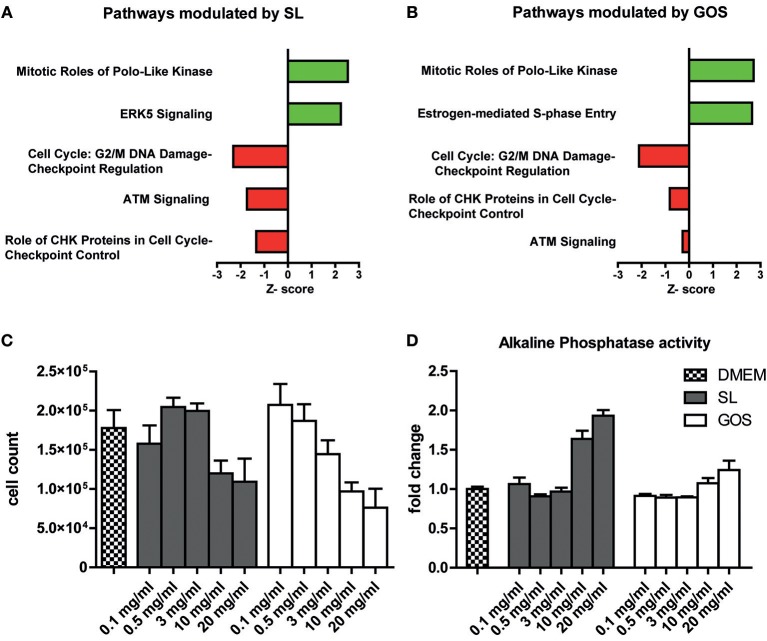
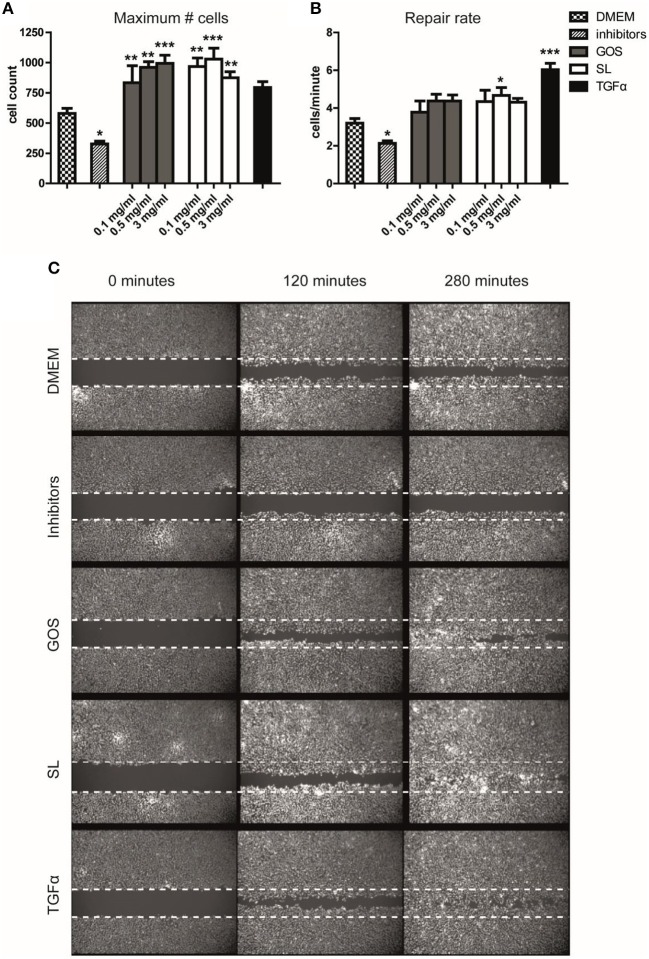
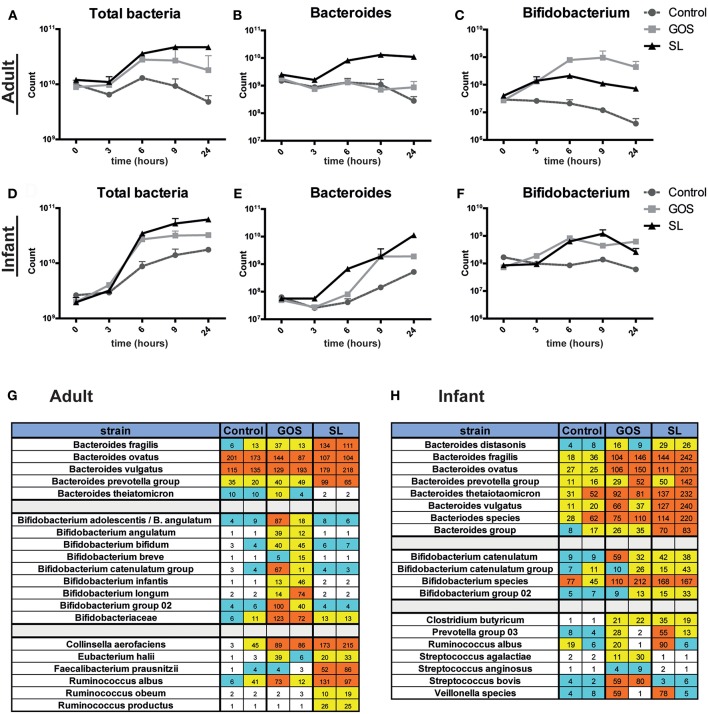
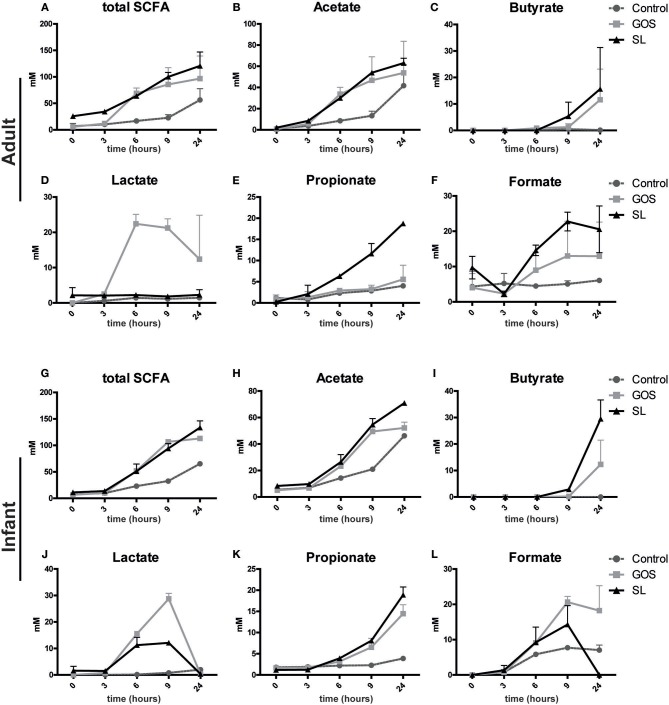
Human milk oligosaccharides (HMO) and prebiotic oligosaccharides are proposed to confer several health benefits to the infant. They shape the microbiota, have anti-inflammatory properties, and support epithelial barrier functioning. However, in order to select the best oligosaccharides for inclusion in infant formulas, there is a need to increase our understanding of the specific effects of HMO and prebiotics on the host immune system. Therefore, we investigated the effects of the HMO sialyllactose (SL), and galactooligosaccharides (GOS) on epithelial barrier functioning, microbiota composition, and SCFA production. The effect of GOS and SL on epithelial barrier functioning and microbiota composition was investigated using in vitro models. Epithelial barrier function was investigated by transcriptome analysis of fully polarized Caco-2 cells exposed for 6 h to SL or GOS. In addition, epithelial cell growth, alkaline phosphatase production, and re-epithelization was studied. Further, we investigated the effect of SL and GOS on microbiota composition and SCFA production using in vitro fecal batch cultures. Transcriptome analysis showed that SL and GOS both induced pathways that regulate cell cycle control. This gene-expression profile translated to a phenotype of halted proliferation and included the induction of alkaline phosphatase activity, a marker of epithelial cell differentiation. SL and GOS also promoted re-epithelialization in an in vitro epithelial wound repair assay. SL and GOS did show distinct modulation of microbiota composition, promoting the outgrowth of Bacteroides and bifidobacteria, respectively, which resulted in distinct changes in SCFA production profiles. Our results show that SL and GOS can both modulate epithelial barrier function by inducing differentiation and epithelial wound repair, but differentially promote the growth of specific genera in the microbiota, which is associated with differential changes in SCFA profiles.
Keywords: epithelium; galactooligosaccharides; microbiota; short chain fatty acids; sialyllactose.
Figures
References
-
- van Herwijnen MJC, Zonneveld MI, Goerdayal S, Nolte – 't Hoen ENM, Garssen J, Stahl B, et al. . Comprehensive proteomic analysis of human milk-derived extracellular vesicles unveils a novel functional proteome distinct from other milk components. Mol Cell Proteomics (2016) 15:3412–23. 10.1074/mcp.M116.060426 - DOI - PMC - PubMed
Publication types
MeSH terms
Substances
LinkOut - more resources
Full Text Sources
Other Literature Sources
