


Gut Microbiota and Chronic Constipation: A Review and Update
- PMID: 30809523
- PMCID: PMC6379309
- DOI: 10.3389/fmed.2019.00019
Gut Microbiota and Chronic Constipation: A Review and Update
Abstract
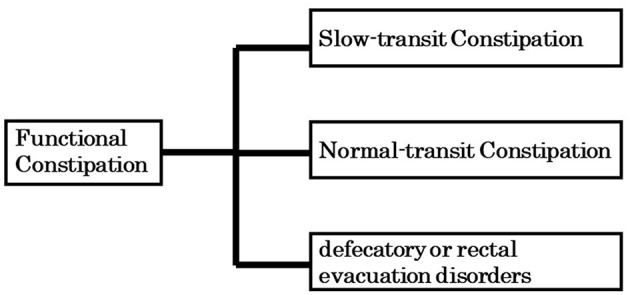
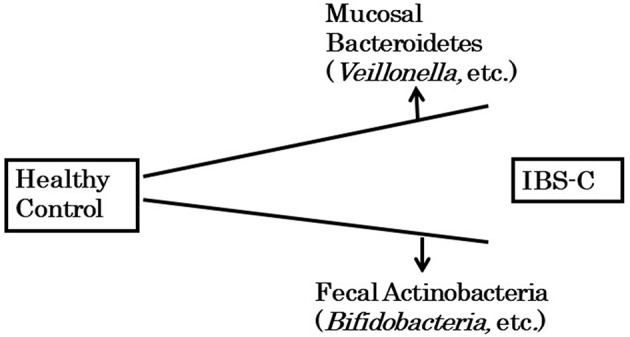
Background: Chronic constipation, including functional constipation and constipation-type irritable bowel syndrome, is a prevalent, multifactorial gastrointestinal disorder, and its etiology and pathophysiology remain poorly understood. Recently studies using 16S rRNA-based microbiota profiling have demonstrated dysbiosis of gut microbiota in chronic constipation. Aims: To provide an overview of recent studies for microbiota in chronic constipation and treatments for chronic constipation using probiotics, prebiotics, synbiotics, antibiotics and fecal microbiota transplantation (FMT). Methods: PubMed searches were performed up to 1 August 2018 using keywords: "IBS," "IBS-C," "irritable bowel syndrome," "irritable bowel syndrome with constipation," "functional constipation," "chronic constipation" in combination with "gut microbiota," "dysbiosis," "gut microflora" for microbiota in chronic constipation, and in combination with "probiotics," "prebiotics," "synbiotics," "antibiotics," and "fecal microbiota transplantation." Results: The findings of gut microbiota in functional constipation are inconsistent, and currently no consensus exists. Although no clear consensus exists, compared with healthy subjects, IBS-C patients have a lower level of Actinobacteria, including Bifidobacteria, in their fecal samples and a higher level of Bacteroidetes in their mucosa. In most randomized controlled and parallel-group trials, probiotics, prebiotics, synbiotics, antibiotics, and FMT therapy for chronic constipation were effective with few side effects. However, there are many studies in a small number and the types of probiotics are different, it is difficult to evaluate the effect. Conclusions: Evidence indicates that dysbiosis of gut microbiota may contribute to functional constipation and constipation-type irritable bowel syndrome. Targeting treatments for the dysbiosis of constipation by probiotics, prebiotics, synbiotics, antibiotics, and FMT may be a new option, especially for refractory constipation to conventional therapies.
Keywords: FMT; antibiotics; chronic constipation; functional constipation; gut microbiota; irritable bowel syndrome with constipation; probiotics; synbiotics.
Figures
References
Publication types
LinkOut - more resources
Full Text Sources
Other Literature Sources
Medical
