


BRD4 inhibition attenuates inflammatory response in microglia and facilitates recovery after spinal cord injury in rats
- PMID: 30809946
- PMCID: PMC6484335
- DOI: 10.1111/jcmm.14196
BRD4 inhibition attenuates inflammatory response in microglia and facilitates recovery after spinal cord injury in rats
Abstract
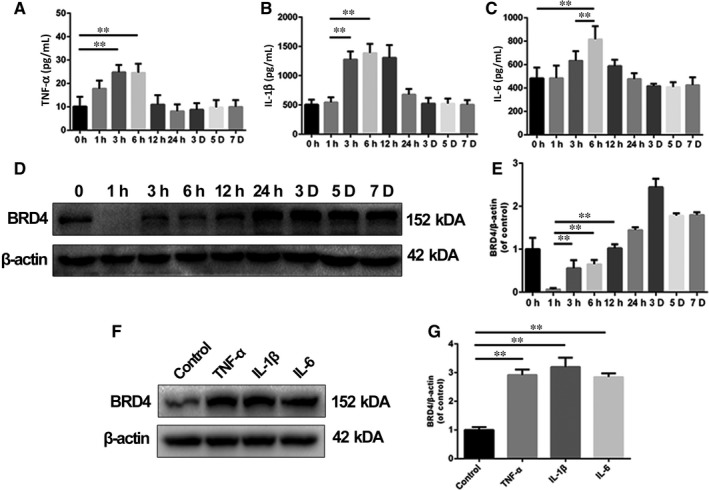
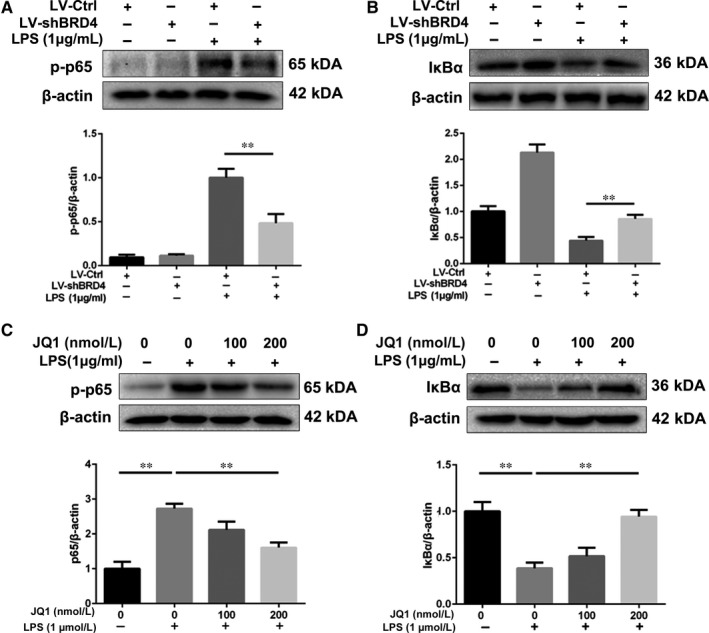
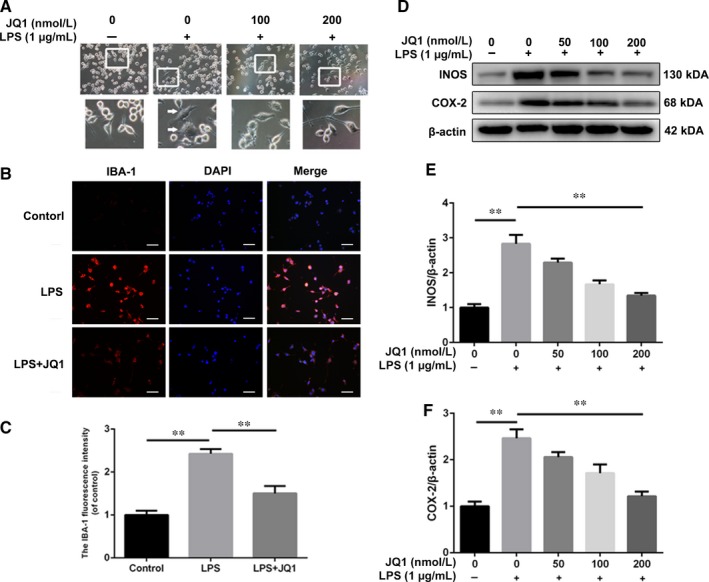
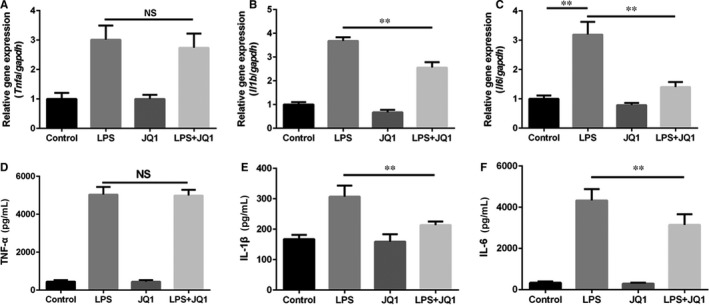
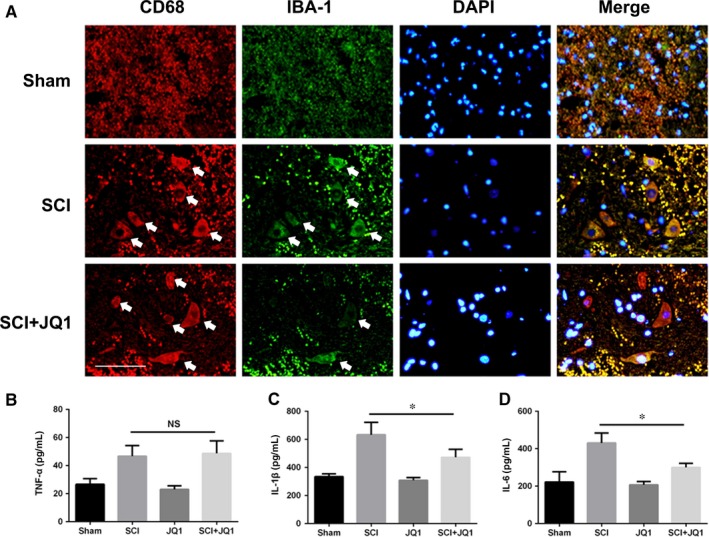
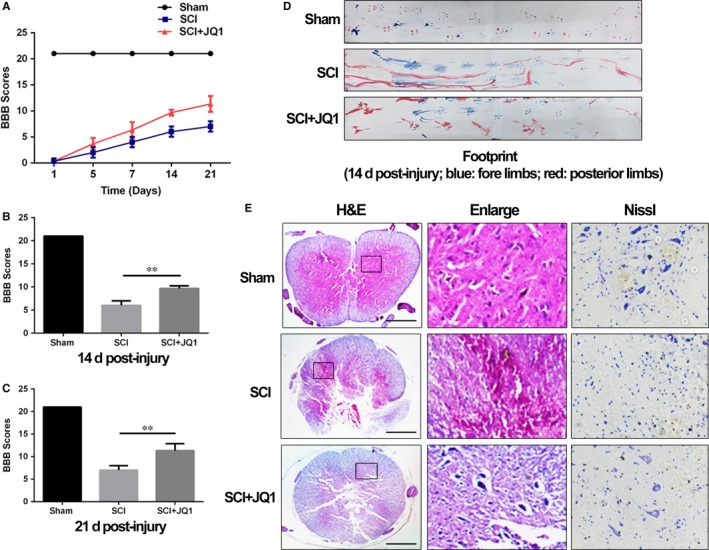
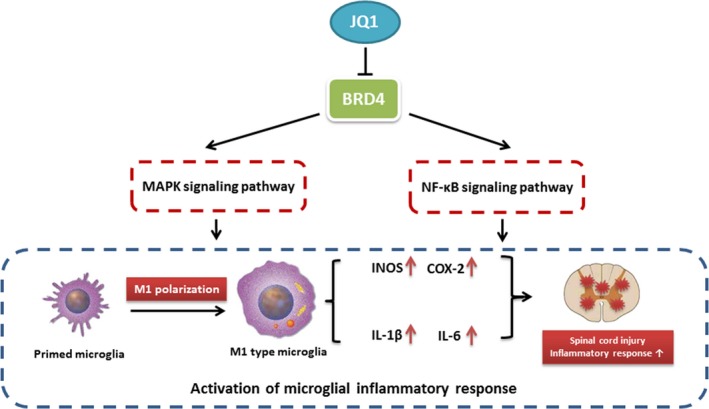
The pathophysiology of spinal cord injury (SCI) involves primary injury and secondary injury. For the irreversibility of primary injury, therapies of SCI mainly focus on secondary injury, whereas inflammation is considered to be a major target for secondary injury; however the regulation of inflammation in SCI is unclear and targeted therapies are still lacking. In this study, we found that the expression of BRD4 was correlated with pro-inflammatory cytokines after SCI in rats; in vitro study in microglia showed that BRD4 inhibition either by lentivirus or JQ1 may both suppress the MAPK and NF-κB signalling pathways, which are the two major signalling pathways involved in inflammatory response in microglia. BRD4 inhibition by JQ1 not only blocked microglial M1 polarization, but also repressed the level of pro-inflammatory cytokines in microglia in vitro and in vivo. Furthermore, BRD4 inhibition by JQ1 can improve functional recovery and structural disorder as well as reduce neuron loss in SCI rats. Overall, this study illustrates that microglial BRD4 level is increased after SCI and BRD4 inhibition is able to suppress M1 polarization and pro-inflammatory cytokine production in microglia which ultimately promotes functional recovery after SCI.
Keywords: BRD4; JQ1; inflammation; microglia; spinal cord injury.
© 2019 The Authors. Journal of Cellular and Molecular Medicine published by John Wiley & Sons Ltd and Foundation for Cellular and Molecular Medicine.
Conflict of interest statement
The authors declare no conflicts of interest.
Figures

References
-
- Ahuja CS, Wilson JR, Nori S, et al. Traumatic spinal cord injury. Nat Rev Dis Primers. 2017;3:17018. - PubMed
-
- Blight AR. Delayed demyelination and macrophage invasion: a candidate for secondary cell damage in spinal cord injury. Cent Nerv Syst Trauma. 1985;2:299‐315. - PubMed
-
- Tator CH. Update on the pathophysiology and pathology of acute spinal cord injury. Brain Pathol. 1995;5:407‐413. - PubMed
Publication types
MeSH terms
Substances
LinkOut - more resources
Full Text Sources
Medical
