


A Genetic Investigation of the Well-Being Spectrum
- PMID: 30810878
- PMCID: PMC6497622
- DOI: 10.1007/s10519-019-09951-0
A Genetic Investigation of the Well-Being Spectrum
Erratum in
-
Correction to: A Genetic Investigation of the Well-Being Spectrum.Behav Genet. 2019 May;49(3):298. doi: 10.1007/s10519-019-09956-9. Behav Genet. 2019. PMID: 30900060 Free PMC article.
Abstract
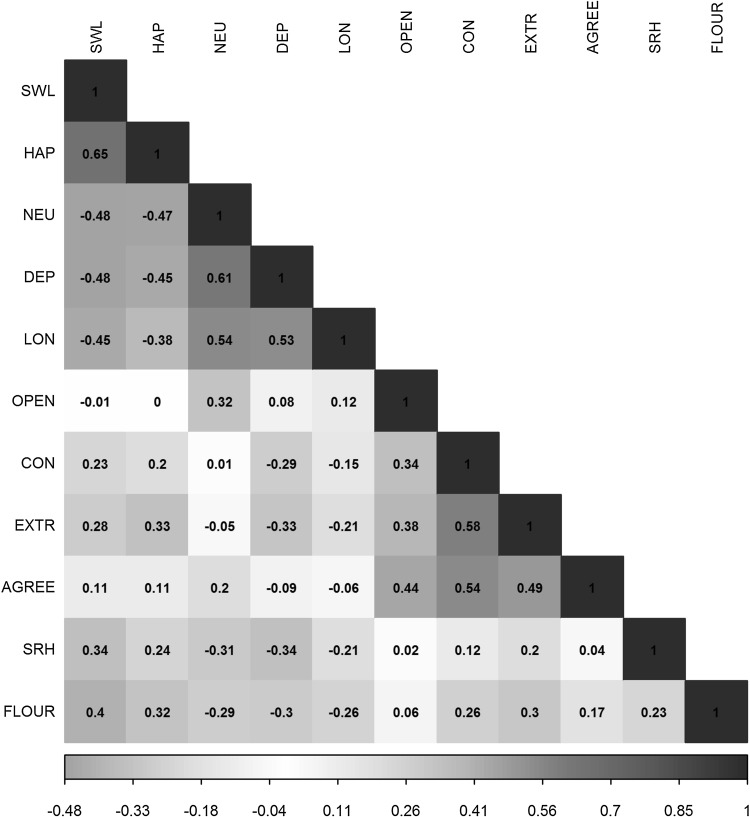
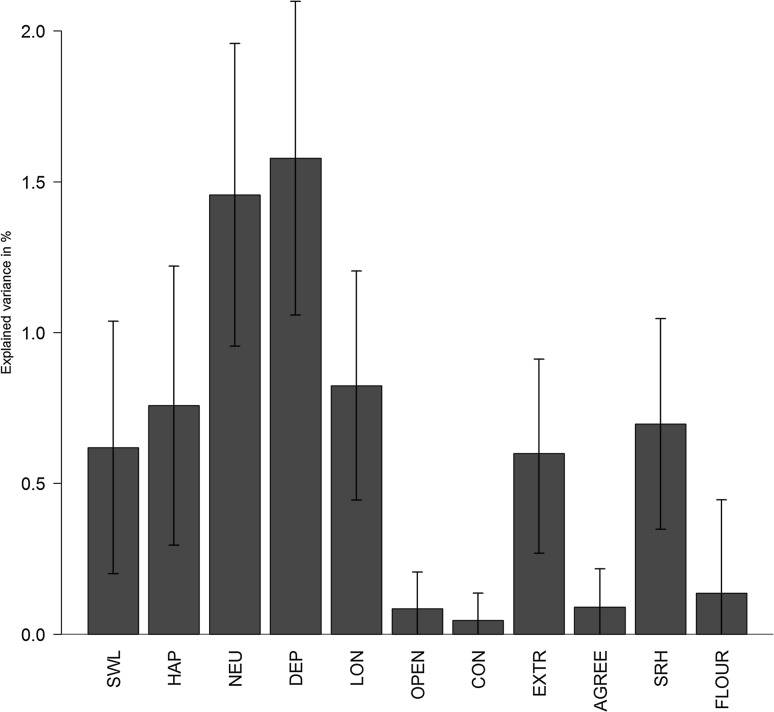
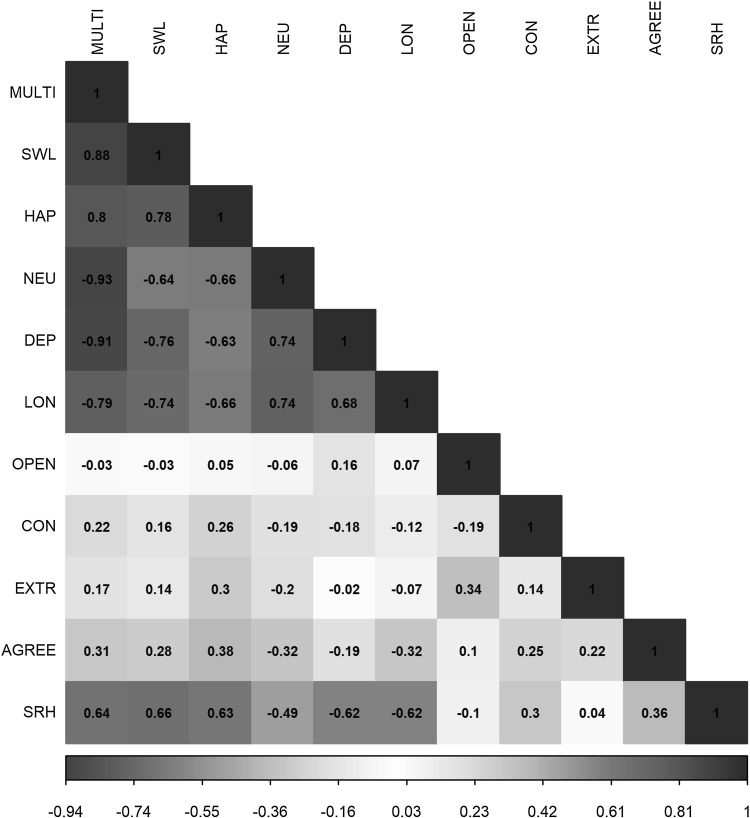
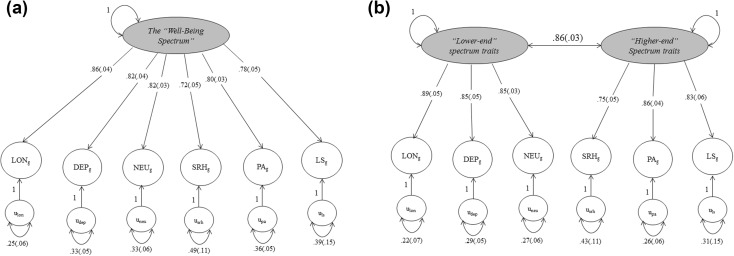
The interrelations among well-being, neuroticism, and depression can be captured in a so-called well-being spectrum (3-phenotype well-being spectrum, 3-WBS). Several other human traits are likely linked to the 3-WBS. In the present study, we investigate how the 3-WBS can be expanded. First, we constructed polygenic risk scores for the 3-WBS and used this score to predict a series of traits that have been associated with well-being in the literature. We included information on loneliness, big five personality traits, self-rated health, and flourishing. The 3-WBS polygenic score predicted all the original 3-WBS traits and additionally loneliness, self-rated health, and extraversion (R2 between 0.62% and 1.58%). Next, using LD score regression, we calculated genetic correlations between the 3-WBS and the traits of interest. From all candidate traits, loneliness and self-rated health were found to have the strongest genetic correlations (rg = - 0.79, and rg= 0.64, respectively) with the 3-WBS. Lastly, we use Genomic SEM to investigate the factor structure of the proposed spectrum. The best model fit was obtained for a two-factor model including the 5-WBS traits, with two highly correlated factors representing the negative- and positive end of the spectrum. Based on these analyses we propose to include loneliness and self-rated health in the WBS and use a 5-phenotype well-being spectrum in future studies to gain more insight into the determinants of human well-being.
Keywords: Flourishing; Genetic correlation; Loneliness; Personality; Self-rated health; Well-being spectrum.
Conflict of interest statement
Conflict of interest
Baselmans, B.M.L, van de Weijer, M.P., Abdellaoui, A, Vink, J.M., Hottenga, J.J., Willemsen, G., Nivard, M.G., E.J.C. de Geus, Boomsma, D.I., Bartels, M declares that they have no conflict of interest.
Ethical approval
All procedures performed in studies involving human participants were in accordance with the ethical standards of the institutional and/or national research committee and with the 1964 Helsinki declaration and its later amendments or comparable ethical standards. This article does not contain any studies with animals performed by any of the authors.
Informed consent
Informed consent was obtained from all individual participants included in the study.
Figures
References
-
- Achenbach TM, Rescorla LA. Manual for the ASEBA Adult Forms & Profiles. Burlington: ASEBA; 2003.
-
- Baselmans BM, Jansen R, Ip HF, et al. Multivariate genome-wide analyses of the well-being spectrum. Nat Genet. 2019;51(2):1546–1718. - PubMed
Publication types
MeSH terms
Grants and funding
LinkOut - more resources
Full Text Sources
Research Materials
