


Advances in Therapeutic Implications of Inorganic Drug Delivery Nano-Platforms for Cancer
- PMID: 30813333
- PMCID: PMC6413464
- DOI: 10.3390/ijms20040965
Advances in Therapeutic Implications of Inorganic Drug Delivery Nano-Platforms for Cancer
Abstract
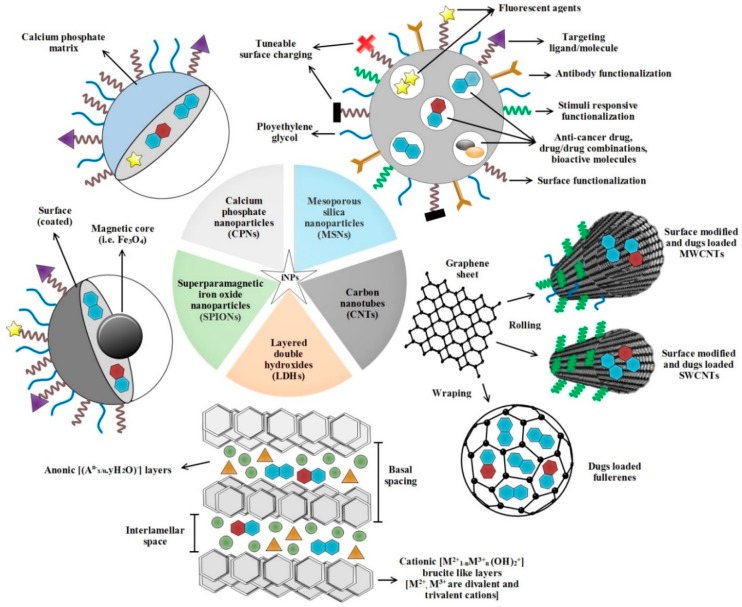
Numerous nanoparticles drug delivery systems for therapeutic implications in cancer treatment are in preclinical development as conventional chemotherapy has several drawbacks. A chemotherapeutic approach requires high doses of chemotherapeutic agents with low bioavailability, non-specific targeting, and above all, development of multiple drug resistance. In recent years, inorganic nano-drug delivery platforms (NDDPs; with a metal core) have emerged as potential chemotherapeutic systems in oncology. One of the major goals of developing inorganic NDDPs is to effectively address the targeted anti-cancer drug(s) delivery related problems by carrying the therapeutic agents to desired tumors sites. In this current review, we delve into summarizing the recent developments in targeted release of anti-cancer drugs loaded in inorganic NDDPs such as mesoporous silica nanoparticles, carbon nanotubes, layered double hydroxides, superparamagnetic iron oxide nanoparticles and calcium phosphate nanoparticles together with highlighting their therapeutic performance at tumor sites.
Keywords: cancer; drug delivery; inorganic agents; nano-carriers; therapeutics.
Conflict of interest statement
The authors declare no conflict of interest.
Figures
References
Publication types
MeSH terms
Substances
Grants and funding
LinkOut - more resources
Full Text Sources
