


Progression of Cystic Fibrosis Lung Disease from Childhood to Adulthood: Neutrophils, Neutrophil Extracellular Trap (NET) Formation, and NET Degradation
- PMID: 30813645
- PMCID: PMC6471578
- DOI: 10.3390/genes10030183
Progression of Cystic Fibrosis Lung Disease from Childhood to Adulthood: Neutrophils, Neutrophil Extracellular Trap (NET) Formation, and NET Degradation
Abstract
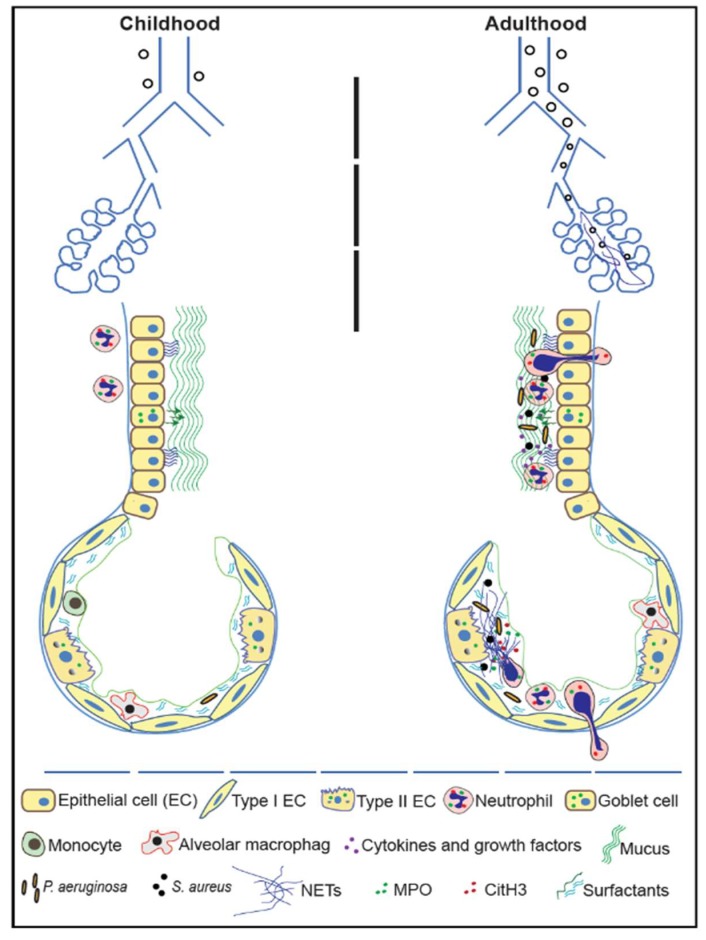
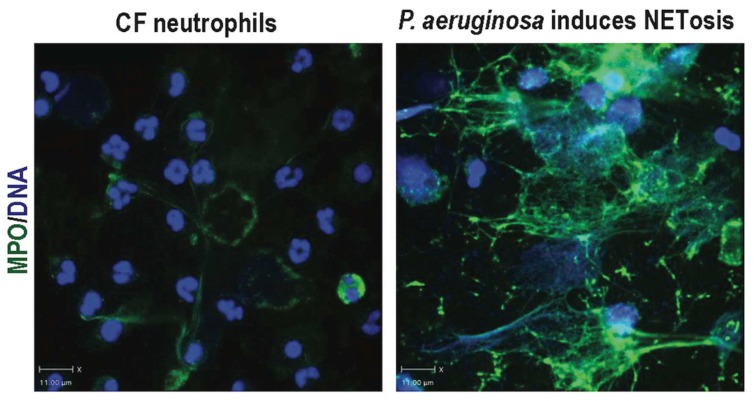
Genetic defects in cystic fibrosis (CF) transmembrane conductance regulator (CFTR) gene cause CF. Infants with CFTR mutations show a peribronchial neutrophil infiltration prior to the establishment of infection in their lung. The inflammatory response progressively increases in children that include both upper and lower airways. Infectious and inflammatory response leads to an increase in mucus viscosity and mucus plugging of small and medium-size bronchioles. Eventually, neutrophils chronically infiltrate the airways with biofilm or chronic bacterial infection. Perpetual infection and airway inflammation destroy the lungs, which leads to increased morbidity and eventual mortality in most of the patients with CF. Studies have now established that neutrophil cytotoxins, extracellular DNA, and neutrophil extracellular traps (NETs) are associated with increased mucus clogging and lung injury in CF. In addition to opportunistic pathogens, various aspects of the CF airway milieux (e.g., airway pH, salt concentration, and neutrophil phenotypes) influence the NETotic capacity of neutrophils. CF airway milieu may promote the survival of neutrophils and eventual pro-inflammatory aberrant NETosis, rather than the anti-inflammatory apoptotic death in these cells. Degrading NETs helps to manage CF airway disease; since DNAse treatment release cytotoxins from the NETs, further improvements are needed to degrade NETs with maximal positive effects. Neutrophil-T cell interactions may be important in regulating viral infection-mediated pulmonary exacerbations in patients with bacterial infections. Therefore, clarifying the role of neutrophils and NETs in CF lung disease and identifying therapies that preserve the positive effects of neutrophils, while reducing the detrimental effects of NETs and cytotoxic components, are essential in achieving innovative therapeutic advances.
Keywords: DNase; NETosis; cystic fibrosis; cystic fibrosis transmembrane conductance regulator; lung disease; neutrophil extracellular traps (NETs); neutrophils.
Conflict of interest statement
The authors declare no conflict of interest.
Figures
References
-
- Hill D.B., Long R.F., Kissner W.J., Atieh E., Garbarine I.C., Markovetz M.R., Fontana N.C., Christy M., Habibpour M., Tarran R., et al. Pathological mucus and impaired mucus clearance in cystic fibrosis patients result from increased concentration, not altered pH. Eur. Respir. J. 2018;52 doi: 10.1183/13993003.01297-2018. - DOI - PMC - PubMed
Publication types
MeSH terms
Substances
Grants and funding
LinkOut - more resources
Full Text Sources
Medical
