. 2019 Feb 27;10(3):204.
doi: 10.1038/s41419-018-1248-8.

Over-expression of FSIP1 promotes breast cancer progression and confers resistance to docetaxel via MRP1 stabilization

Affiliations

Over-expression of FSIP1 promotes breast cancer progression and confers resistance to docetaxel via MRP1 stabilization

Meisi Yan et al. Cell Death Dis. .

Abstract

Fibrous sheath-interacting protein 1 (FSIP1) functions centrally in breast carcinogenesis and progression, although its exact role remains to be clarified. Therefore, we sought to establish a correlation between the clinico-pathological features of breast cancer and FSIP1 expression in breast cancer tissues, as well as to validate its role in tumor progression and chemo-resistance. We analyzed FSIP1 expression in the breast cancer and para-tumor tissues by immunohistochemistry. We performed MTT, Caspase-Glo 3/7 Assay, Annexin V staining, wound healing and trans-well assays to evaluate cellular apoptosis, proliferation, migration and invasion in FSIP1 knockout and wild-type breast cancer cell lines. Additionally, we examined the effects of FSIP1 on docetaxel sensitivity in a nude mice model transplanted with control or FSIP1 knockout breast cancer cells, and also evaluate its role in tumor metastasis. FSIP1 and MRP1 interaction was determined by co-immunoprecipitation and mass spectrometry. We found that breast cancer cells and tissues consistently demonstrated elevated FSIP1 expressions, which correlated with poor overall survival. Notably, patients with high FSIP1 expression in their tumors undergoing docetaxel neoadjuvant chemotherapy had shorter disease-free survival. FSIP1 knockout in breast cancer cells significantly increased their sensitivity to docetaxel both in vitro and in vivo. Mechanistically, FSIP1 bound to the multidrug resistance protein 1 (MRP1) and stabilized it, and knocking out FSIP1 decreased MRP1 expression and increased cellular docetaxel accumulation. In sum, FSIP1 promotes breast carcinogenesis and mediates docetaxel resistance, and may serve as a novel target in the development of breast cancer therapies.


Conflict of interest statement

Conflict of interest

The authors declare that they have no conflict of interest.

Ethics approval and consent to participate

All experiments and protocols adhered to ethical standards outlined in the Declaration of Helsinki and approved by the ethics committee of Harbin Medical University Cancer Hospital in Harbin, China. Consent was obtained from all patients prior to tumor sample collection.

Figures

Fig. 1
Fig. 1. FSIP1 is over-expressed in breast cancer cell lines and tumor tissues.
a FSIP1 expression in breast cancer cell lines and normal cell line detected by western blotting. b FSIP1 expression in 6 pairs of breast cancer and adjacent non-cancerous tissues as visualized by IHC
Fig. 2
Fig. 2. High FSIP1 expression is correlated with high malignancy, shorter overall survival and poor therapeutic response to docetaxel in breast cancer patients.
a Kaplan–Meier curves depicting the overall survival of two patient cohorts stratified by FSIP1 expression. b, c FSIP1 overexpression correlates with higher disease stage and high Ki67 levels. d Disease-free survival in patients under docetaxel-based neoadjuvant therapy
Fig. 3
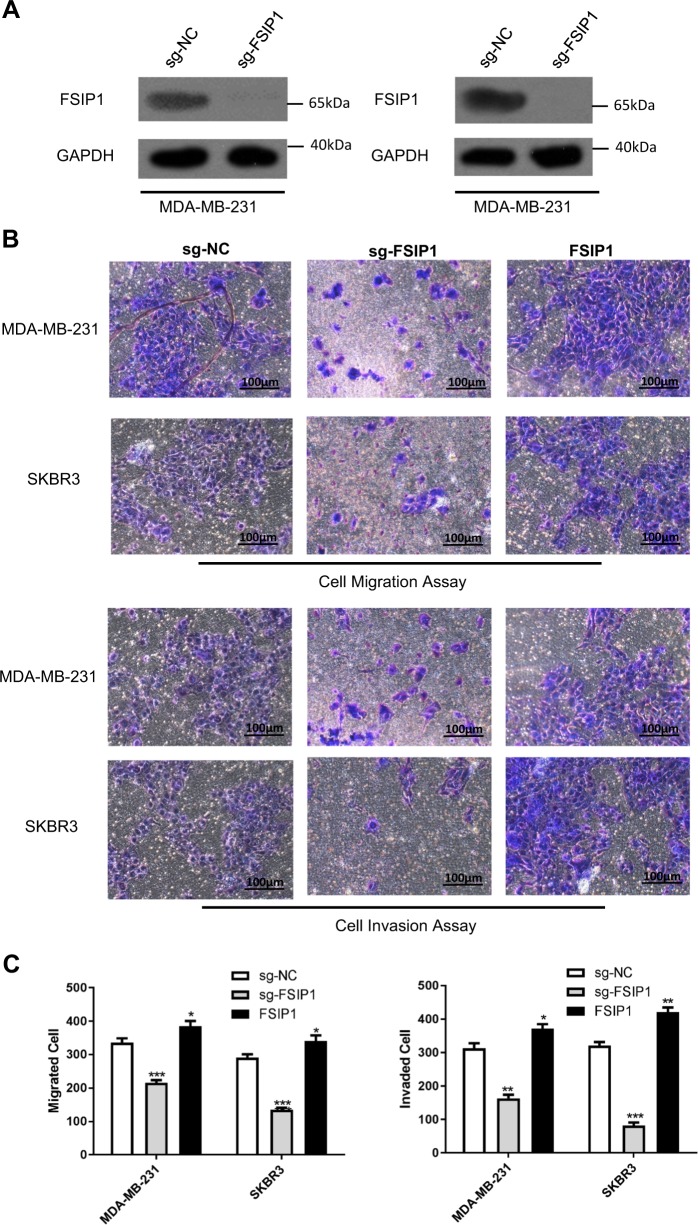
Fig. 3. FSIP1 knockout cancer cells show attenuated invasion abilities.
a Western blotting confirmed FSIP1 knockout in the relevant cell lines. b Representative images of the cell migration assay and invasion assays c Quantification of cell invasion and migration
Fig. 4
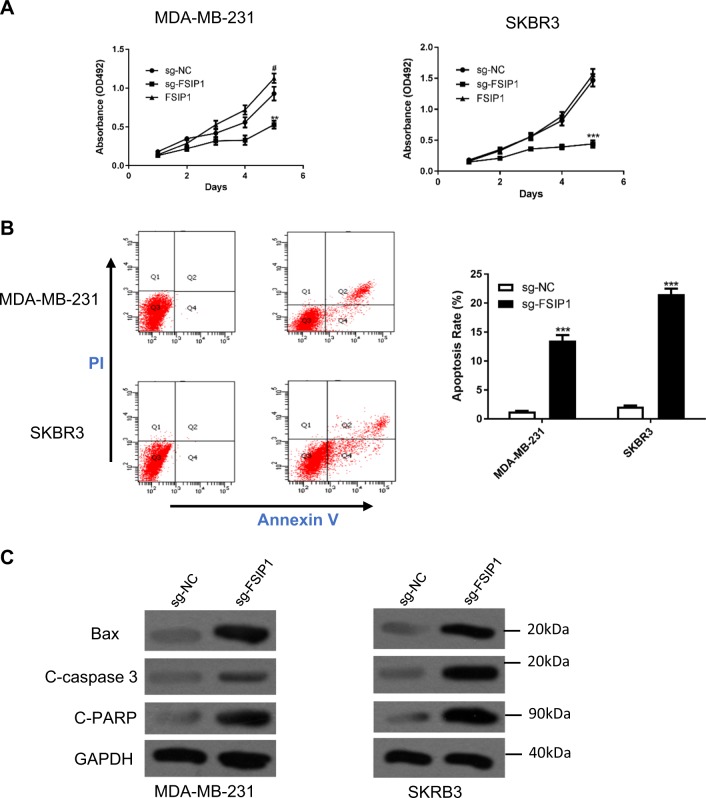
Fig. 4. FSIP1 knockout decreases breast cancer cell viability and promotes apoptosis.
a MTT assay showing the proliferation of the wild type, FSIP1 knockout and FSIP1 re-expressed SKBR3 and MDA-MB-231 cells. b Apoptosis was measured by the flow cytometry. c Apoptosis markers were detected by western blotting
Fig. 5
Fig. 5. FSIP1 knockout sensitizes breast cancer cells to docetaxel.
a MTT assay showing the IC50 of docetaxel in control and FSIP1 knockout MDA-MB-231 and SKBR3 cells. b Caspase-Glo 3/7 Assay to test the docetaxel sensitivity in MDA-MB-231 wild-type or FSIP1 knockout cells. c Tumor volumes in nude mice transplanted with control and FSIP1 knockout MDA-MB-231 cells and regression in tumor volumes post docetaxel administration. The *** indicates a statistical significant difference in tumor volume exists between sgNC + Docetaxel group and sgFSIP1 + Docetaxel group. d Bioluminescence imaging showing lung metastasis in the mice receiving either sgNC- or sgFSIP1-Luc-MDA-MB-231 via tail vein injection
Fig. 6
Fig. 6. MRP1 can bind and be stabilized by FSIP1, and is responsible for FSIP1-mediated docetaxel resistance.
a Co-IP and MS analysis identified the binding of FSIP1 and MRP1. b Confocal images showing the membrane-proximal co-localization of FSIP1 and MRP1. c FSIP1 knockout can decrease MRP1 levels. d MTT assay showing that overexpression of MRP1 in FSIP1 knockout cells can reverse the effect of knockout. e HPLC Analysis showing increased intracellular accumulation of docetaxel in FSIP1 knockout cancer cells, which was attenuated by MRP1

References

    1. Zeng Z, et al. Overexpression of GOLPH3 promotes proliferation and tumorigenicity in breast cancer via suppression of the FOXO1 transcription factor. Clin. Cancer Res. 2012;18:4059–4069. doi: 10.1158/1078-0432.CCR-11-3156. - DOI - PubMed
    1. Leslie EM, Deeley RG, Cole SP. Multidrug resistance proteins: role of P-glycoprotein, MRP1, MRP2, and BCRP (ABCG2) in tissue defense. Toxicol. Appl. Pharmacol. 2005;204:216–37. doi: 10.1016/j.taap.2004.10.012. - DOI - PubMed
    1. Callaghan R, Luk F, Bebawy M. Inhibition of the multidrug resistance P-glycoprotein: time for a change of strategy? Drug Metab. Dispos. 2014;42:623–31. doi: 10.1124/dmd.113.056176. - DOI - PMC - PubMed
    1. Syed SB, et al. Targeting P-glycoprotein: Investigation of piperine analogs for overcoming drug resistance in cancer. Sci. Rep. 2017;7:7972. doi: 10.1038/s41598-017-08062-2. - DOI - PMC - PubMed
    1. Szakacs G, et al. Targeting multidrug resistance in cancer. Nat. Rev. Drug Discov. 2006;5:219–34. doi: 10.1038/nrd1984. - DOI - PubMed

Publication types

MeSH terms