


Neoadjuvant Therapy for Breast Cancer as a Model for Translational Research
- PMID: 30814840
- PMCID: PMC6381436
- DOI: 10.1177/1178223419829072
Neoadjuvant Therapy for Breast Cancer as a Model for Translational Research
Abstract
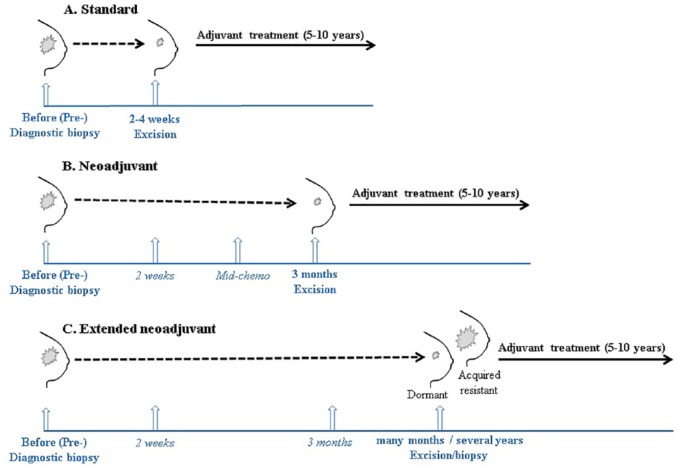
Neoadjuvant therapy, where patients receive systemic therapy before surgical removal of the tumour, can downstage tumours allowing breast-conserving surgery, rather than mastectomy. In addition to its impact on surgery, the neoadjuvant setting offers a valuable opportunity to monitor individual tumour response. The effectiveness of standard and/or potential new therapies can be tested in the neoadjuvant pre-surgical setting. It can potentially help to identify markers differentiating patients that will potentially benefit from continuing with the same or a different adjuvant treatment enabling personalised treatment. Characterising the molecular response to treatment over time can more accurately identify the significant differences between baseline samples that would not be identified without post-treatment samples. In this review, we discuss the potential and challenges of using the neoadjuvant setting in translational breast cancer research, considering the implications for improving our understanding of response to treatment, predicting therapy benefit, modelling breast cancer dormancy, and the development of drug resistance.
Keywords: Breast cancer dormancy; clinical model; drug resistance; neoadjuvant therapy.
Conflict of interest statement
Declaration of conflicting interests:The author(s) declared no potential conflicts of interest with respect to the research, authorship, and/or publication of this article.
Figures
References
-
- Bardia A, Baselga J. Neoadjuvant therapy as a platform for drug development and approval in breast cancer. Clin Cancer Res. 2013;19:6360–6370. - PubMed
-
- Rubens RD, Sexton S, Tong D, Winter PJ, Knight RK, Hayward JL. Combined chemotherapy and radiotherapy for locally advanced breast cancer. Eur J Cancer. 1980;16:351–356. - PubMed
Publication types
Grants and funding
LinkOut - more resources
Full Text Sources
