Role of intestinal microecology in the regulation of energy metabolism by dietary polyphenols and their metabolites
- PMID: 30814920
- PMCID: PMC6385797
- DOI: 10.29219/fnr.v63.1518
Role of intestinal microecology in the regulation of energy metabolism by dietary polyphenols and their metabolites
Abstract
Background: Polyphenols are a class of plant secondary metabolites with a variety of physiological functions. Polyphenols and their intestinal metabolites could greatly affect host energy metabolism via multiple mechanisms.
Objective: The objective of this review was to elaborate the role of intestinal microecology in the regulatory effects of dietary polyphenols and their metabolites on energy metabolism.
Methods: In this review, we illustrated the potential mechanisms of energy metabolism regulated by the crosstalk between polyphenols and intestinal microecology including intestinal microbiota, intestinal epithelial cells, and mucosal immune system.
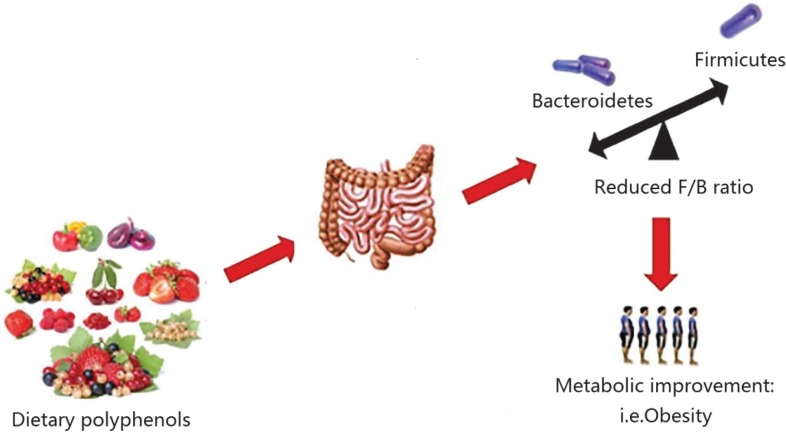
Results: Polyphenols can selectively regulate the growth of susceptible microorganisms (eg. reducing the ratio of Firmicutes to Bacteroides, promoting the growth of beneficial bacteria and inhibiting pathogenic bacteria) as well as alter bacterial enzyme activity. Moreover, polyphenols can influence the absorption and secretion of intestinal epithelial cells, and alter the intestinal mucosal immune system.
Conclusion: The intestinal microecology play a crucial role for the regulation of energy metabolism by dietary polyphenols.
Keywords: energy metabolism; gut microecology; polyphenols.
Conflict of interest statement
The authors have not received any funding or benefits from industry or elsewhere to conduct this study.
Figures
References
-
- Lin S, Hu J, Zhou X, Cheung PCK. Inhibition of vascular endothelial growth factor-induced angiogenesis by chlorogenic acid via targeting the vascular endothelial growth factor receptor 2-mediated signaling pathway. J Funct Foods 2017; 32: 285–95. doi: 10.1016/j.jff.2017.03.009 - DOI
-
- Park JH, Schaller M, Crandall CS. Pathogen-avoidance mechanisms and the stigmatization of obese people. Evol Hum Behav 2007; 28: 410–14. doi: 10.1016/j.evolhumbehav.2007.05.008 - DOI
Publication types
LinkOut - more resources
Full Text Sources
Molecular Biology Databases