


Neural Connectivity in Syntactic Movement Processing
- PMID: 30814941
- PMCID: PMC6381040
- DOI: 10.3389/fnhum.2019.00027
Neural Connectivity in Syntactic Movement Processing
Abstract
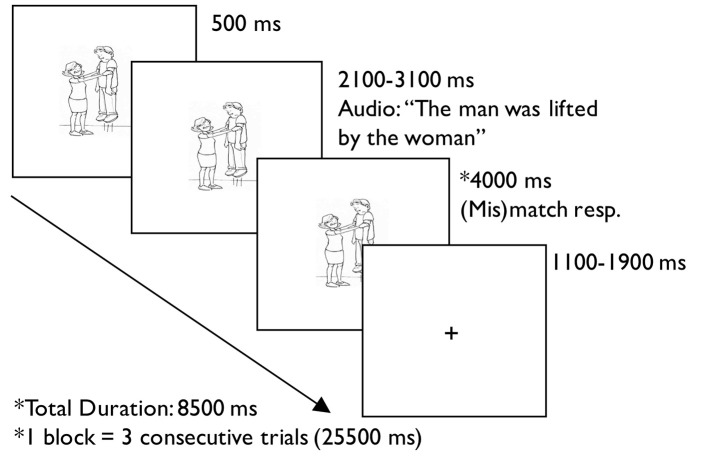
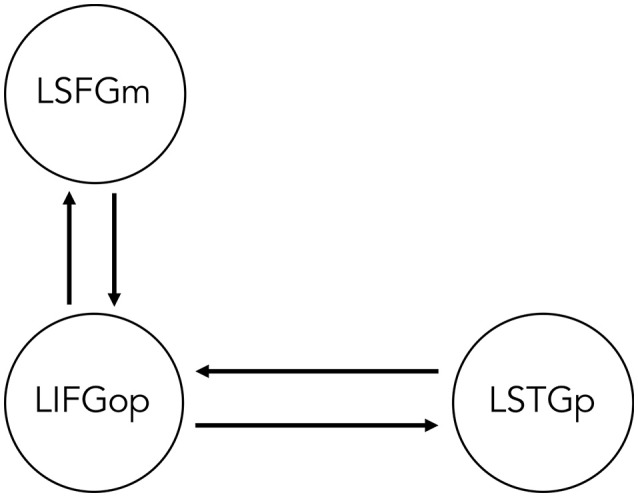
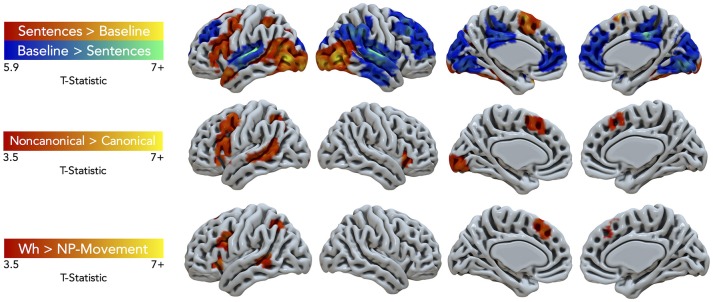
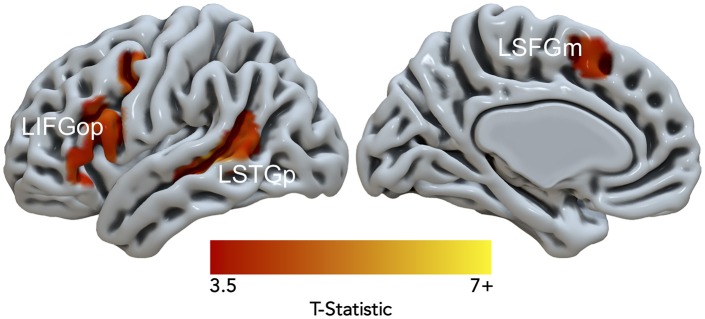
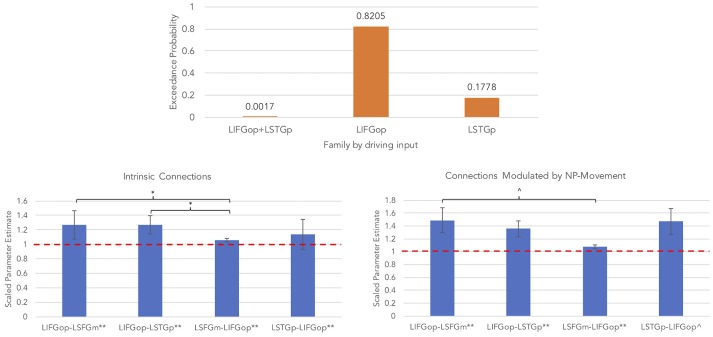
Linguistic theory suggests non-canonical sentences subvert the dominant agent-verb-theme order in English via displacement of sentence constituents to argument (NP-movement) or non-argument positions (wh-movement). Both processes have been associated with the left inferior frontal gyrus and posterior superior temporal gyrus, but differences in neural activity and connectivity between movement types have not been investigated. In the current study, functional magnetic resonance imaging data were acquired from 21 adult participants during an auditory sentence-picture verification task using passive and active sentences contrasted to isolate NP-movement, and object- and subject-cleft sentences contrasted to isolate wh-movement. Then, functional magnetic resonance imaging data from regions common to both movement types were entered into a dynamic causal modeling analysis to examine effective connectivity for wh-movement and NP-movement. Results showed greater left inferior frontal gyrus activation for Wh > NP-movement, but no activation for NP > Wh-movement. Both types of movement elicited activity in the opercular part of the left inferior frontal gyrus, left posterior superior temporal gyrus, and left medial superior frontal gyrus. The dynamic causal modeling analyses indicated that neither movement type significantly modulated the connection from the left inferior frontal gyrus to the left posterior superior temporal gyrus, nor vice-versa, suggesting no connectivity differences between wh- and NP-movement. These findings support the idea that increased complexity of wh-structures, compared to sentences with NP-movement, requires greater engagement of cognitive resources via increased neural activity in the left inferior frontal gyrus, but both movement types engage similar neural networks.
Keywords: dynamic causal modeling; functional magnetic resonance imaging; non-canonical sentences; sentence comprehension; syntactic movement.
Figures

References
Grants and funding
LinkOut - more resources
Full Text Sources
Medical
Miscellaneous
