


A comparative biomechanical evaluation of different osteosynthesis techniques used for intracapsular condylar head fractures
- PMID: 30815344
- PMCID: PMC6377404
- DOI: 10.1016/j.jobcr.2019.02.001
A comparative biomechanical evaluation of different osteosynthesis techniques used for intracapsular condylar head fractures
Abstract
Purpose: The aim of the present experimental study was to evaluate the biomechanical behavior in different types of osteosynthesis (titanium screws, bioresorbable pins and miniplates) used in management of intracapsular condylar head fractures.
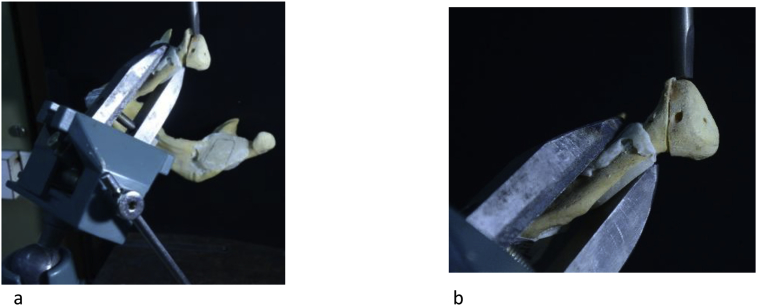
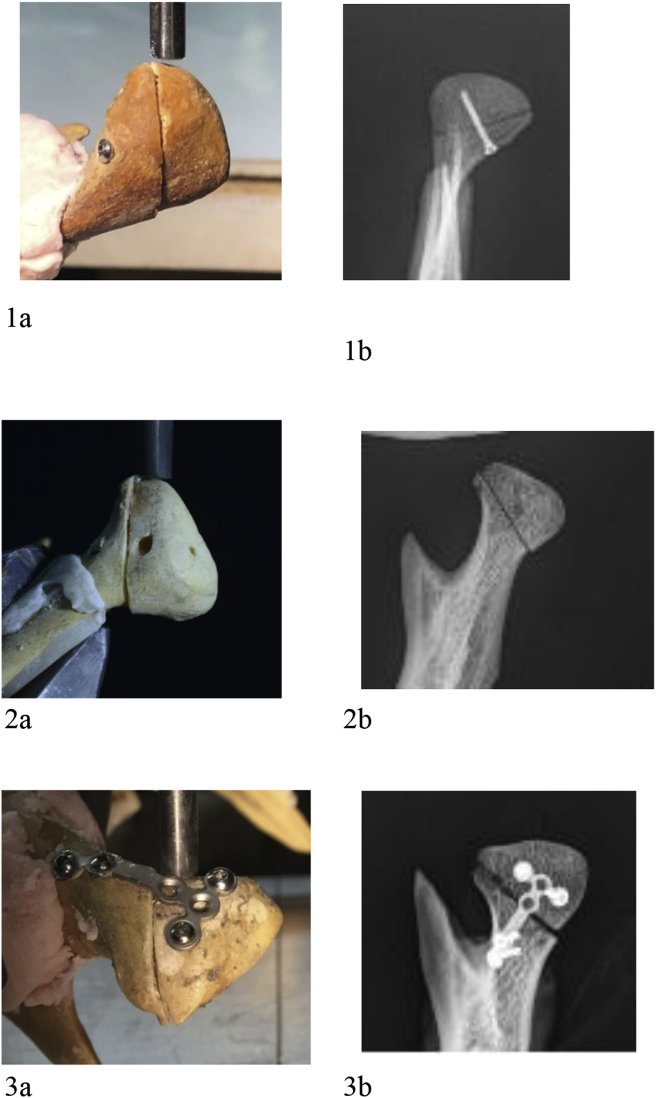
Method: Experimental models of the condylar head fractures were simulated on 15 dry human cadaveric mandibles. Osteotomized mandibles were randomly divided into three groups with different fixation systems used: 1) 15 mm long titanium screws, 2) 15 mm long bioresorbable pins Sonic Pins Rx, 3) T-shaped titanium miniplate and 7 mm long titanium screws. Mandibles were loaded in TIRAtest testing machine (Germany). The main types of deformations, including torsion, bending and shearing, were simulated to study the biomechanical characteristics of the fixation systems.
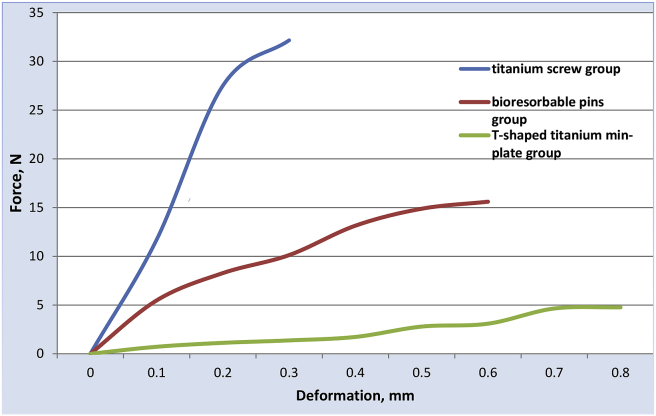
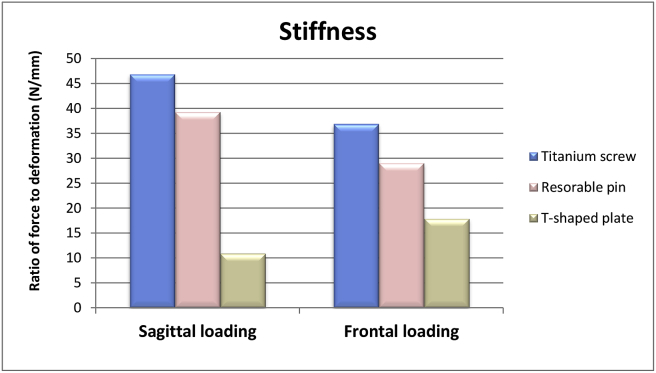
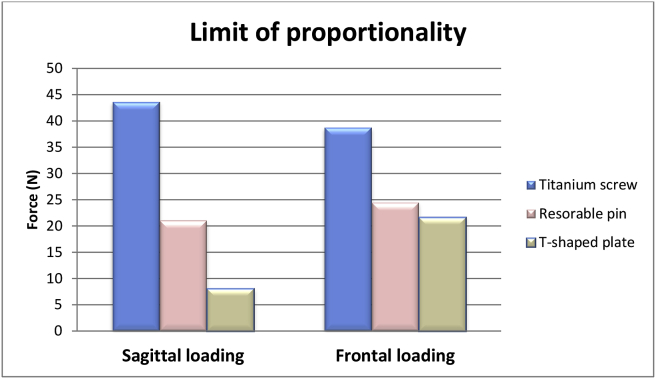
Results: Titanium bicortical screws demonstrated the highest stiffness in standard loading conditions. The fixation with bioresorbable pins showed lower stiffness in both frontal and sagittal loads. This is indicative of the fact that resorbable pins, which have numerous advantages for clinical usage, cannot provide adequately stable fixation in maximal masticatory loads. The mandibles fixed with T-shaped plate had the lowest stiffness.
Conclusion: Screw or pin fixation, regardless of the material used, was not resistant to rotational loads. On the contrary, the stiffness of T-shaped plates was quite significant. In real clinical conditions, if rotational displacements are not effectively compensated by irregularities in the fracture surface and precise repositioning of the bone fragments, combined use of miniplates and bicortical titanium screws or two screws can be beneficial.
Keywords: Biomechanics; Condylar head; Fracture; Osteosynthesis.
Figures
References
-
- Boffano P., Roccia F., Zavattero E. Maxillofacial Trauma (EURMAT) project: a multicentre and prospective study. J Cranio-Maxillo-Fac Surg. 2015;43(1):62–70. - PubMed
-
- Luo S., Li B., Long X., Deng M., Cai H., Cheng Y. Surgical treatment of sagittal fracture of mandibular condyle using long-screw osteosynthesis. J OralMaxillofacSurg. 2011;69:1988–1994. - PubMed
-
- Duan D.H., Zhang Y. A clinical investigation on disc displacement in sagittal fracture of the mandibular condyle and its association with TMJ ankylosis development. Int J Oral Maxillofac Surg. 2011;40(2):134–138. - PubMed
-
- Neff A., Muhlberger G., Karoglan M. Stability of osteosyntheses for condylar head fractures in the clinic and biomechanical simulation. Mund Kiefer Gesichtschir. 2004;8(2):63–74. - PubMed
LinkOut - more resources
Full Text Sources
