


How the insula speaks to the heart: Cardiac responses to insular stimulation in humans
- PMID: 30815964
- PMCID: PMC6865697
- DOI: 10.1002/hbm.24548
How the insula speaks to the heart: Cardiac responses to insular stimulation in humans
Abstract
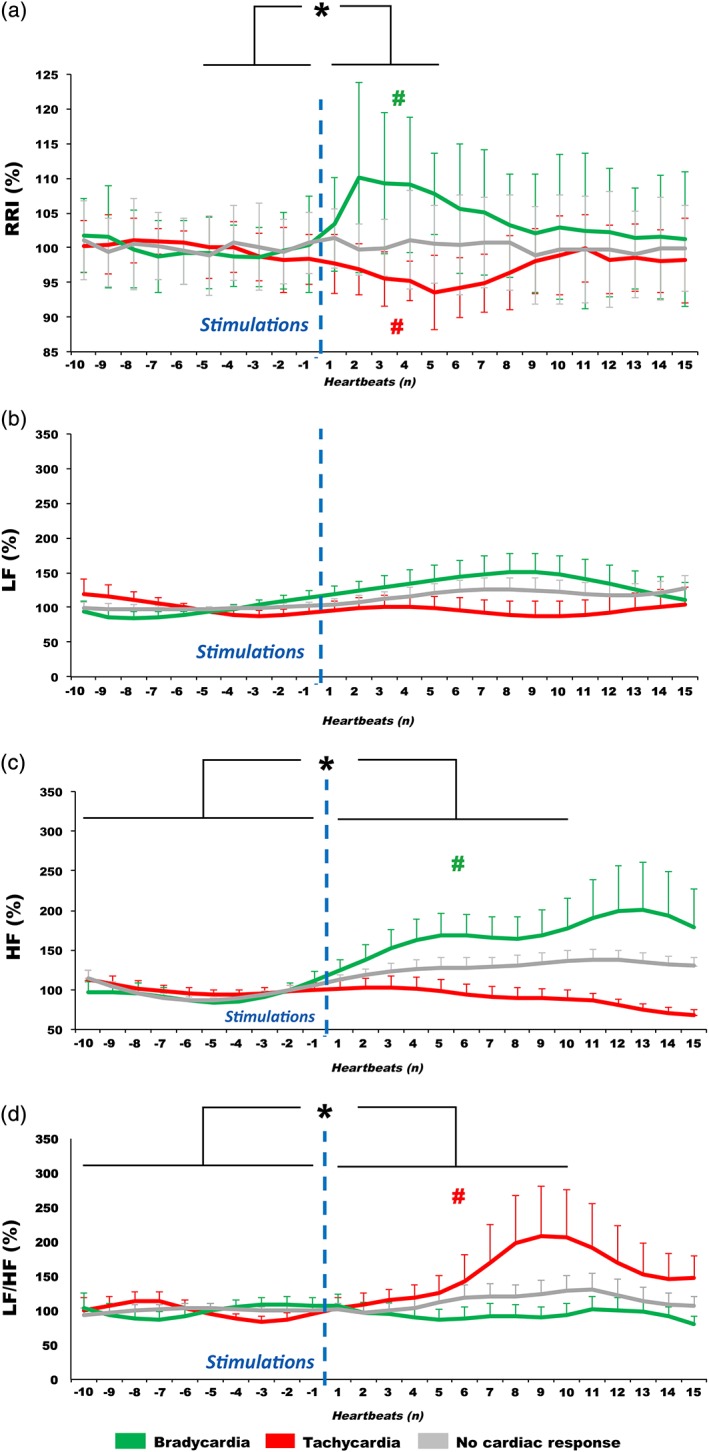
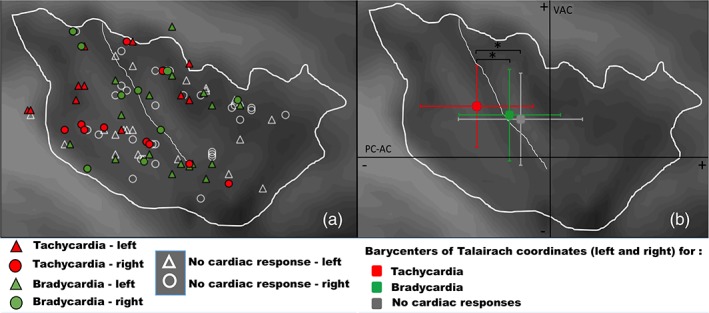
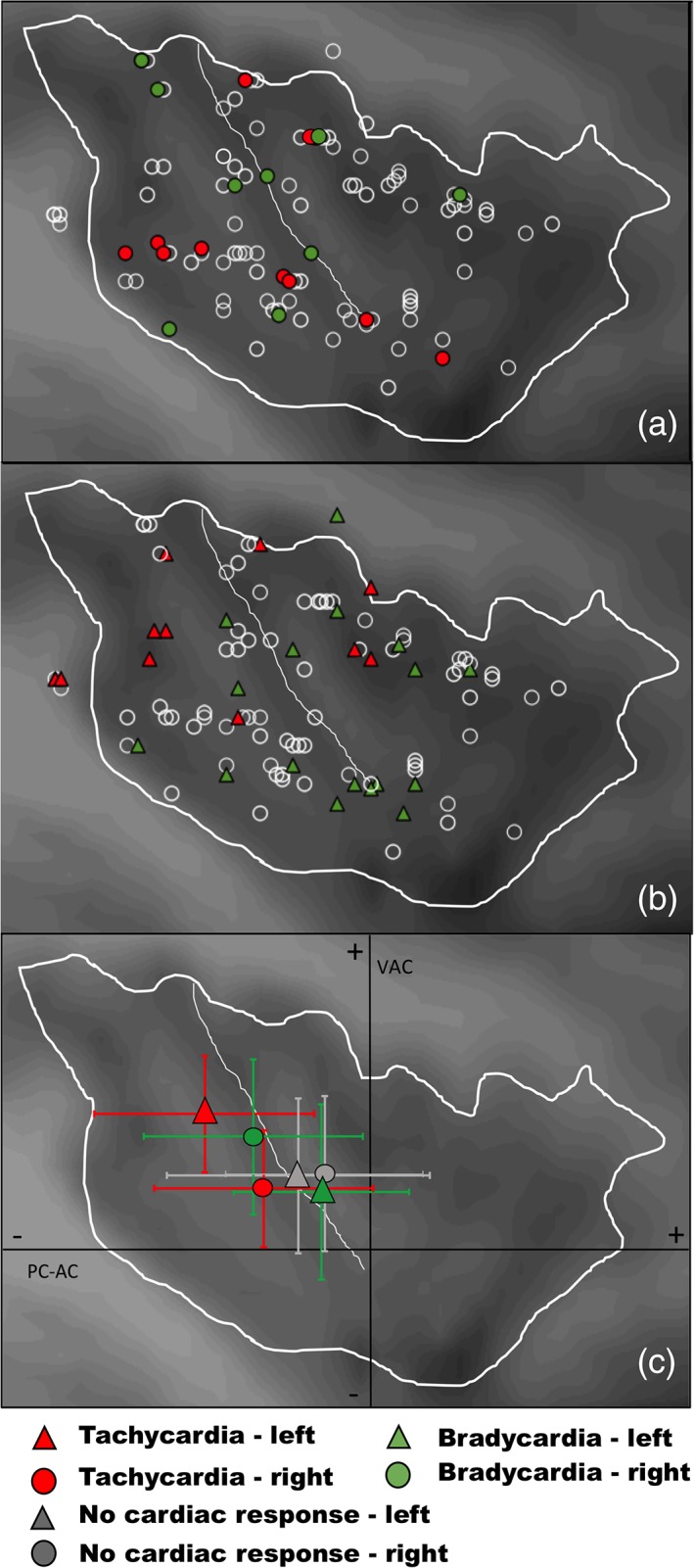
Despite numerous studies suggesting the role of insular cortex in the control of autonomic activity, the exact location of cardiac motor regions remains controversial. We provide here a functional mapping of autonomic cardiac responses to intracortical stimulations of the human insula. The cardiac effects of 100 insular electrical stimulations into 47 epileptic patients were divided into tachycardia, bradycardia, and no cardiac response according to the magnitude of RR interval (RRI) reactivity. Sympathetic (low frequency, LF, and low to high frequency powers ratio, LF/HF ratio) and parasympathetic (high frequency power, HF) reactivity were studied using RRI analysis. Bradycardia was induced by 26 stimulations (26%) and tachycardia by 21 stimulations (21%). Right and left insular stimulations induced as often a bradycardia as a tachycardia. Tachycardia was accompanied by an increase in LF/HF ratio, suggesting an increase in sympathetic tone; while bradycardia seemed accompanied by an increase of parasympathetic tone reflected by an increase in HF. There was some left/right asymmetry in insular subregions where increased or decreased heart rates were produced after stimulation. However, spatial distribution of tachycardia responses predominated in the posterior insula, whereas bradycardia sites were more anterior in the median part of the insula. These findings seemed to indicate a posterior predominance of sympathetic control in the insula, whichever the side; whereas the parasympathetic control seemed more anterior. Dysfunction of these regions should be considered when modifications of cardiac activity occur during epileptic seizures and in cardiovascular diseases.
Keywords: RR intervals; autonomic nervous system; bradycardia; heart; insula; tachycardia.
© 2019 Wiley Periodicals, Inc.
Conflict of interest statement
The authors declare no conflict of interest.
Figures
References
-
- Akselrod, S. , Gordon, D. , Ubel, F. A. , Shannon, D. C. , Berger, A. C. , & Cohen, R. J. (1981). Power spectrum analysis of heart rate fluctuation: A quantitative probe of beat‐to‐beat cardiovascular control. Science, 213, 220–222. - PubMed
-
- Benarroch, E. E. (1993). The central autonomic network: Functional organization, dysfunction, and perspective. Mayo Clinic Proceedings, 68, 988–1001. - PubMed
-
- Britton, J. W. , Ghearing, G. R. , Benarroch, E. E. , & Cascino, G. D. (2006). The ictal bradycardia syndrome: Localization and lateralization. Epilepsia, 47, 737–744. - PubMed
-
- Catenoix, H. , Mauguière, F. , Guénot, M. , Isnard, J. , & Ryvlin, P. (2013). Recording the insula during ictal asystole. International Journal of Cardiology, 169, e28–e30. - PubMed
MeSH terms
LinkOut - more resources
Full Text Sources
Research Materials
Miscellaneous
