


Sex Differences in the Effects of Prenatal Bisphenol A Exposure on Genes Associated with Autism Spectrum Disorder in the Hippocampus
- PMID: 30816183
- PMCID: PMC6395584
- DOI: 10.1038/s41598-019-39386-w
Sex Differences in the Effects of Prenatal Bisphenol A Exposure on Genes Associated with Autism Spectrum Disorder in the Hippocampus
Abstract
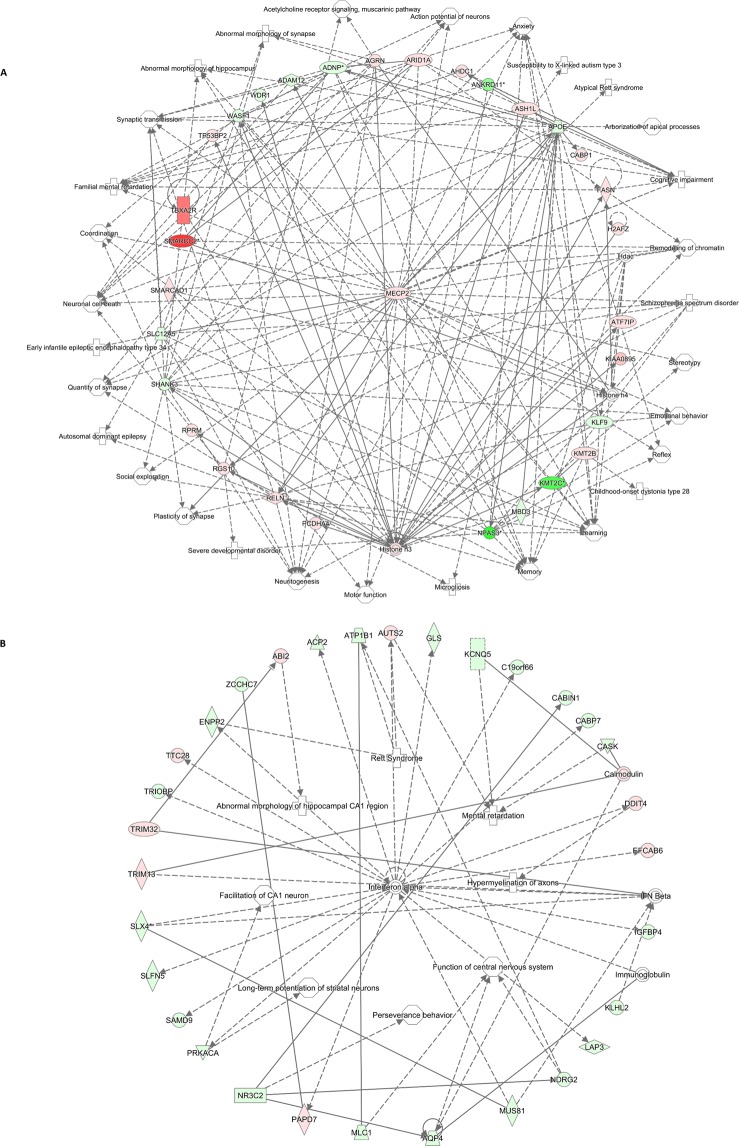
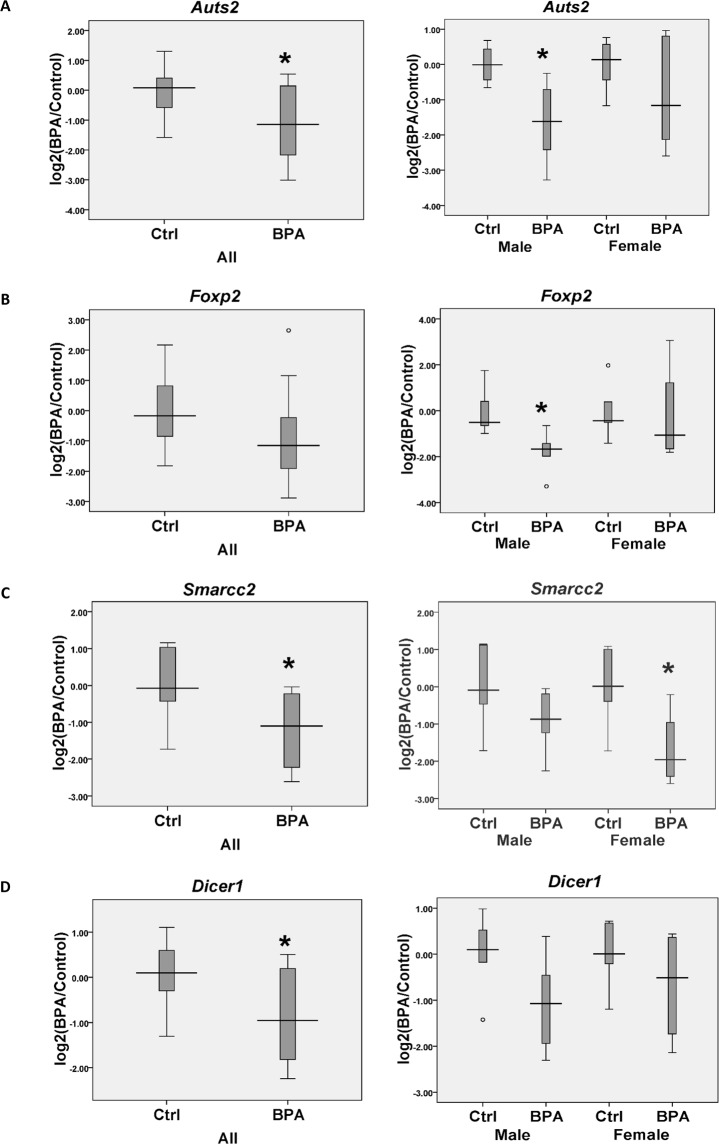
Autism spectrum disorder (ASD) is a neurodevelopmental disorder inexplicably biased towards males. Although prenatal exposure to bisphenol A (BPA) has recently been associated with the ASD risk, whether BPA dysregulates ASD-related genes in the developing brain remains unclear. In this study, transcriptome profiling by RNA-seq analysis of hippocampi isolated from neonatal pups prenatally exposed to BPA was conducted and revealed a list of differentially expressed genes (DEGs) associated with ASD. Among the DEGs, several ASD candidate genes, including Auts2 and Foxp2, were dysregulated and showed sex differences in response to BPA exposure. The interactome and pathway analyses of DEGs using Ingenuity Pathway Analysis software revealed significant associations between the DEGs in males and neurological functions/disorders associated with ASD. Moreover, the reanalysis of transcriptome profiling data from previously published BPA studies consistently showed that BPA-responsive genes were significantly associated with ASD-related genes. The findings from this study indicate that prenatal BPA exposure alters the expression of ASD-linked genes in the hippocampus and suggest that maternal BPA exposure may increase ASD susceptibility by dysregulating genes associated with neurological functions known to be negatively impacted in ASD, which deserves further investigations.
Conflict of interest statement
The authors declare no competing interests.
Figures
References
-
- Baio J, et al. Prevalence of Autism Spectrum Disorder Among Children Aged 8 Years - Autism and Developmental Disabilities MonitoringNetwork, 11 Sites, United States, 2014. Morbidity and mortality weekly report. Surveillance summaries (Washington, D.C.: 2002) 2018;67:1–23. doi: 10.15585/mmwr.ss6706a1. - DOI - PMC - PubMed
-
- Nguyen A, Rauch TA, Pfeifer GP, Hu VW. Global methylation profiling of lymphoblastoid cell lines reveals epigenetic contributions to autism spectrum disorders and a novel autism candidate gene, RORA, whose protein product is reduced in autistic brain. FASEB journal: official publication of the Federation of American Societies for Experimental Biology. 2010;24:3036–3051. doi: 10.1096/fj.10-154484. - DOI - PMC - PubMed
Publication types
MeSH terms
Substances
Grants and funding
LinkOut - more resources
Full Text Sources
Medical
Molecular Biology Databases
