


Adeno-associated virus-based Alzheimer's disease mouse models and potential new therapeutic avenues
- PMID: 30817847
- PMCID: PMC6715621
- DOI: 10.1111/bph.14637
Adeno-associated virus-based Alzheimer's disease mouse models and potential new therapeutic avenues
Abstract
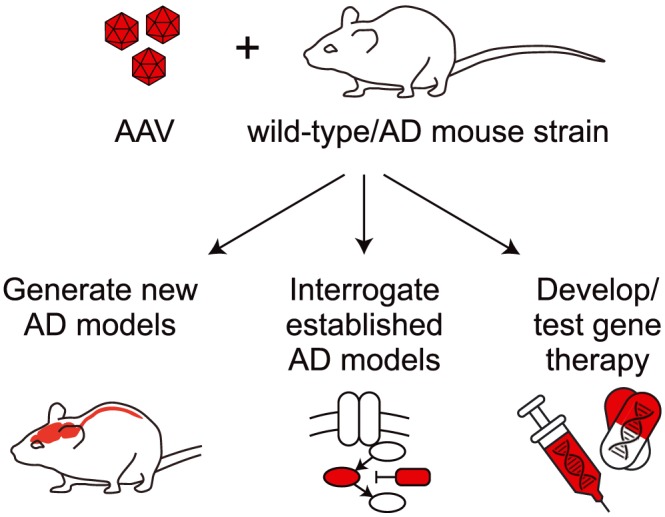
Alzheimer's disease (AD) is a highly prevalent neurodegenerative condition that presents with cognitive decline. The current understanding of underlying disease mechanisms remains incomplete. Genetically modified mouse models have been instrumental in deciphering pathomechanisms in AD. While these models were typically generated by classical transgenesis and genome editing, the use of adeno-associated viruses (AAVs) to model and investigate AD in mice, as well as to develop novel gene-therapy approaches, is emerging. Here, we reviewed literature that used AAVs to study and model AD and discuss potential gene therapy strategies. LINKED ARTICLES: This article is part of a themed section on Therapeutics for Dementia and Alzheimer's Disease: New Directions for Precision Medicine. To view the other articles in this section visit http://onlinelibrary.wiley.com/doi/10.1111/bph.v176.18/issuetoc.
© 2019 The British Pharmacological Society.
Conflict of interest statement
The authors declare no conflicts of interest.
Figures
References
Publication types
MeSH terms
LinkOut - more resources
Full Text Sources
Medical
