


Dietary Components That May Influence the Disturbed Gut Microbiota in Chronic Kidney Disease
- PMID: 30818761
- PMCID: PMC6471287
- DOI: 10.3390/nu11030496
Dietary Components That May Influence the Disturbed Gut Microbiota in Chronic Kidney Disease
Abstract
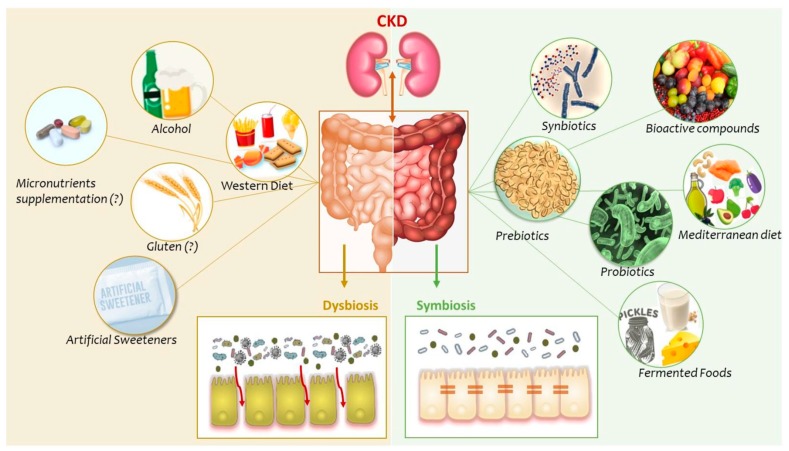
Gut microbiota imbalance is common in patients with chronic kidney disease (CKD) and associates with factors such as increased circulating levels of gut-derived uremic toxins, inflammation, and oxidative stress, which are linked to cardiovascular disease and increased morbimortality. Different nutritional strategies have been proposed to modulate gut microbiota, and could potentially be used to reduce dysbiosis in CKD. Nutrients like proteins, fibers, probiotics, and synbiotics are important determinants of the composition of gut microbiota and specific bioactive compounds such as polyphenols present in nuts, berries. and fruits, and curcumin, may also play a key role in this regard. However, so far, there are few studies on dietary components influencing the gut microbiota in CKD, and it is therefore not possible to conclude which nutrients should be prioritized in the diet of patients with CKD. In this review, we discuss some nutrients, diet patterns and bioactive compounds that may be involved in the modulation of gut microbiota in CKD and provide the background and rationale for studies exploring whether nutritional interventions with these dietary components could be used to alleviate the gut dysbiosis in patients with CKD.
Keywords: chronic kidney disease; diet; gut microbiota; nutrients.
Conflict of interest statement
The authors declare no conflict of interest.
Figures
References
-
- Petrova P., Petrov K. Prebiotic-Probiotic Relationship: The Genetic Fundamentals of Polysaccharides Conversion by Bifidobacterium and Lactobacillus Genera. Food Bioconvers. 2017;2:237–278.
Publication types
MeSH terms
LinkOut - more resources
Full Text Sources
Medical
