


Molecular Pathogenesis of Cholangiocarcinoma
- PMID: 30819129
- PMCID: PMC6394015
- DOI: 10.1186/s12885-019-5391-0
Molecular Pathogenesis of Cholangiocarcinoma
Abstract
Background: Cholangiocarcinomas are a heterogeneous group of malignancies arising from a number of cells of origin along the biliary tree. Although most cases in Western countries are sporadic, large population-based studies have identified a number of risk factors. This review summarises the evidence behind reported risk factors and current understanding of the molecular pathogenesis of cholangiocarcinoma, with a focus on inflammation and cholestasis as the driving forces in cholangiocarcinoma development.
Risk factors for cholangiocarcinogenesis: Cholestatic liver diseases (e.g. primary sclerosing cholangitis and fibropolycystic liver diseases), liver cirrhosis, and biliary stone disease all increase the risk of cholangiocarcinoma. Certain bacterial, viral or parasitic infections such as hepatitis B and C and liver flukes also increase cholangiocarcinoma risk. Other risk factors include inflammatory disorders (such as inflammatory bowel disease and chronic pancreatitis), toxins (e.g. alcohol and tobacco), metabolic conditions (diabetes, obesity and non-alcoholic fatty liver disease) and a number of genetic disorders.
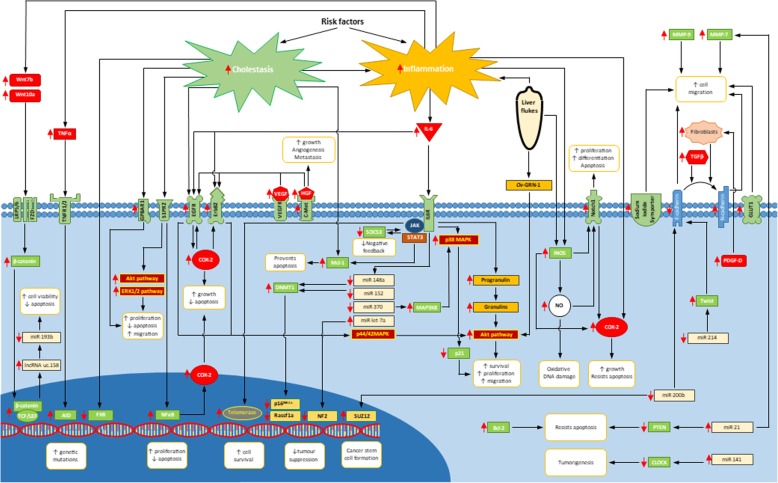
Molecular pathogenesis of cholangiocarcinoma: Regardless of aetiology, most risk factors cause chronic inflammation or cholestasis. Chronic inflammation leads to increased exposure of cholangiocytes to the inflammatory mediators interleukin-6, Tumour Necrosis Factor-ɑ, Cyclo-oxygenase-2 and Wnt, resulting in progressive mutations in tumour suppressor genes, proto-oncogenes and DNA mismatch-repair genes. Accumulating bile acids from cholestasis lead to reduced pH, increased apoptosis and activation of ERK1/2, Akt and NF-κB pathways that encourage cell proliferation, migration and survival. Other mediators upregulated in cholangiocarcinoma include Transforming Growth Factor-β, Vascular Endothelial Growth Factor, Hepatocyte Growth Factor and several microRNAs. Increased expression of the cell surface receptor c-Met, the glucose transporter GLUT-1 and the sodium iodide symporter lead to tumour growth, angiogenesis and cell migration. Stromal changes are also observed, resulting in alterations to the extracellular matrix composition and recruitment of fibroblasts and macrophages that create a microenvironment promoting cell survival, invasion and metastasis.
Conclusion: Regardless of aetiology, most risk factors for cholangiocarcinoma cause chronic inflammation and/or cholestasis, leading to the activation of common intracellular pathways that result in reactive cell proliferation, genetic/epigenetic mutations and cholangiocarcinogenesis. An understanding of the molecular pathogenesis of cholangiocarcinoma is vital when developing new diagnostic biomarkers and targeted therapies for this disease.
Keywords: Aetiology; Biomarkers; Cholangiocarcinoma; Cholestasis; Inflammation; Molecular pathogenesis; Pathology.
Conflict of interest statement
Ethics approval and consent to participate
Not applicable.
Consent for publication
Not applicable.
Competing interests
The authors declare that they have no competing interests.
Publisher’s Note
Springer Nature remains neutral with regard to jurisdictional claims in published maps and institutional affiliations.
Figures
References
-
- Banales J, Cardinale V, Carpino G, Marzioni M, Andersen J, Invernizzi P, et al. Expert consensus document: Cholangiocarcinoma: current knowledge and future perspectives consensus statement from the European Network for the Study of Cholangiocarcinoma (ENS-CCA) Nat Rev Gastroenterol Hepatol. 2016;13:261–280. - PubMed
Publication types
MeSH terms
Substances
LinkOut - more resources
Full Text Sources
Medical
Research Materials
Miscellaneous
