


Novel gait training alters functional brain connectivity during walking in chronic stroke patients: a randomized controlled pilot trial
- PMID: 30819259
- PMCID: PMC6396471
- DOI: 10.1186/s12984-019-0503-2
Novel gait training alters functional brain connectivity during walking in chronic stroke patients: a randomized controlled pilot trial
Abstract
Background: A recent study has demonstrated that a turning-based treadmill program yields greater improvements in gait speed and temporal symmetry than regular treadmill training in chronic stroke patients. However, it remains unknown how this novel and challenging gait training shapes the cortico-cortical network and cortico-spinal network during walking in chronic stroke patients. The purpose of this study was to examine how a novel type of gait training, which is an unfamiliar but effective task for people with chronic stroke, enhances brain reorganization.
Methods: Subjects in the experimental and control groups received 30 min of turning-based treadmill training and regular treadmill training, respectively. Cortico-cortical connectivity and cortico-muscular connectivity during walking and gait performance were assessed before and after completing the 12-session training.
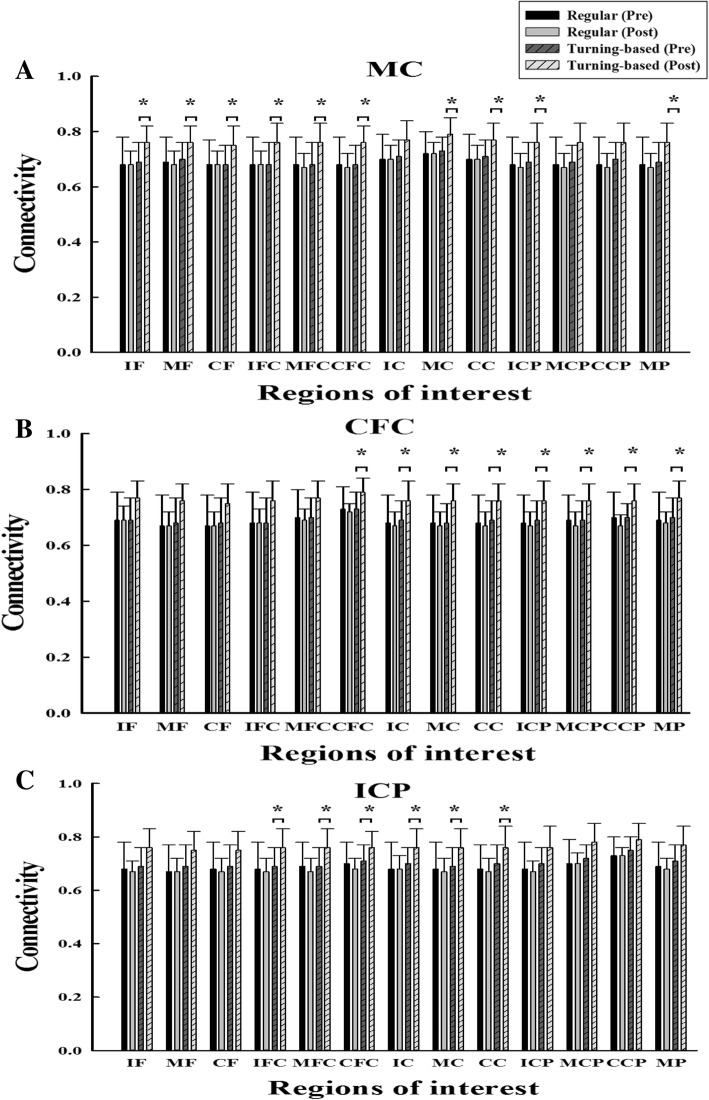
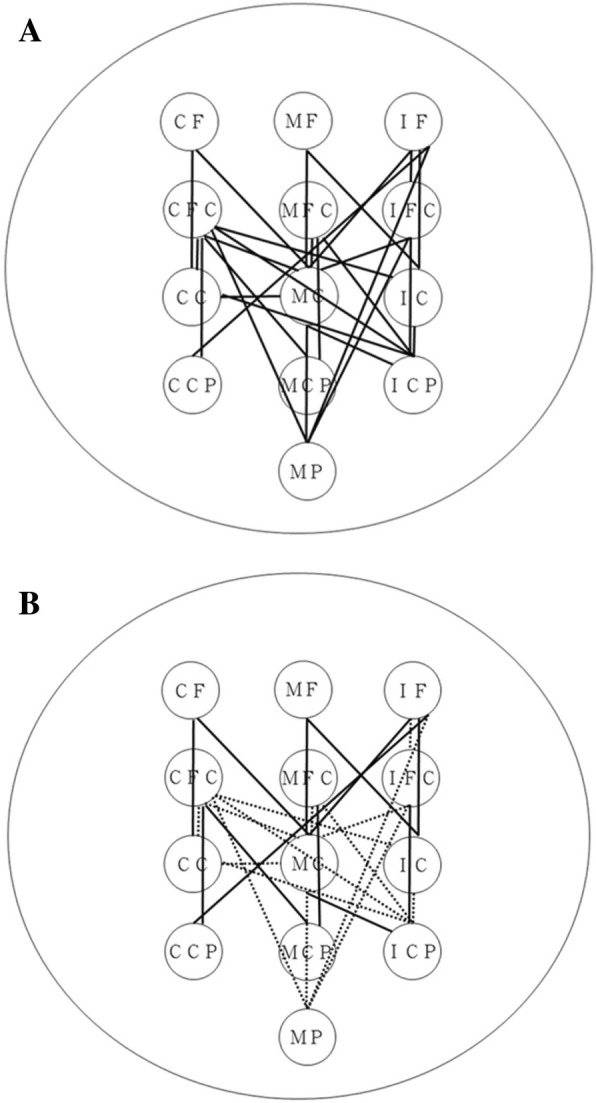
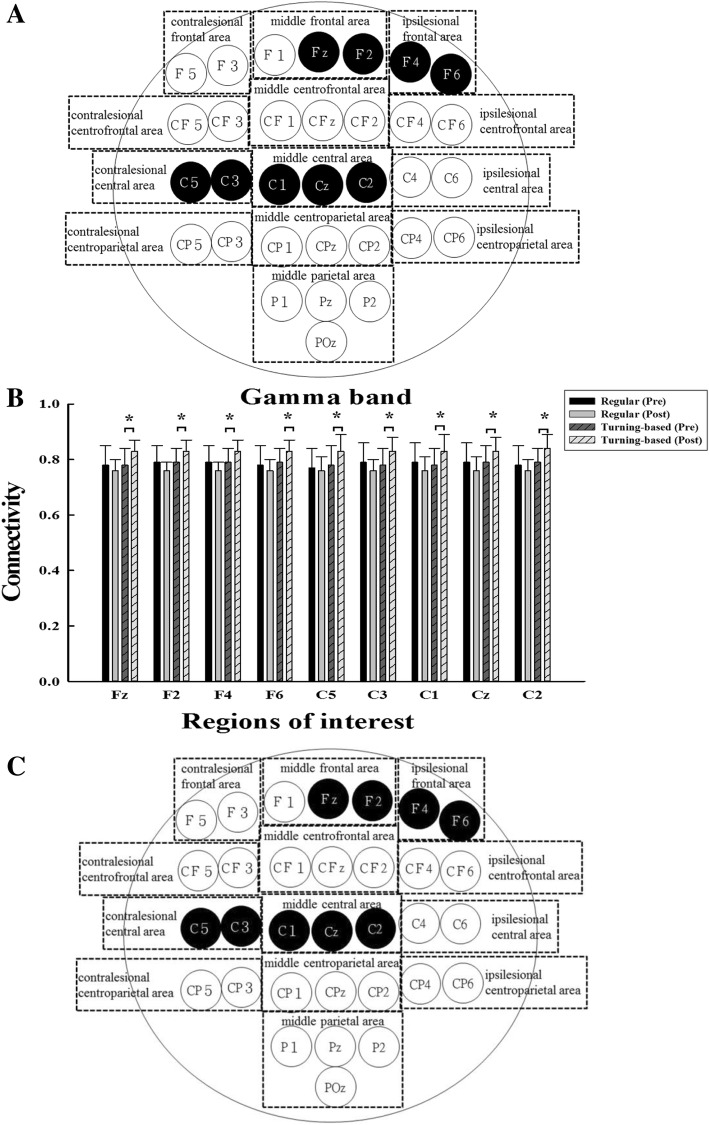
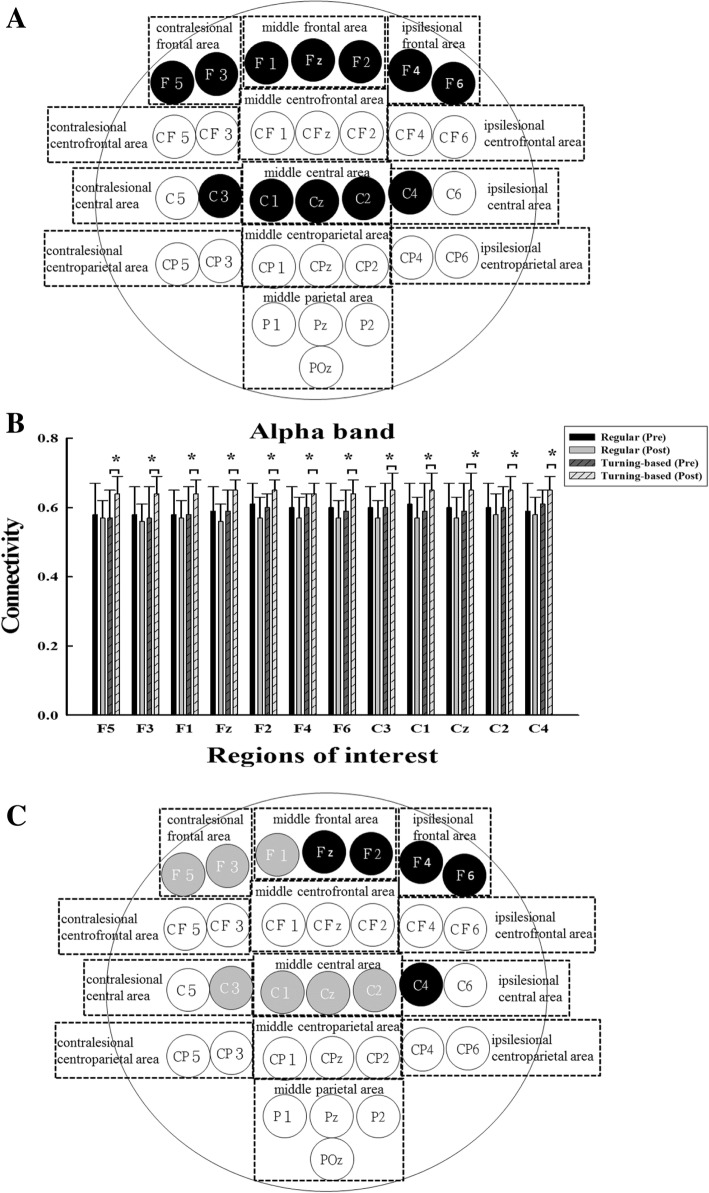
Results: Eighteen subjects (n = 9 per group) with a mean age of 52.5 ± 9.7 years and an overground walking speed of 0.61 ± 0.26 m/s consented and participated in this study. There were significant group by time interactions for gait speed, temporal gait symmetry, and cortico-cortical connectivity as well as cortico-muscular connectivity in walk-related frequency (24-40 Hz) over the frontal-central-parietal areas. Compared with the regular treadmill training, the turning-based treadmill training resulted in greater improvements in these measures. Moreover, the increases in cortico-cortical connectivity and cortico-muscular connectivity while walking were associated with improvements in temporal gait symmetry.
Conclusions: Our findings suggest this novel turning-based treadmill training is effective for enhancing brain functional reorganization underlying cortico-cortical and corticomuscular mechanisms and thus may result in gait improvement in people with chronic stroke.
Trial registration: ACTRN12617000190303 . Registered 3 February 2017, retrospectively registered.
Keywords: Brain connectivity; EEG; EMG; Gait; Stroke; Turning.
Conflict of interest statement
Ethics approval and consent to participate
The study protocol was approved by the institutional review board of Taipei City Hospital. Participants consented to participate following an explanation of the procedure and review of the informed consent.
Consent for publication
Not applicable.
Competing interests
The authors declare that they have no competing interests.
Publisher’s Note
Springer Nature remains neutral with regard to jurisdictional claims in published maps and institutional affiliations.
Figures
References
-
- Krakauer JW. Motor learning: its relevance to stroke recovery and neurorehabilitation. Curr Opin Neurol. 2006;19:84–90. doi: 10.1097/01.wco.0000200544.29915.cc. - DOI - PubMed
Publication types
MeSH terms
LinkOut - more resources
Full Text Sources
Medical
