p66Shc deficiency in the Eμ-TCL1 mouse model of chronic lymphocytic leukemia enhances leukemogenesis by altering the chemokine receptor landscape
- PMID: 30819907
- PMCID: PMC6886430
- DOI: 10.3324/haematol.2018.209981
p66Shc deficiency in the Eμ-TCL1 mouse model of chronic lymphocytic leukemia enhances leukemogenesis by altering the chemokine receptor landscape
Abstract
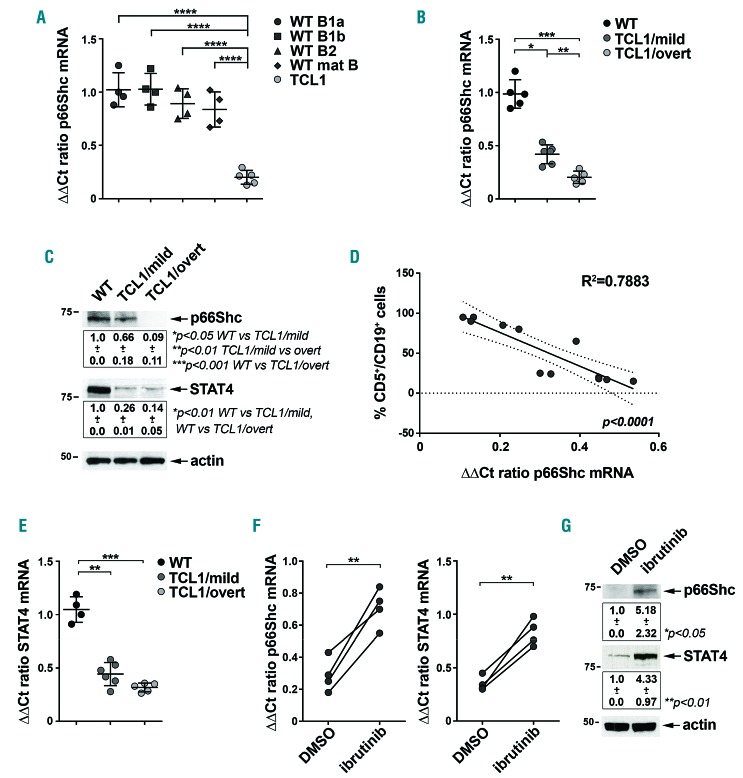
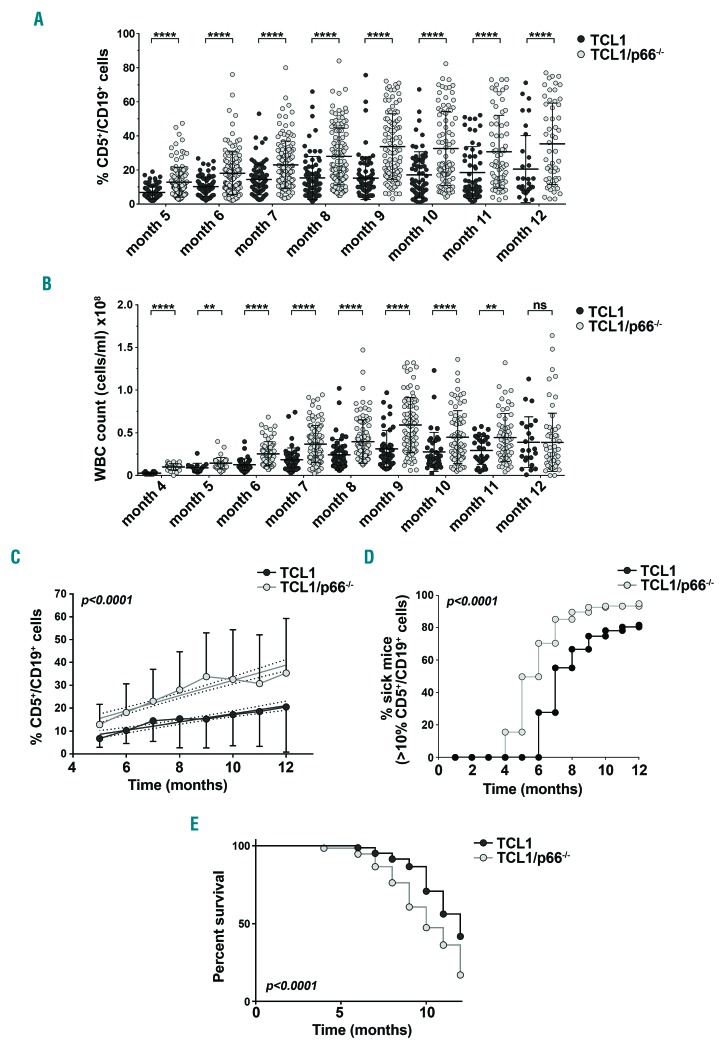
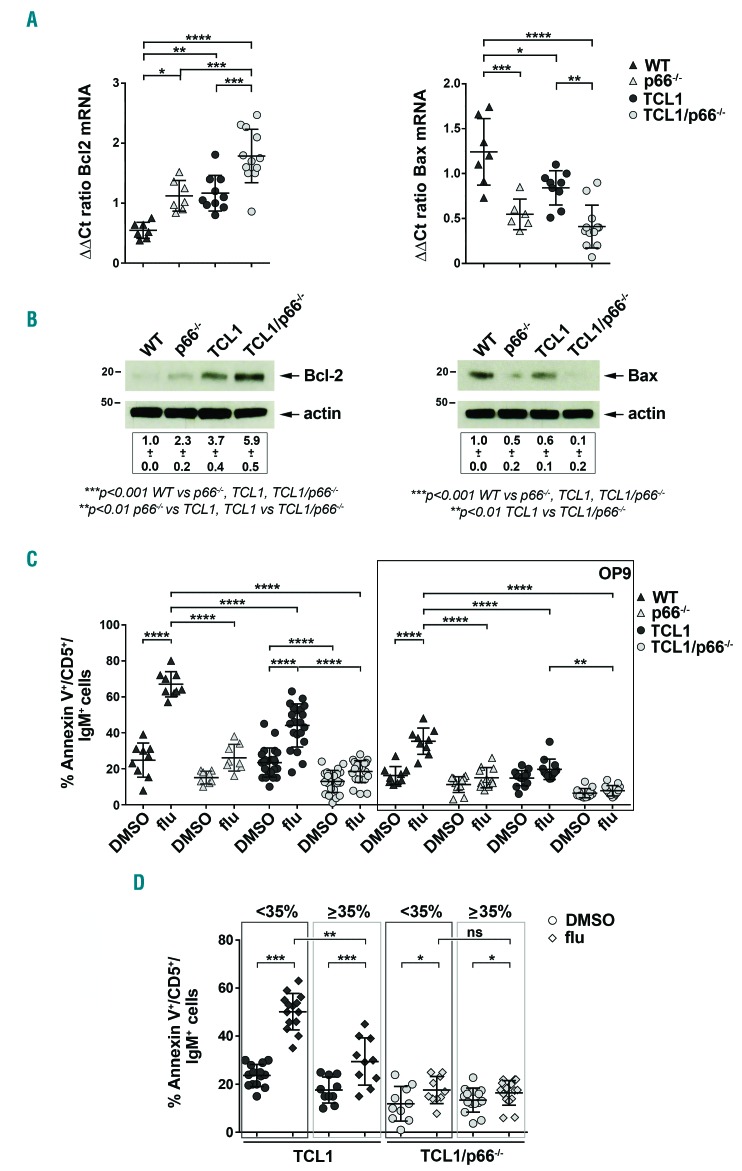
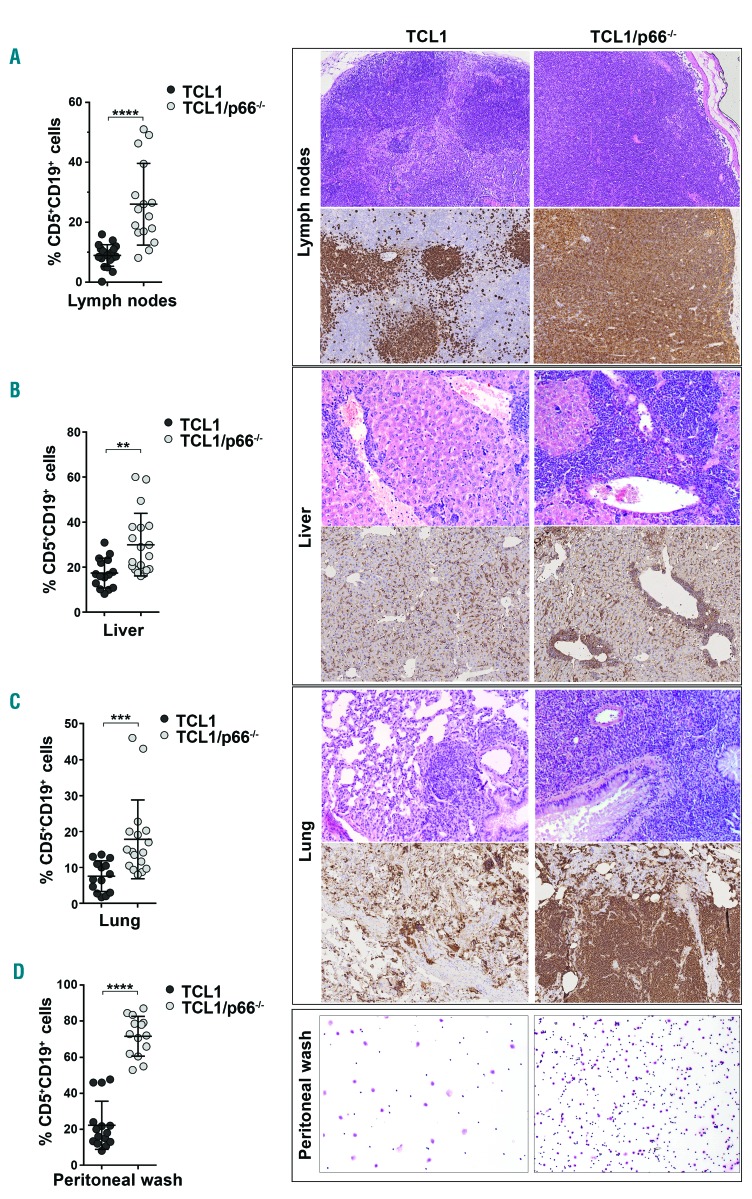
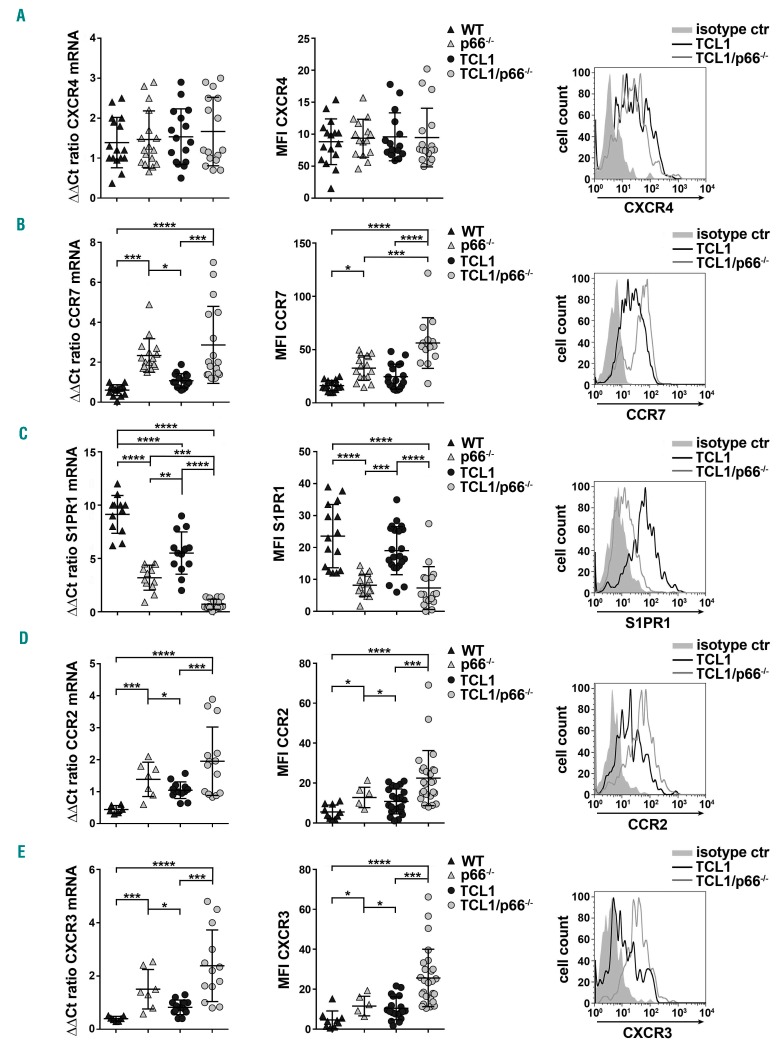
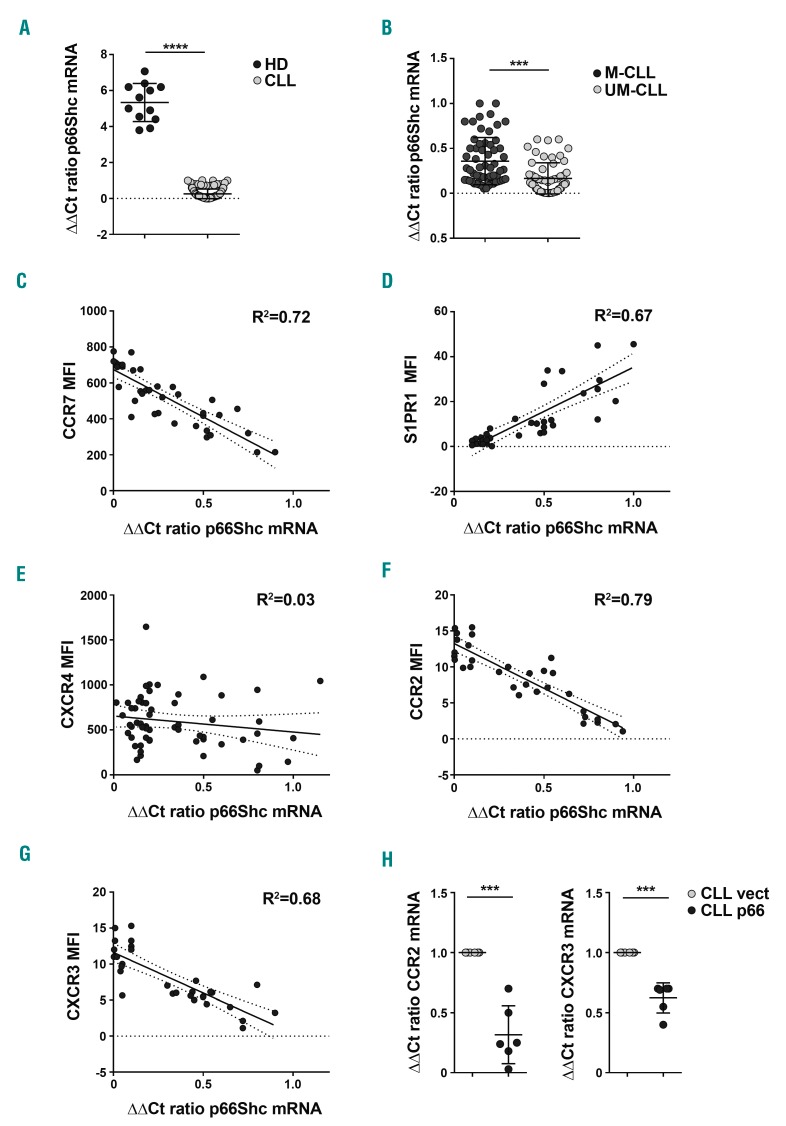
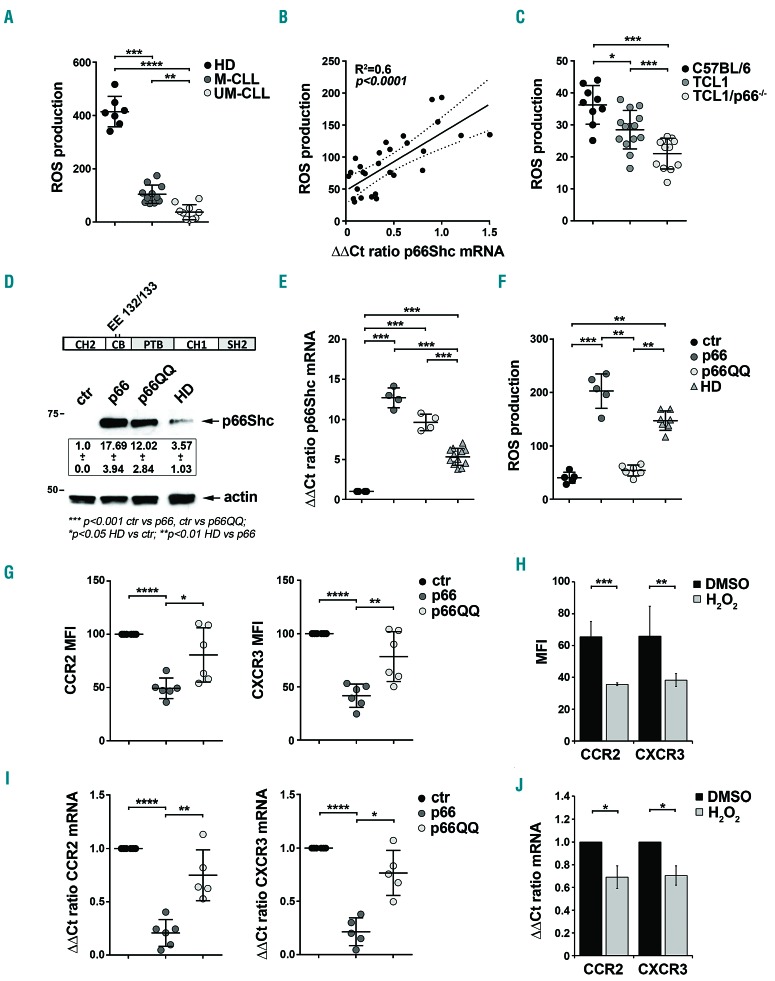
The Shc family adaptor p66Shc acts as a negative regulator of proliferative and survival signals triggered by the B-cell receptor and, by enhancing the production of reactive oxygen species, promotes oxidative stress-dependent apoptosis. Additionally, p66Shc controls the expression and function of chemokine receptors that regulate lymphocyte traffic. Chronic lymphocytic leukemia cells have a p66Shc expression defect which contributes to their extended survival and correlates with poor prognosis. We analyzed the impact of p66Shc ablation on disease severity and progression in the Eμ-TCL1 mouse model of chronic lymphocytic leukemia. We showed that Eμ-TCL1/p66Shc-/- mice developed an aggressive disease that had an earlier onset, occurred at a higher incidence and led to earlier death compared to that in Eμ-TCL1 mice. Eμ-TCL1/p66Shc-/- mice displayed substantial leukemic cell accumulation in both nodal and extranodal sites. The target organ selectivity correlated with upregulation of chemokine receptors whose ligands are expressed therein. This also applied to chronic lymphocytic leukemia cells, where chemokine receptor expression and extent of organ infiltration were found to correlate inversely with these cells' level of p66Shc expression. p66Shc expression declined with disease progression in Eμ-TCL1 mice and could be restored by treatment with the Bruton tyrosine kinase inhibitor ibrutinib. Our results highlight p66Shc deficiency as an important factor in the progression and severity of chronic lymphocytic leukemia and underscore p66Shc expression as a relevant therapeutic target.
Copyright© 2019 Ferrata Storti Foundation.
Figures
Comment in
-
p66Shc deficiency sets the scene for clinically aggressive chronic lymphocytic leukemia.Haematologica. 2019 Oct;104(10):1914-1916. doi: 10.3324/haematol.2019.225904. Haematologica. 2019. PMID: 31575671 Free PMC article. No abstract available.
References
-
- Dighiero G, Hamblin TJ. Chronic lymphocytic leukaemia. Lancet. 2008;371(9617): 1017–1029. - PubMed
-
- Burger JA. Nurture versus nature: the microenvironment in chronic lymphocytic leukemia. Hematol Am Soc Hematol Educ Progr. 2011;2011(1):96–103. - PubMed
-
- Giorgio M, Migliaccio E, Orsini F, et al. Electron transfer between cytochrome c and p66Shc generates reactive oxygen species that trigger mitochondrial apoptosis. Cell. 2005;122(2):221–233. - PubMed
-
- Finetti F, Savino MT, Baldari CT. Positive and negative regulation of antigen receptor signaling by the Shc family of protein adapters. Immunol Rev. 2009;232(1):115–134. - PubMed
Publication types
MeSH terms
Substances
LinkOut - more resources
Full Text Sources
Molecular Biology Databases
Miscellaneous