


What Determines Support for Donor Registration Systems? The Influence of Sociopolitical Viewpoint, Attitudes Toward Organ Donation, and Patients' Need
- PMID: 30820923
- PMCID: PMC6440942
- DOI: 10.1007/s12529-019-09777-4
What Determines Support for Donor Registration Systems? The Influence of Sociopolitical Viewpoint, Attitudes Toward Organ Donation, and Patients' Need
Abstract
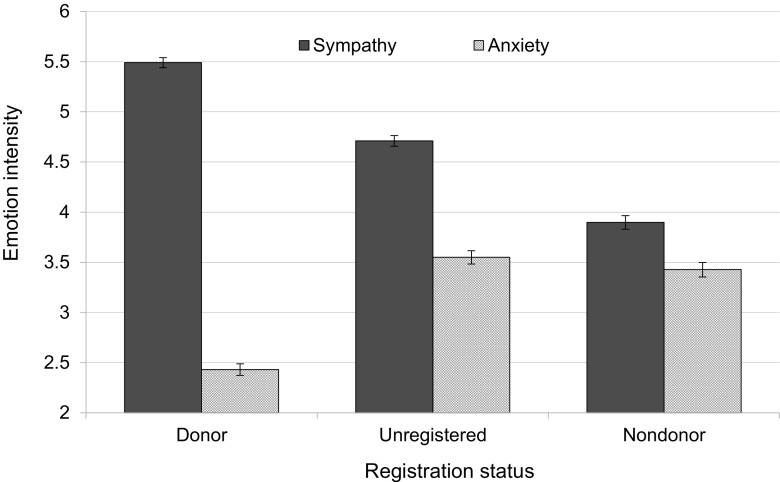
Background: In forming opinions about donor registration systems such as opt-in versus opt-out, the sociopolitical implications of these systems may be confounded with attitudes toward organ donation itself, causing people to talk at cross purposes. The goal of the present research was to examine the interactive effects of sociopolitical viewpoint, attitude toward donation (as evidenced by current registration status in study 1 and registration intention of unregistered individuals in study 2), and patients' need for organs on people's support for a particular system.
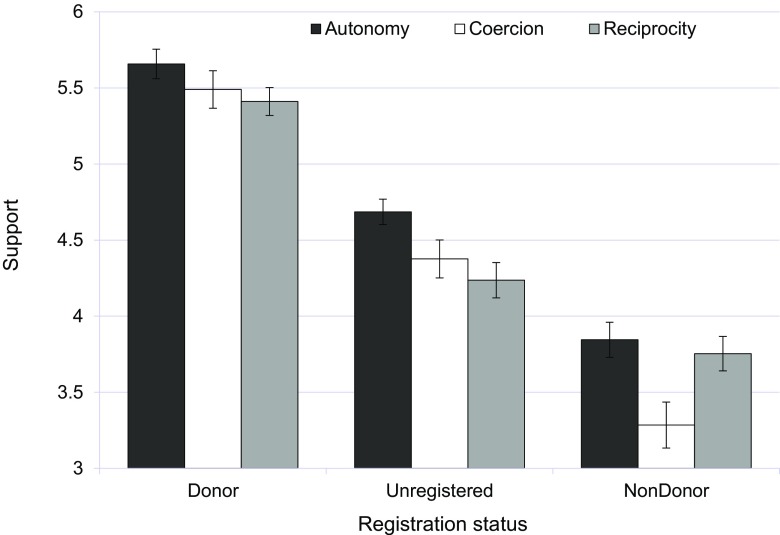
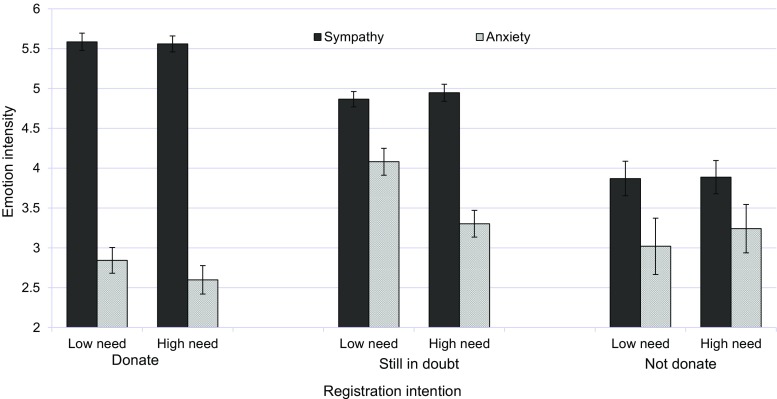
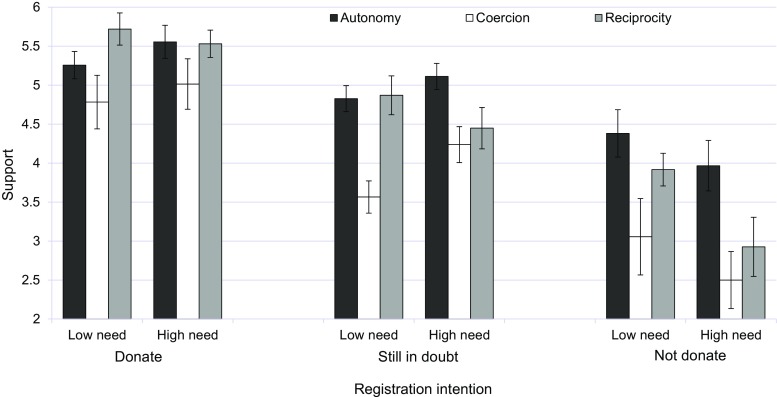
Method: In study 1, we randomly assigned registered donors, registered nondonors, and nonregistered individuals to one of three sociopolitically inspired solutions to reducing the organ shortage, distinguishing between solutions based on autonomy, coercion by the state, and reciprocity, respectively. In study 2, we concentrated specifically on young and unregistered people in order to examine how prior donation intentions or indecision with respect to donor registration affect responses to the three different sociopolitical viewpoints. In both studies, we also manipulated salience of patients' need.
Results: Registered donors in study 1 and unregistered individuals with donation intention in study 2 (high in sympathy, low in anxiety) were highly and equally supportive of a solution based on autonomy and coercion. In contrast, registered nondonors in study 1 and unregistered and undecided individuals in study 2 (lower in sympathy, higher in anxiety) were less supportive of a solution based on coercion than autonomy. Study 2 also found that, for undecided individuals, a more salient need state was associated with a drop in anxiety and stronger support for coercion. Results for a system based on reciprocity were more difficult to interpret.
Conclusion: Individuals most concerned with the need of patients waiting for an organ are relatively indifferent with respect to the sociopolitical implications of a registration system, while those strongly objecting to a coercive role for the state express reservations against organ donation itself. In order to help people to form balanced opinions about organ donation systems, we recommend to make the prosocial and sociopolitical aspects equally salient and deserving of debate.
Keywords: Attitudes; Autonomy; Beliefs; Coercion; Donor registration system; Opt-in versus opt-out; Posthumous organ donation; Reciprocity; Sociopolitical viewpoints.
Conflict of interest statement
Ethical Approval
All procedures performed in studies involving human participants were in accordance with the ethical standards of the institutional and/or national research committee and with the 1964 Helsinki declaration and its later amendments or comparable ethical standards.
Conflict of Interest
The authors declare that they have no conflict of interest.
Figures
References
-
- Taels M, van Raaij F. Eindrapport: Beslissystemen, beloningen en orgaandonatie. Tilburg: Tilburg University; 2008.
-
- The Gallup Organization. National survey of organ and tissue donation attitudes and behaviors. 2005.
-
- Moseley A, Stoker G. Putting public policy defaults to the test: the case of organ donation registration. International Public Management Journal. 2015;18:246–264. doi: 10.1080/10967494.2015.1012574. - DOI
-
- Rithalia A, McDaid C, Suekarran S, Norman G, Myers L, Sowden A. A systematic review of presumed consent systems for deceased organ donation. Health Technol Assess. 2009;13(26). - PubMed
Publication types
MeSH terms
LinkOut - more resources
Full Text Sources
Medical
