


One Size Doesn't Fit All: Using Factor Analysis to Gather Validity Evidence When Using Surveys in Your Research
- PMID: 30821600
- PMCID: PMC6757227
- DOI: 10.1187/cbe.18-04-0064
One Size Doesn't Fit All: Using Factor Analysis to Gather Validity Evidence When Using Surveys in Your Research
Abstract
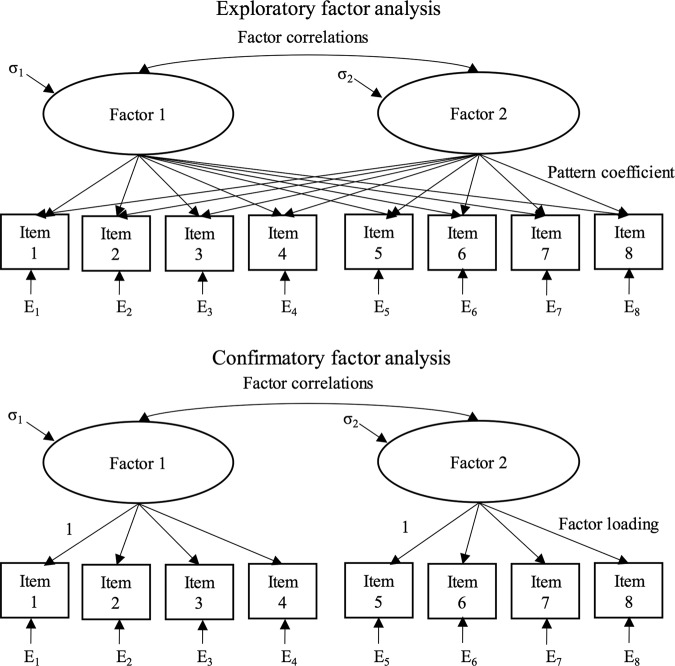
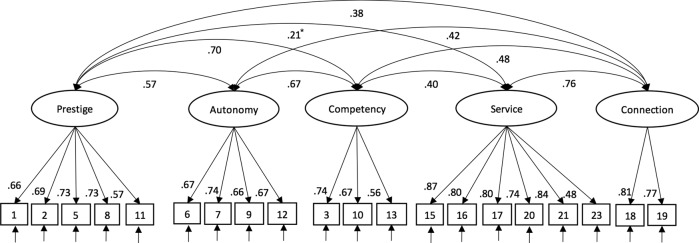
Across all sciences, the quality of measurements is important. Survey measurements are only appropriate for use when researchers have validity evidence within their particular context. Yet, this step is frequently skipped or is not reported in educational research. This article briefly reviews the aspects of validity that researchers should consider when using surveys. It then focuses on factor analysis, a statistical method that can be used to collect an important type of validity evidence. Factor analysis helps researchers explore or confirm the relationships between survey items and identify the total number of dimensions represented on the survey. The essential steps to conduct and interpret a factor analysis are described. This use of factor analysis is illustrated throughout by a validation of Diekman and colleagues' goal endorsement instrument for use with first-year undergraduate science, technology, engineering, and mathematics students. We provide example data, annotated code, and output for analyses in R, an open-source programming language and software environment for statistical computing. For education researchers using surveys, understanding the theoretical and statistical underpinnings of survey validity is fundamental for implementing rigorous education research.
Figures
References
-
- American Educational Research Association, American Psychological Association, and National Council for Measurement in Education (AERA, APA, and NCME). (2014). Standards for educational and psychological testing. Washington, DC.
-
- Bakan D. (1966). The duality of human existence: An essay on psychology and religion. Oxford, UK: Rand McNally.
Publication types
MeSH terms
LinkOut - more resources
Full Text Sources
