Comparative Study
. 2019 Jul;9(7):746-758.
doi: 10.1002/alr.22324. Epub 2019 Mar 1.

Comparative study of simulated nebulized and spray particle deposition in chronic rhinosinusitis patients

Affiliations
Comparative Study

Comparative study of simulated nebulized and spray particle deposition in chronic rhinosinusitis patients

Zainab Farzal et al. Int Forum Allergy Rhinol. 2019 Jul.

Abstract

Background: Topical intranasal drugs are widely prescribed for chronic rhinosinusitis (CRS), although delivery can vary with device type and droplet size. The study objective was to compare nebulized and sprayed droplet deposition in the paranasal sinuses and ostiomeatal complex (OMC) across multiple droplet sizes in CRS patients using computational fluid dynamics (CFD).

Methods: Three-dimensional models of sinonasal cavities were constructed from computed tomography (CT) scans of 3 subjects with CRS refractory to medical therapy using imaging software. Assuming steady-state inspiratory airflow at resting rate, CFD was used to simulate 1-µm to 120-µm sprayed droplet deposition in the left and right sinuses and OMC with spray nozzle positioning as in current nasal spray use instructions. Zero-velocity nebulization simulations were performed for 1-µm to 30-µm droplet sizes, maximal sinus and OMC deposition fractions (MSDF) were obtained, and sizes that achieved at least 50% of MSDF were identified. Nebulized MSDF was compared to sprayed droplet deposition. We also validated CFD framework through in vitro experiments.

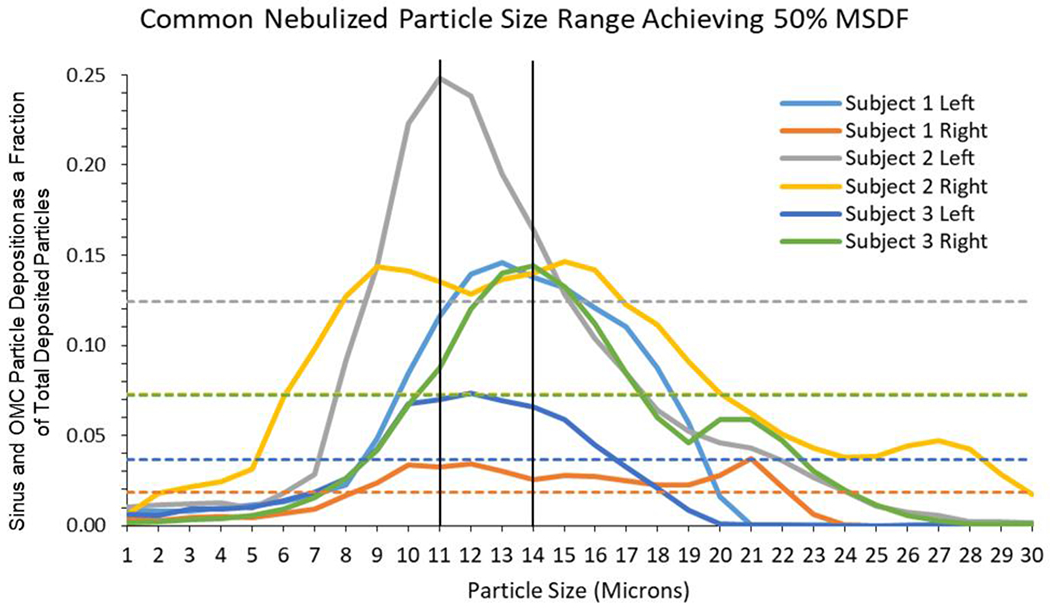
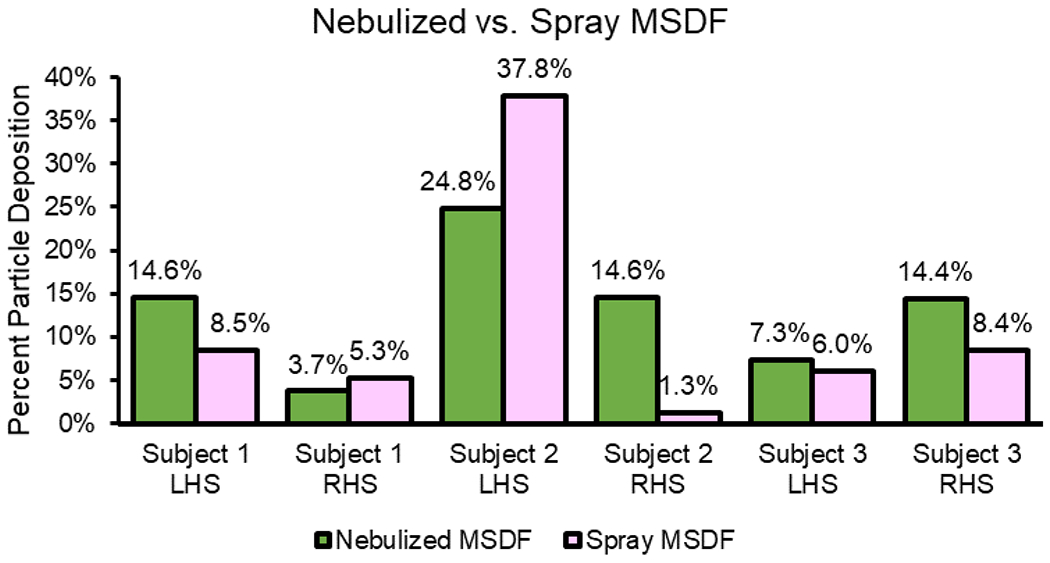
Results: Among nebulized droplet sizes, 11-µm to 14-µm droplets achieved at least 50% of MSDF in all 6 sinonasal cavities. Four of 6 sinonasal cavities had greater sinus and OMC deposition with nebulized droplets than with sprayed droplets at optimal sizes.

Conclusion: Nebulized droplets may target the sinuses and OMC more effectively than sprayed particles at sizes achieving best deposition. Further studies are needed to confirm our preliminary findings. Several commercial nasal nebulizers have average particle sizes outside the optimal nebulized droplet size range found here, suggesting potential for product enhancement.

Keywords: chronic rhinosinusitis; computational fluid dynamics; intranasal steroids; nebulizer; topical drug delivery.


Conflict of interest statement

Financial Conflict of Interest Disclosure: None

Figures

Figure 1.
Figure 1.
Sinonasal 3-D reconstructions and mesh. A) Axial View. B) Coronal View. C) Sagittal View. Box denotes OMC region (green) with maxillary sinus removed for visualization. D) Tetrahedral mesh with three prism wide edges at nostril. 3-D, three dimensional; OMC, ostiomeatal complex.
Figure 2.
Figure 2.
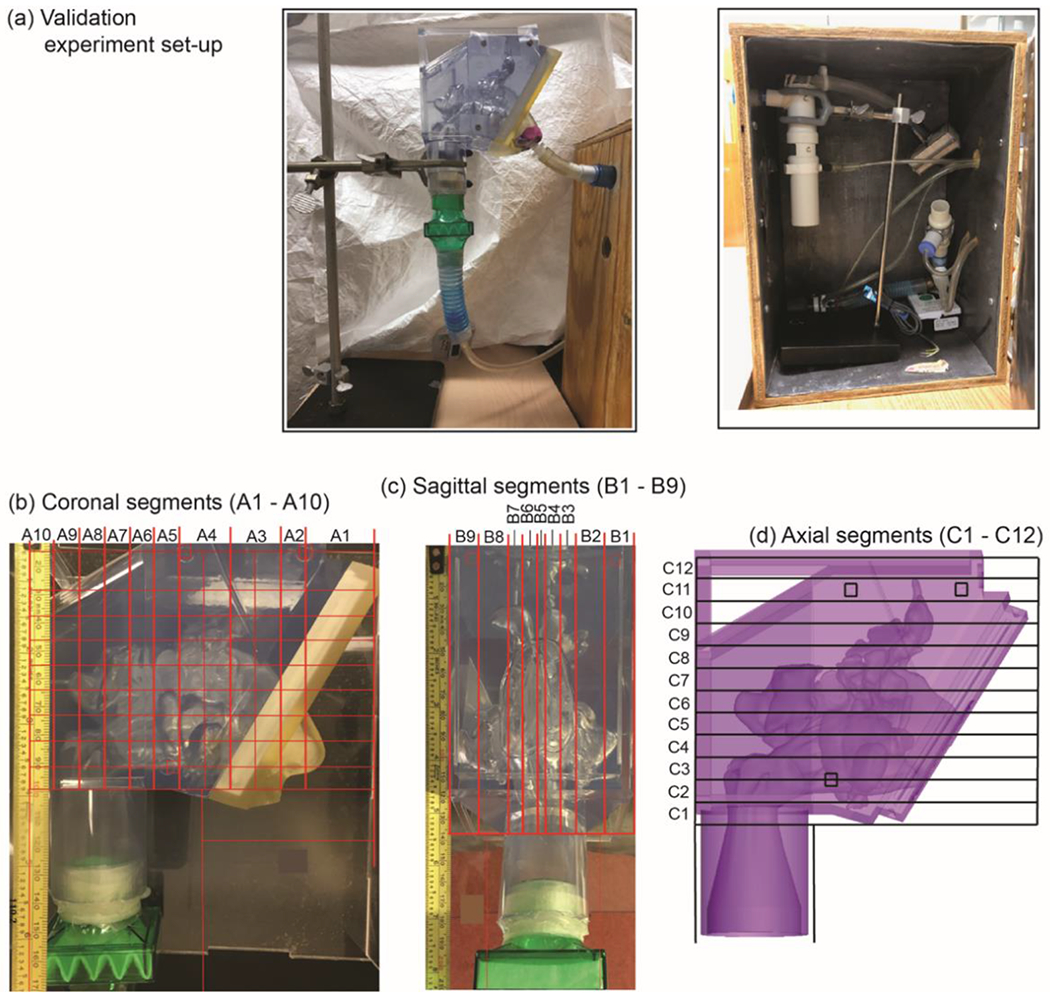
Validation experiment set-up. A) The nebulizer was positioned in a lead-lined box and connected to tubing with an inlet along the 3-D printed model’s right nostril surface and held in place with putty. A filter (green) represents the outlet. B, C, and D) In order to assess particle deposition to various regions of the sinonasal cavity, a grid method was used as shown.
Figure 3.
Figure 3.
Determination of particles meeting 50% maximal sinus and OMC deposition fraction (MSDF) criteria. After the MSDF and the particle size achieving MSDF were determined, all particles meeting half the MSDF or greater were included and reported as the size range meeting 50% MSDF. This example shows nebulizer particle deposition in subject 1 left hand side (LHS). OMC, ostiomeatal complex.
Figure 4.
Figure 4.
Determination of Common Nebulizer Particle Size Range Across Subjects. Sinus and OMC deposition is shown for all subjects. The solid color lines represent the deposition fractions for each subject across particle sizes. The matched color dotted lines represent particle deposition fraction at which 50% maximal sinus and OMC deposition fraction (MSDF) was achieved for the corresponding subject. A common particle size range of 11-14 micron particles achieving at least 50% MSDF across all subjects (range represented within the vertical black lines). OMC, ostiomeatal complex.
Figure 5.
Figure 5.
Nebulizer vs. Spray Particle Maximal Sinus and OMC Deposition Fraction (MSDF). All cases had greater nebulized particle MSDF, except for subject 1 right side and subject 2 left side which exhibited greater spray particle deposition. OMC, ostiomeatal complex.
Figure 6.
Figure 6.
Deposition Fractions for All Sinuses and OMC across Subjects. OMC, ostiomeatal complex.
Figure 7.
Figure 7.
Post-Vestibule Penetrance and Total Deposition Fractions. Post-vestibule refers to deposition beyond the anterior nasal cavity region, beyond the internal nasal valve. Penetration fraction = fraction of particles depositing beyond the anterior nasal cavity.
Figure 8.
Figure 8.
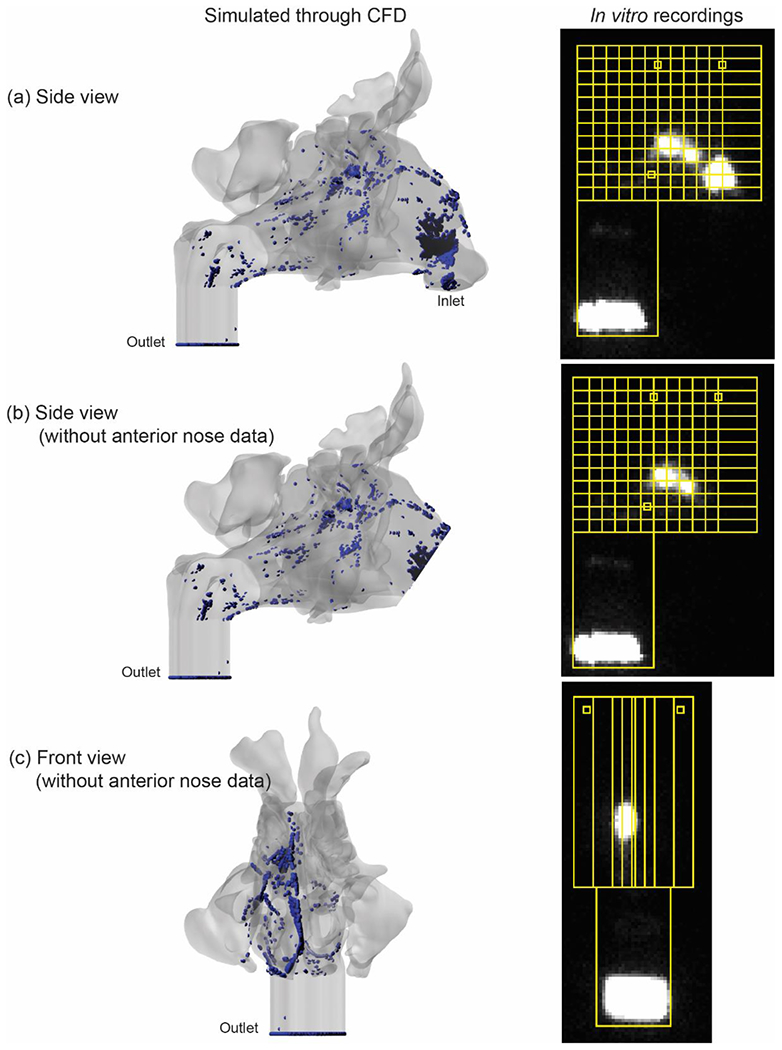
Validation of CFD Nebulized Particle Model. Left: Visualization of CFD nebulized particle deposition (blue = deposited particles). Right: Gamma scintigraphy-based nebulized particle deposition (bright signal = deposited particles). “Anterior nose” region is excluded in panels B and C to remove the high gamma scintigraphy anterior nose signal for better visualization of deposition in the regions of interest more posteriorly.
Figure 9.
Figure 9.
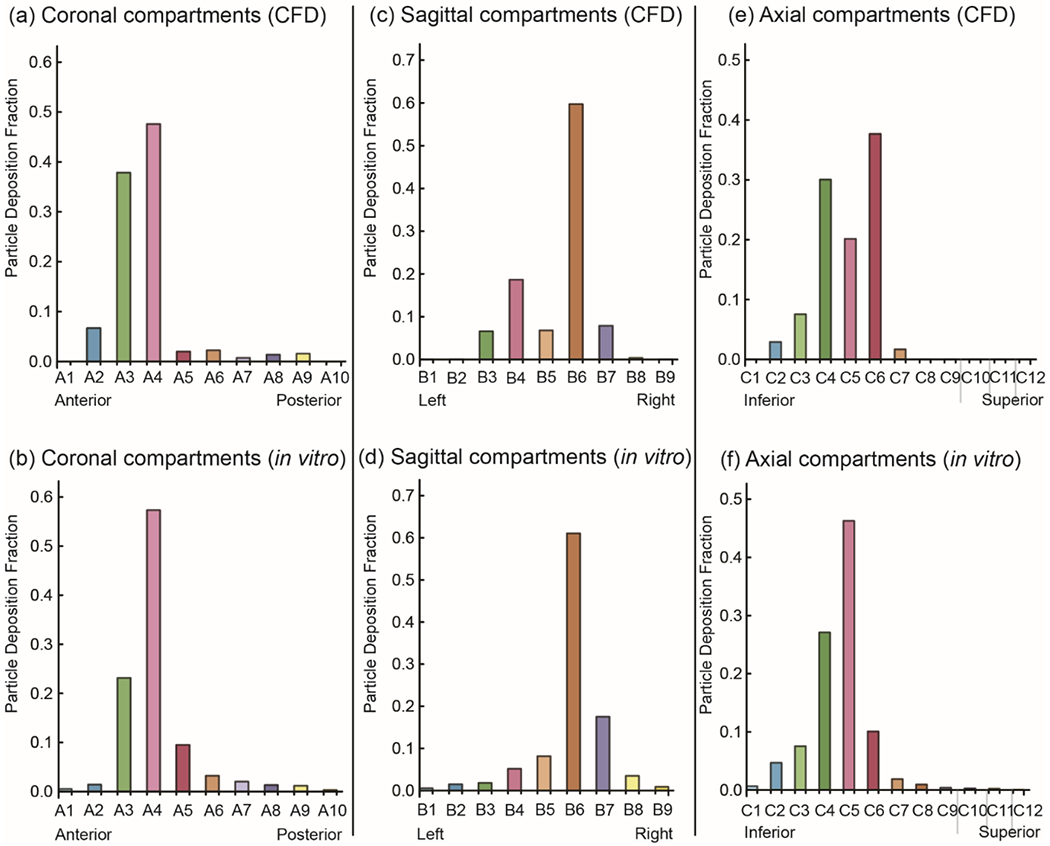
Comparison of CFD and in vitro deposition patterns for validation. Coronal (a and b), sagittal (c and d), and axial (e and f) compartmental views are shown. The “anterior nose” region was excluded. Compartment labels correspond to consecutive sections of the models in each view as shown in Figure 2.

References

    1. DeConde AS, Soler ZM. Chronic rhinosinusitis: Epidemiology and burden of disease. Am J Rhinol Allergy 2016; 30:134–139 PubMed. - PubMed
    1. Smith KA, Orlandi RR, Rudmik L. Cost of adult chronic rhinosinusitis: A systematic review. Laryngoscope 2015; 125:1547–1556 PubMed. - PubMed
    1. Rudmik L, Smith TL. Quality of life in patients with chronic rhinosinusitis. Curr Allergy Asthma Rep 2011; 11:247–252. - PubMed
    1. Rudmik L, Smith TL, Schlosser RJ, Hwang PH, Mace JC, Soler ZM. Productivity costs in patients with refractory chronic rhinosinusitis. Laryngoscope 2014; 124:2007–2012 PubMed. - PMC - PubMed
    1. Rudmik L, Hoy M, Schlosser RJ et al. Topical therapies in the management of chronic rhinosinusitis: an evidence-based review with recommendations. Int Forum Allergy Rhinol 2013; 3:281–298. - PubMed

Publication types