


Social Ecological Correlates of Family-Level Interpersonal and Environmental Microaggressions Toward Sexual and Gender Minority Adolescents
- PMID: 30828128
- PMCID: PMC6396286
- DOI: 10.1007/s10896-017-9937-0
Social Ecological Correlates of Family-Level Interpersonal and Environmental Microaggressions Toward Sexual and Gender Minority Adolescents
Abstract
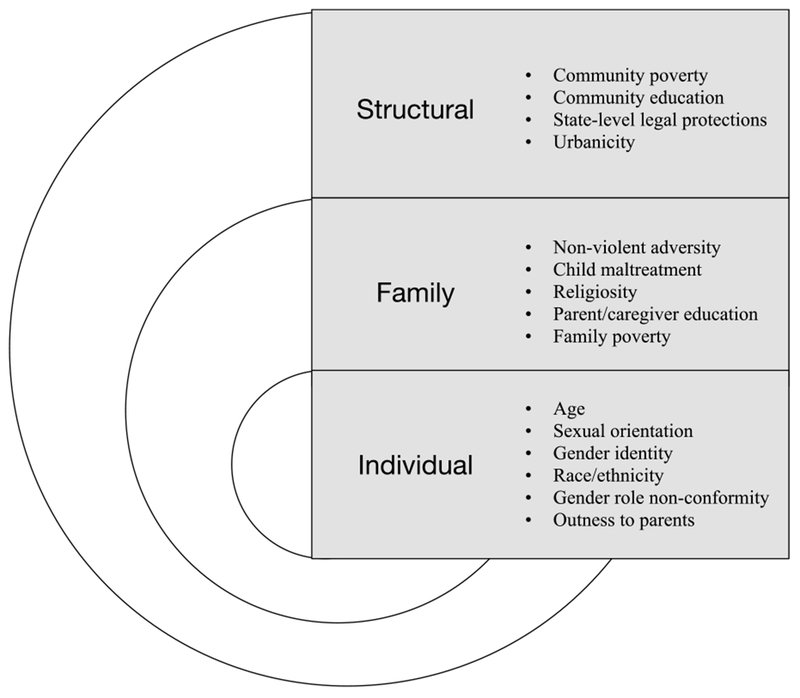
Microaggressions are associated with mental and behavioral health problems and are common experiences for sexual and gender minority adolescents (SGMA). Little is known about the social ecological correlates of family-level interpersonal and environmental microaggressions for SGMA. Utilizing a national sample of SGMA (N = 1,177), this study (a) identified the frequencies of family-level interpersonal and environmental microaggressions by participant demographics and (b) examined individual-, family-, and structural-level factors associated with interpersonal and environmental microaggressions. Outness to parents, a transgender or genderqueer identity, and higher levels of gender role non-conformity were associated with higher frequencies of interpersonal microaggressions. Higher levels of family-level child maltreatment and religiosity were associated with higher frequencies of interpersonal and environmental microaggressions. State-level non-discrimination protections were associated with lower frequencies of environmental microaggressions. Suggestions for increased individual-level support for gender non-binary adolescents as well as family targeted preventive strategies are discussed. Areas for future research are highlighted.
Keywords: adolescence; family violence; gender minority; microaggressions; minority stress; sexual minority.
Figures
References
-
- Brill S, & Kenney L (2016). The transgender teen: The handbook for parents and professionals supporting transgender and non-binary teens. Jersey City, NJ: Cleis Press.