


AD-8 for detection of dementia across a variety of healthcare settings
- PMID: 30828783
- PMCID: PMC6398085
- DOI: 10.1002/14651858.CD011121.pub2
AD-8 for detection of dementia across a variety of healthcare settings
Abstract
Background: Dementia assessment often involves initial screening, using a brief tool, followed by more detailed assessment where required. The AD-8 is a short questionnaire, completed by a suitable 'informant' who knows the person well. AD-8 is designed to assess change in functional performance secondary to cognitive change.
Objectives: To determine the diagnostic accuracy of the informant-based AD-8 questionnaire, in detection of all-cause (undifferentiated) dementia in adults. Where data were available, we described the following: the diagnostic accuracy of the AD-8 at various predefined threshold scores; the diagnostic accuracy of the AD-8 for each healthcare setting and the effects of heterogeneity on the reported diagnostic accuracy of the AD-8.
Search methods: We searched the following sources on 27 May 2014, with an update to 7 June 2018: ALOIS (Cochrane Dementia and Cognitive Improvement Group), MEDLINE (Ovid SP), Embase (Ovid SP), PsycINFO (Ovid SP), BIOSIS Previews (Thomson Reuters Web of Science), Web of Science Core Collection (includes Conference Proceedings Citation Index) (Thomson Reuters Web of Science), CINAHL (EBSCOhost) and LILACS (BIREME). We checked reference lists of relevant studies and reviews, used searches of known relevant studies in PubMed to track related articles, and contacted research groups conducting work on the AD-8 to try to find additional studies. We developed a sensitive search strategy and used standardised database subject headings as appropriate. Foreign language publications were translated.
Selection criteria: We selected those studies which included the AD-8 to assess for the presence of dementia and where dementia diagnosis was confirmed with clinical assessment. We only included those studies where the AD-8 was used as an informant assessment. We made no exclusions in relation to healthcare setting, language of AD-8 or the AD-8 score used to define a 'test positive' case.
Data collection and analysis: We screened all titles generated by electronic database searches, and reviewed abstracts of potentially relevant studies. Two independent assessors checked full papers for eligibility and extracted data. We extracted data into two-by-two tables to allow calculation of accuracy metrics for individual studies. We then created summary estimates of sensitivity, specificity and likelihood ratios using the bivariate approach and plotting results in receiver operating characteristic (ROC) space. We determined quality assessment (risk of bias and applicability) using the QUADAS-2 tool.
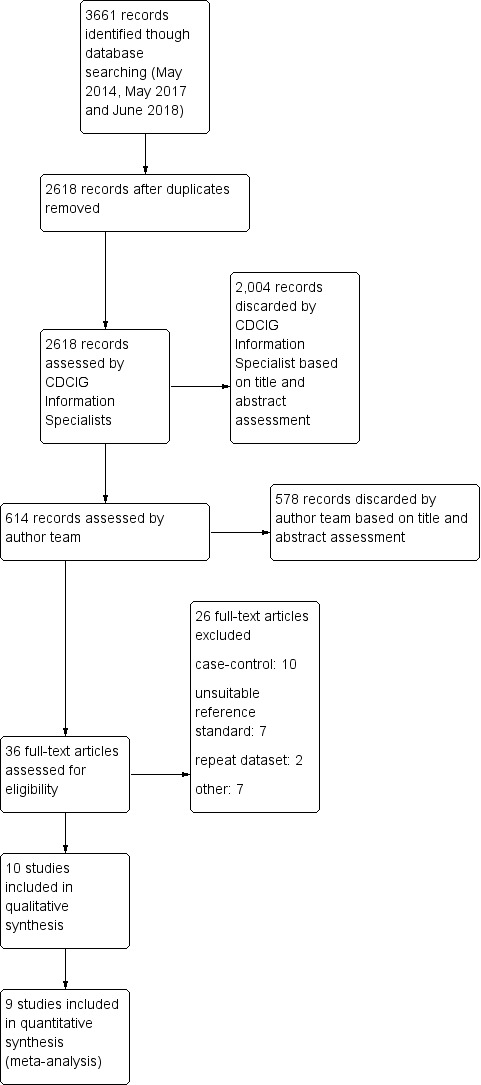
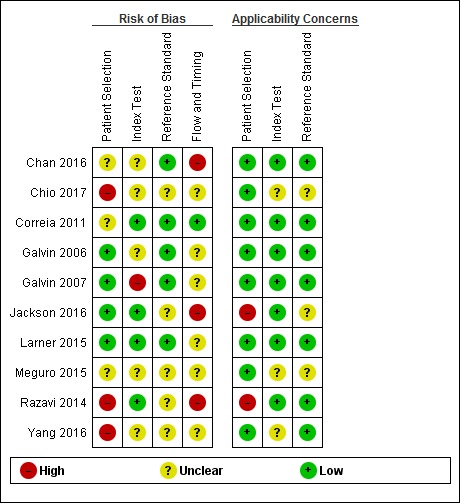
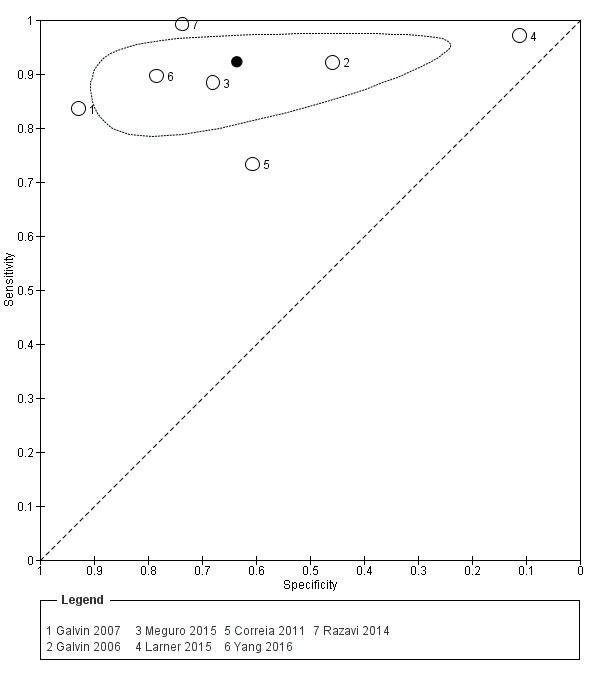
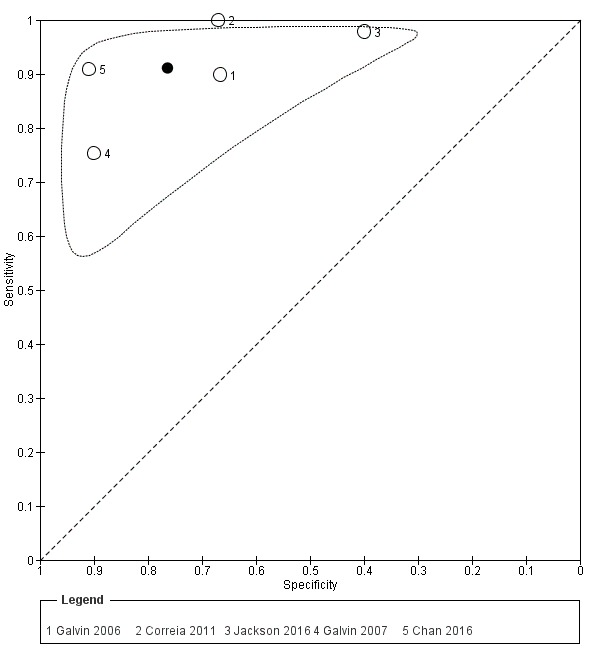
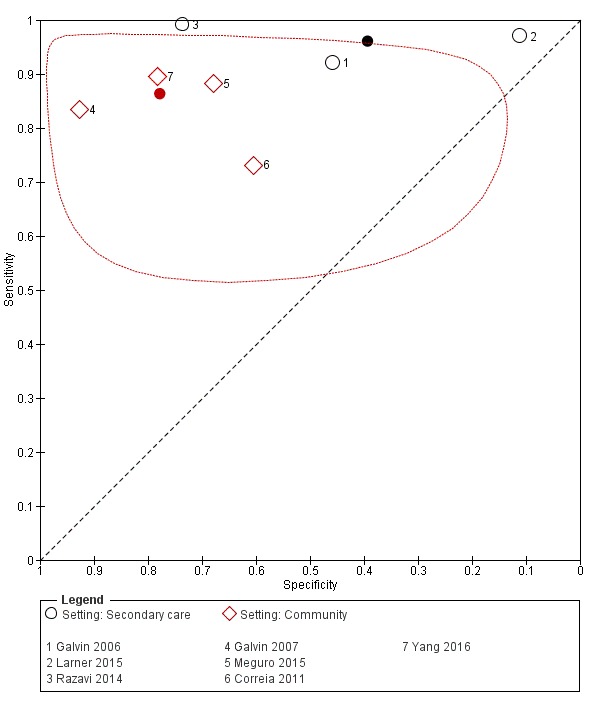
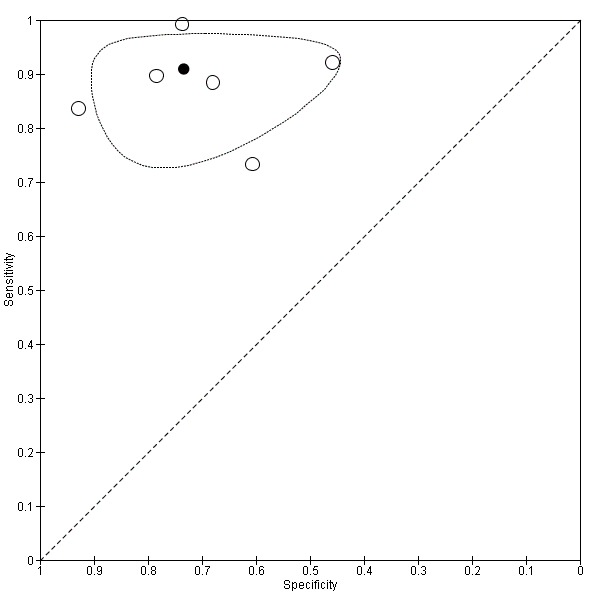
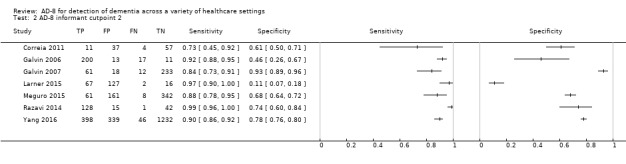
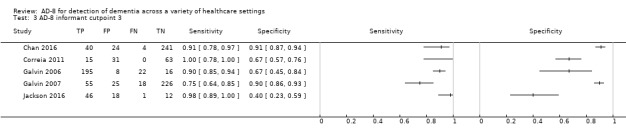
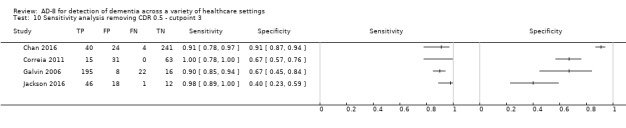
Main results: From 36 papers describing AD-8 test accuracy, we included 10 papers. We utilised data from nine papers with 4045 individuals, 1107 of whom (27%) had a clinical diagnosis of dementia. Pooled analysis of seven studies, using an AD-8 informant cut-off score of two, indicated that sensitivity was 0.92 (95% confidence interval (CI) 0.86 to 0.96); specificity was 0.64 (95% CI 0.39 to 0.82); the positive likelihood ratio was 2.53 (95% CI 1.38 to 4.64); and the negative likelihood ratio was 0.12 (95% CI 0.07 to 0.21). Pooled analysis of five studies, using an AD-8 informant cut-off score of three, indicated that sensitivity was 0.91 (95% CI 0.80 to 0.96); specificity was 0.76 (95% CI 0.57 to 0.89); the positive likelihood ratio was 3.86 (95% CI 2.03 to 7.34); and the negative likelihood ratio was 0.12 (95% CI 0.06 to 0.24).Four studies were conducted in community settings; four were in secondary care (one in the acute hospital); and one study was in primary care. The AD-8 has a higher relative sensitivity (1.11, 95% CI 1.02 to 1.21), but lower relative specificity (0.51, 95% CI 0.23 to 1.09) in secondary care compared to community care settings.There was heterogeneity across the included studies. Dementia prevalence rate varied from 12% to 90% of included participants. The tool was also used in various different languages. Among all the included studies there was evidence of risk of bias. Issues included the selection of participants, conduct of index test, and flow of assessment procedures.
Authors' conclusions: The high sensitivity of the AD-8 suggests it can be used to identify adults who may benefit from further specialist assessment and diagnosis, but is not a diagnostic test in itself. This pattern of high sensitivity and lower specificity is often suited to a screening test. Test accuracy varies by setting, however data in primary care and acute hospital settings are limited. This review identified significant heterogeneity and risk of bias, which may affect the validity of its summary findings.
Conflict of interest statement
KH: none known
CG: none known
RM: none known
ANS: none known
DJS: none known
SA: none known
AJS: none known
JKB: none known
TJQ: none known
Figures



Update of
References
References to studies included in this review
Chan 2016 {published data only}
-
- Chan QL, Xu X, Shaik MA, Chong SST, Hui RJY, Chen CLH, et al. Clinical utility of the Informant AD8 as a dementia case finding instrument in Primary healthcare. Journal of Alzheimer's Disease 2016;1:121‐7. - PubMed
Chio 2017 {published data only}
-
- Chio OI, Yip PK, Liu YC, Chen LH, Wang PC, Tsai TH, et al. Detection of cognitive impairment using self‐rated AD8 and informant‐reported AD8. Journal of the Formosan Medical Association/Taiwan yi zhi. 2017;117:42‐7. - PubMed
Correia 2011 {published data only}
-
- Correia CC, Lima F, Junqueira F, Campos MS, Bastos O, Petribu K, et al. AD8‐Brazil: Cross‐cultural validation of the Ascertaining Dementia Interview in Portuguese. Journal of Alzheimer's Disease 2011;27:177‐85. - PubMed
Galvin 2006 {published data only}
-
- Galvin JE, Roe CM, Xiong X, Morris JC. Validity and reliability of the AD8 informant interview in dementia. Neurology 2006;67:1942‐8. - PubMed
Galvin 2007 {published data only}
-
- Galvin JE, Roe CM, Coats MA, Morris JC. Patient's rating of cogntive ability. Archives of Neurology 2007;64:725‐30. - PubMed
Jackson 2016 {published data only}
-
- Jackson TA, MacLullich AMJ, Gladman JRF, Lord JM, Sheehan B. Diagnostic test accuracy of informant‐based tools to diagnose dementia in older hospital patients with delirium: a prospective cohort study. Age and Ageing 2016;45:505‐11. - PubMed
Larner 2015 {published data only}
-
- Larner AJ. AD8 Informant Questionnaire for cognitive impairment: pragmatic diagnostic test accuracy study. Journal of Geriatric Psychiatry and Neurology 2015;28(3):198‐202. - PubMed
Meguro 2015 {published data only}
-
- Meguro K, Kasai M, Nakamura K. Reliability and validity of the Japanese version of the AD8. Nihon Ronen Igakkai zasshi [Japanese Journal of Geriatrics] 2015;52(1):61‐70. - PubMed
Razavi 2014 {published data only}
References to studies excluded from this review
Basalo 2017 {published data only}
-
- Basalo MMG, Fernandez MC, Quintana MO, Rojas JI, Basalo MJG, Bogliotti E, et al. ALBA Screening Instrument (ASI): a brief screening tool for Lewy Body Dementia. Archives of Gerontology and Geriatrics 2017;70:67‐75. - PubMed
Blanco 2016 {published data only}
-
- Blanco R, Roman F, Iturry M, Leis A, Russo MJ, Bartoloni L. AD8‐Argentina questionnaire to detect dementia in primary health care. Neurologia Argentina 2016;8:231‐6.
Carnero 2013 {published data only}
Carpenter 2011 {published data only}
Carpenter 2011ii {published data only}
-
- Carpenter CR, Bassett ER, Fischer GM, Shirshekan J, Galvin JE, Morris JC. Four sensitive screening tools to detect cognitive dysfunction in Geriatric Emergency Department patients: Brief Alzheimer's Screen, Short Blessed Test, Ottawa 3DY, and Caregiver‐completed AD8. Academic Emergency Medicine 2011;18:374‐84. - PMC - PubMed
Chen 2017 {published data only}
-
- Chen S‐F, Liu M‐H, Chen N‐C, Horng H‐D, Tsao W‐L, Chang C‐C, et al. Educational effects on Ascertain Dementia 8‐item informant questionnaire to detect dementia in the Taiwanese population. International Psychogeriatrics 2017;1:9. - PubMed
Chen 2018 {published data only}
-
- Chen H‐H, Sun F‐J, Yeh T‐L, Liu H‐E, Huang H‐L, Kuo BI, et al. The diagnostic accuracy of the Ascertain Dementia 8 questionnaire for detecting cognitive impairment in primary care in the community, clinics and hospitals: a systematic review and meta‐analysis. Family Practice 2018;35:239‐46. - PMC - PubMed
Chin 2013 {published data only}
Dong 2013 {published data only}
-
- Dong Y, Pang WS, Lim LBS, Yang Y, Morris JC, Hilal S, et al. The informant AD8 is superior to participant AD8 in detecting cognitive impairment in a Memory Clinic setting. Journal of Alzheimer's Disease 2013;35:159‐68. - PubMed
Dong 2014 {published data only}
Dyer 2017 {published data only}
-
- Dyer AH, Briggs R, Nabeel S, O'Neill D, Kennelly SP. The Abbreviated Mental Test 4 for cognitive screening of older adults presenting to the Emergency Department. European Journal of Emergency Medicine 2017;6:417‐22. - PubMed
Galvin 2005 {published data only}
-
- Galvin JE, Roe CM, Powlishta KK, Coats MA, Muich SJ, Grant E, et al. The AD8 a brief informant interview to detect dementia. Neurology 2005;65:559‐64. - PubMed
Galvin 2007ii {published data only}
-
- Galvin JE, Roe CM, Morris JC. Evaluation of cognitive impairment in older adults. Archives of Neurology 2007;64:718‐24. - PubMed
Galvin 2010 {published data only}
Gottesman 2018 {published data only}
-
- Gottesman R, Weiss E, Facchini R, Valdesuso K, Marquez C, Zwerling J. The correlation between reported changes in cognitive functioning and objective performance on cognitive screening in English‐and Spanish‐speaking patients. Neurology 2018;90(15 Supplement):P5.174.
Hsieh 2015 {published data only}
-
- Hsieh I, Kuan T, Hsieh P, Chem S, Yen W, Lin Y. Detection of early cognitive impairment using AD8 in a young patient with stroke with cerebral autosomal dominant arteriopathy with subcortical infarcts and leukoencephalopathy syndrome: A case report. Current Topics in Care 2015;29:133‐7. - PMC - PubMed
Li 2012 {published data only}
-
- Li T, Wang HL, Yang YH, Galvin JE, Morris JC, Yu X. The reliability and validity of Chinese version of AD8 (abstract). Zhonghua Nei Ke Za Zhi 2012;51:777‐80. - PubMed
Malmstrom 2009 {published data only}
Munoz 2010 {published data only}
-
- Munoz C, Nunez J, Flores P, Behrens MI, Slachevsky YA. Usefulness of a brief informant interview to detect dementia, translated into Spanish (AD8‐Ch) [Utilidad de un cuestionario breve dirigido alinformante para el diagnóstico temprano decasos de demencia: La versión chilena del AD8(AD8‐Ch)]. Review of Medicine Chile 2010;138:1063‐65. - PubMed
Overton 2013 {published data only}
Pardo 2013 {published data only}
Ryu 2009 {published data only}
-
- Ryu HJ, Kim H, Han S. Validity and reliability of the Korean version of the AD8 informant interview (K‐AD8) in dementia. Alzheimer Disease and Associated Disorders 2009;23:371‐6. - PubMed
Tew 2015 {published data only}
Wojtowicz 2017 {published data only}
-
- Wojtowicz A, Larner AJ. Diagnostic test accuracy of cognitive screeners in older people. Progress in Neurology and Psychiatry. 2017;21(1):17‐21.
Xie 2014 {published data only}
Additional references
Anwer 2017
-
- Anwer S. A systematic review and meta‐analysis of the performance of the AD‐8 for the diagnosis of dementia including synthesis of multiple threshold data from individual studies [Masters thesis]. University of Leicester 2017.
Bahar‐Fuchs 2013
Banerjee 2009
-
- Banerjee S, Wittenberg R. Clinical and cost effectiveness of services for early diagnosis and intervention in dementia. International Journal of Geriatric Psychiatry 2009;24(7):748‐54. - PubMed
Birks 2018
Boustani 2003
-
- Boustani M, Peterson B, Hanson L, Harris R, Lohr KN. Screening for dementia in primary care: a summary of the evidence for the US Preventative Services Task Force. Annals of Internal Medicine 2003;138(11):927‐37. - PubMed
Bradford 2009
Brodaty 2002
-
- Brodaty H. The GPCOG: a new screening test for dementia designed for general practice. Journal of the American Geriatrics Society 2002;50(3):530‐4. - PubMed
Brunet 2012
-
- Brunet MD, McCartney M, Heath I, Tomlinson J, Gorodon P, Cosgrove J, et al. There is no evidence base for proposed dementia screening. BMJ 2012;345:e8588. - PubMed
Burn 2018
Chodosh 2004
-
- Chodosh J, Petitti DB, Elliott M, Hays RD, Crooks VC, Reuben DB, et al. Physician recognition of cognitive impairment: evaluating the need for improvement. Journal of the American Geriatrics Society 2004;52(7):1051‐9. - PubMed
Cordell 2013
-
- Cordell CB, Borson S, Boustani M, Chodosh J, Reuben D, Verghese J, et al. Medicare Detection of Cognitive Impairment Workgroup. Alzheimer's Association recommendations for operationalizing the detection of cognitive impairment during Medicare annual wellness visit in a primary care setting. Alzheimer's & Dementia 2013;9(2):141‐50. - PubMed
Davis 2013
-
- David DJH, Creavin ST, Noel‐Storr A, Quinn TJ, Smailagic N, Hyde C, et al. Neuropsychological tests for the diagnosis of Alzheimer's disease dementia and other dementias: a generic protocol for cross‐sectional and delayed verification studies.. Cochrane Database of Systematic Reviews 2013, Issue 4. [DOI: 10.1002/14651858.CD010460] - DOI - PMC - PubMed
Davis 2015
Donegan 2017
-
- Donegan K, Fox N, Black N, Livingston G, Banerjee S, Burns A. Trends in diagnosis and treatment for people with dementia in the UK from 2005 to 2015: a longitudinal retrospective cohort study. Lancet Public Health 2017;2:e149‐56. - PubMed
DSM‐IV
-
- American Psychiatric Association. Diagnostic and statistical manual of mental disorders (4th Ed). Washington DC: American Psychiatric Association, 2000.
Ferri 2005
Folstein 1975
-
- Folstein MF, Folstein SE, McHugh PR. "Minimental state": a practical method for grading the cognitive state of patients for the clinician. Journal of Psychiatric Research 1975;12(3):189‐98. - PubMed
Glanville 2010
-
- Glanville JM, Cikalo M, Crawford F, Dozier M, Lowson P. Handsearching for reports of diagnostic test accuracy studies adding to the evidence base. Joint Cochrane and Campbell Colloquium, Madrid, Spain. 2010.
Greenhalgh 2005
Harrison 2014
-
- Harrison JK, Fearon P, Noel‐Storr AH, McShane R, Stott DJ, Quinn TJ. Informant Questionnaire on Cognitive Decline in the Elderly (IQCODE) for the diagnosis of dementia within a general practice (primary care) setting. Cochrane Database of Systematic Reviews 2014, Issue 7. [DOI: 10.1002/14651858.CD010771.pub2] - DOI - PubMed
Harrison 2015
-
- Harrison JK, Fearon P, Noel‐Storr AH, McShane R, Stott DJ, Quinn TJ. Informant Questionnaire on Cognitive Decline in the Elderly (IQCODE) for the diagnosis of dementia within a secondary care setting. Cochrane Database of Systematic Reviews 2015, Issue 3. [DOI: 10.1002/14651858.CD010772.pub2] - DOI - PubMed
Harrison 2016
Hebert 2013
ICD‐10
-
- World Health Organisation. International Classification of Diseases (ICD) 10th Edition. WHO, 1992.
Iliffe 2009
-
- Iliffe S, Robinson L, Brayne C, Goodman C, Rait G, Manthorpe J, Ashley P, DeNDRoN Primary Care Clinical Studies Group. Primary care and dementia: 1. diagnosis, screening and disclosure. International Journal of Geriatric Psychiatry 2009;24(9):895‐901. - PubMed
Iliffe 2010
-
- Illiffe S, Pealing L. Subjective memory problems. BMJ 2010;340:c1425. - PubMed
Inouye 2014
Jackson 2017
Jorm 2004
-
- Jorm AF. The Informant Questionnaire on cognitive decline in the elderly (IQCODE): a review. International Psychogeriatrics 2004;16(3):275‐93. - PubMed
Kohn 2013
-
- Kohn MA, Carpenter CR, Newman TB. Understanding the direction of bias in studies of diagnostic test accuracy. Academic Emergency Medicine 2013;20(11):1194‐1206. - PubMed
Lang 2017
Lees 2017
-
- Lees RA, Hendry Ba K, Broomfield N, Stott D, Larner AJ, Quinn TJ. Cognitive assessment in stroke: feasibility and test accuracy using differing approaches to scoring of incomplete items. International Journal of Geriatric Psychiatry 2017;32(10):1072‐78. - PubMed
Livingston 2017
-
- Livingston G, Sommerlad A, Orgeta V, Costafreda SG, Huntley J, Ames D, et al. Dementia prevention, intervention, and care. Lancet 2017;390:2673‐734. - PubMed
Matthews 2013
-
- Matthews FE, Arthur A, Barnes LE, Bond J, Jagger C, Robinson L, et al. A two‐decade comparison of prevalence of dementia in individuals aged 65 and older from three geographical areas of England: results of the Cognitive Function and Ageing Study I and II. Lancet 2013;382(9902):1405‐12. - PMC - PubMed
McKeith 2005
-
- McKeith IG, Dickson DW, Lowe J, Emre M, O’Brien JT, Feldman H, et al. Diagnosis and management of dementia with Lewy bodies: third report of the DLB Consortium. Neurology 2005;65(12):1863‐72. - PubMed
McKhann 1984
-
- McKhann G, Drachman D, Folstein M, Katzman R, Price D, Stadlan EM. Clinical diagnosis of Alzheimer's disease: report of the NINCDS‐ADRDA work group under the auspices of Department of Health and Human Services task force on Alzheimer's Disease. Neurology 1984;34(7):939‐44. - PubMed
McKhann 2001
-
- McKhann GM, Albert MS, Grossman M, Miller B, Dickson D, Trojanowski JQ: Work Group on Frontotemporal dementia and Pick’s disease. Clinical and pathological diagnosis of frontotemporal dementia: report of the Work Group on Frontotemporal Dementia and Pick's Disease. Archives of Neurology 2001;58(11):1803‐9. - PubMed
McKhann 2011
-
- McKhann GM, Knopman DS, Chertkow H, Hyman BT, Jack CR Jr, Kawas CH, et al. The diagnosis of dementia due to Alzheimer’s disease:recommendations from the National Institute on Aging ‐ Alzheimer’s Association workgroup on diagnostic guidelines for Alzheimer's disease. Alzheimer's & Dementia 2011;7(3):263‐9. - PMC - PubMed
McShane 2006
Menon 2011
-
- Menon R, Larner AJ. Use of cognitive screening instruments in primary care: the impact of national dementia directives. Family Practice 2011;28(3):272‐6. - PubMed
Morris 1993
-
- Morris JC. The Clinical Dementia Rating (CDR): current version and scoring rules. Neurology 1993;43(11):2412‐4. - PubMed
Noel‐Storr 2014
Office for National Statistics 2018
-
- Office for National Statistics. Overview of the UK population: November 2017. Available from: https://www.ons.gov.uk/peoplepopulationandcommunity/populationandmigrati... 2018.
Owen 2018
-
- Owen RK, Cooper NJ, Quinn TJ, Lees RA, Sutton AJ. Network meta‐analysis of diagnostic test accuracy studies identifies and ranks the optimal diagnostic tests and thresholds for health care policy and decision‐making. Journal of Clinical Epidemiology 2018;99:64‐74. - PubMed
Prince 2013
-
- Prince M, Bryce R, Albanese E, Wimo A, Ribeiro W, Ferri CP. The global prevalence of dementia: a systematic review and metaanalysis. Alzheimer's and Dementia 2013;9(1):63‐75. - PubMed
Quinn 2014
-
- Quinn TJ, Fearon P, Noel‐Starr A, Young C, McShane R, Stott DJ. Informant Questionnaire on Cognitive Decline in the Elderly (IQCODE) for the diagnosis of dementia within community dwelling populations. Cochrane Database of Systematic Reviews 2014, Issue 4. [DOI: 10.1002/14651858.CD010079.pub2] - DOI - PubMed
RevMan 2012 [Computer program]
-
- The Nordic Cochrane Centre, The Cochrane Collaboration. Review Manager (RevMan). Version 5.2. Copenhagen: The Nordic Cochrane Centre, The Cochrane Collaboration, 2012.
Robinson 2015
Román 1993
-
- Román GC, Tatemichi TK, Erkinjutti T, Cummings JL, Masdeu JC, Garcia JH, et al. Vascular dementia: diagnostic criteria for research studies. Report of the NINDS‐AIREN international workshop. Neurology 1993;43(2):250‐60. - PubMed
Rutjes 2006
SAS release 9.4 [Computer program]
-
- SAS Institute. SAS release 9.4. SAS Institute, 2013.
Takwoingi 2018
-
- Takwoingi Y, Quinn TJ. Review of diagnostic test accuracy studies in older people. Age and Ageing 2018;47:349‐55. - PubMed
Valcour 2000
-
- Valcour VG, Masaki KH, Curb JD, Blanchette PL. The detection of dementia in the primary care setting. Archives of Internal Medicine 2000;160(19):2964‐8. - PubMed
