Review
. 2019 Mar 4;129(4):1407-1418.
doi: 10.1172/JCI122287.

Oncolytic viruses: overcoming translational challenges

Affiliations
Review

Oncolytic viruses: overcoming translational challenges

Jordi Martinez-Quintanilla et al. J Clin Invest. .

Abstract

Oncolytic virotherapy (OVT) is a promising approach in which WT or engineered viruses selectively replicate and destroy tumor cells while sparing normal ones. In the last two decades, different oncolytic viruses (OVs) have been modified and tested in a number of preclinical studies, some of which have led to clinical trials in cancer patients. These clinical trials have revealed several critical limitations with regard to viral delivery, spread, resistance, and antiviral immunity. Here, we focus on promising research strategies that have been developed to overcome the aforementioned obstacles. Such strategies include engineering OVs to target a broad spectrum of tumor cells while evading the immune system, developing unique delivery mechanisms, combining other immunotherapeutic agents with OVT, and using clinically translatable mouse tumor models to potentially translate OVT more readily into clinical settings.


Conflict of interest statement

Conflict of interest: KS owns equity in and is a member of the board of directors of AMASA Technologies Inc., a company developing cell-based therapies for cancer. KS’s interests were reviewed and are managed by Brigham and Women’s Hospital and Partners HealthCare in accordance with their conflict of interest policies.

Figures

Figure 1
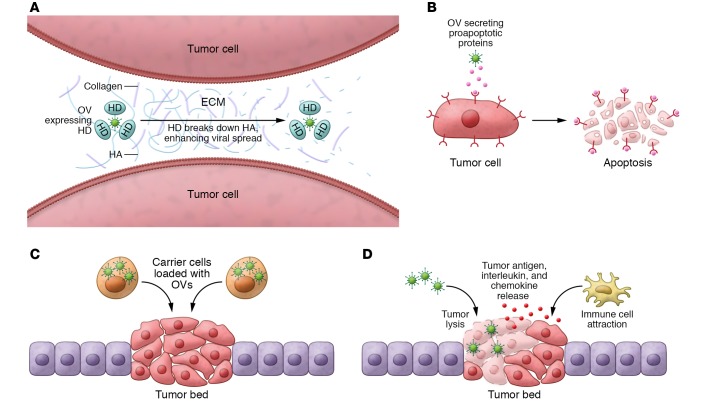
Figure 1. Strategies to circumvent the obstacles observed in clinical trials using OVs.
(A) Enhancing intratumor viral spread. OVs engineered to express hyaluronidase (HD) are able to break down HA in the ECM, enhancing the ease of intratumor spread of the OV. (B) Sensitize tumor cells to OV therapy. OVs engineered to secrete proapoptotic proteins revert tumor resistance to OV therapies. (C) Optimizing OV delivery. Carrier cells protect OVs from the immune system and increase tumor targeting of OVs. (D) OV-mediated immunotherapy. OV-mediated oncolysis boosts the immune system response against tumor cells, improving overall therapeutic response.
Figure 2
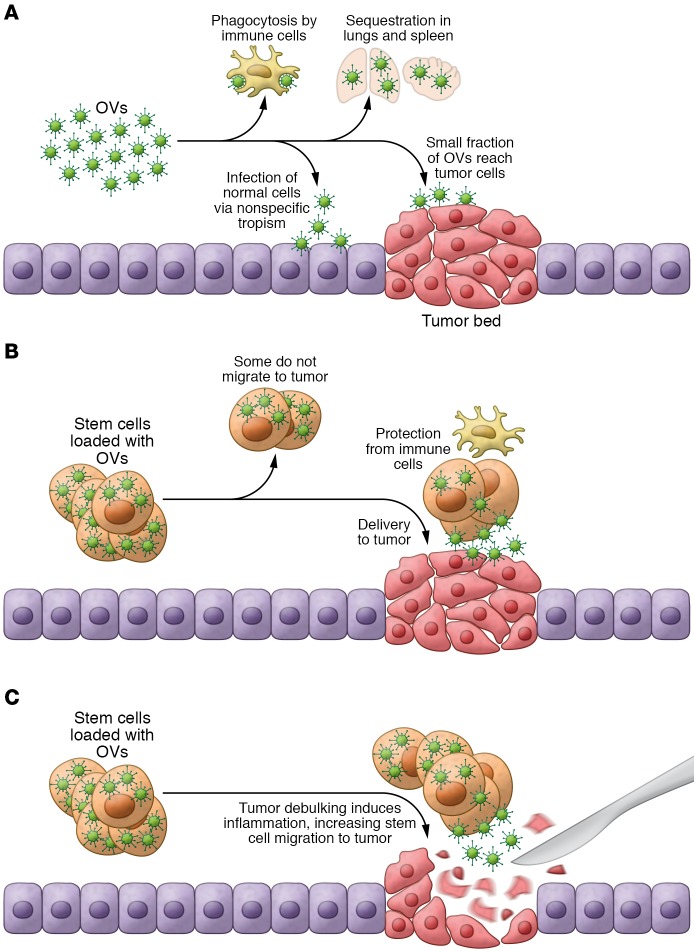
Figure 2. Optimizing OV delivery with SCs.
(A) Intrinsic immunotherapy of OVs. OVs administered systemically are phagocytosed by immune cells before reaching tumor cells. Furthermore, some OVs infect normal cells via nonspecific tropism, and other OVs are sequestered in the lung and spleen. (B) SCs loaded with OVs migrate to intact tumors. SCs protect OVs from the immune cells and target them to the tumor sites. (C) SCs loaded with OVs migrate to debulked tumors. Tumor debulking releases tumor antigens and causes inflammation in the surrounding area, attracting SCs loaded with OVs to the remaining tumor deposits.
Figure 3
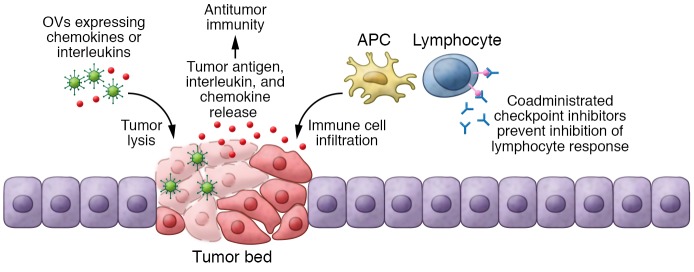
Figure 3. Oncolytic immunotherapy.
OVs engineered to activate immune system release interleukins or chemokines after tumor cell infection, activating the immune response against the tumor. Coadministered checkpoint inhibitors prevent the inhibition of immune response, ensuring that immune cells are constantly activated against the tumor cells. APC, antigen-presenting cell.

References

    1. Chiocca EA, Rabkin SD. Oncolytic viruses and their application to cancer immunotherapy. Cancer Immunol Res. 2014;2(4):295–300. doi: 10.1158/2326-6066.CIR-14-0015. - DOI - PMC - PubMed
    1. Maroun J, Muñoz-Alía M, Ammayappan A, Schulze A, Peng KW, Russell S. Designing and building oncolytic viruses. Future Virol. 2017;12(4):193–213. doi: 10.2217/fvl-2016-0129. - DOI - PMC - PubMed
    1. Guo ZS, et al. Oncolytic immunotherapy: conceptual evolution, current strategies, and future perspectives. Front Immunol. 2017;8:555. - PMC - PubMed
    1. Russell SJ, Barber GN. Oncolytic viruses as antigen-agnostic cancer vaccines. Cancer Cell. 2018;33(4):599–605. doi: 10.1016/j.ccell.2018.03.011. - DOI - PMC - PubMed
    1. Liu TC, Galanis E, Kirn D. Clinical trial results with oncolytic virotherapy: a century of promise, a decade of progress. Nat Clin Pract Oncol. 2007;4(2):101–117. doi: 10.1038/ncponc0736. - DOI - PubMed

Publication types