


Probiotics and Prebiotics for the Amelioration of Type 1 Diabetes: Present and Future Perspectives
- PMID: 30832381
- PMCID: PMC6463158
- DOI: 10.3390/microorganisms7030067
Probiotics and Prebiotics for the Amelioration of Type 1 Diabetes: Present and Future Perspectives
Abstract
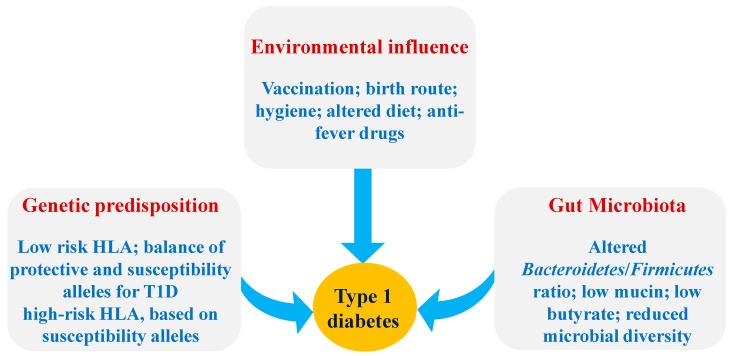
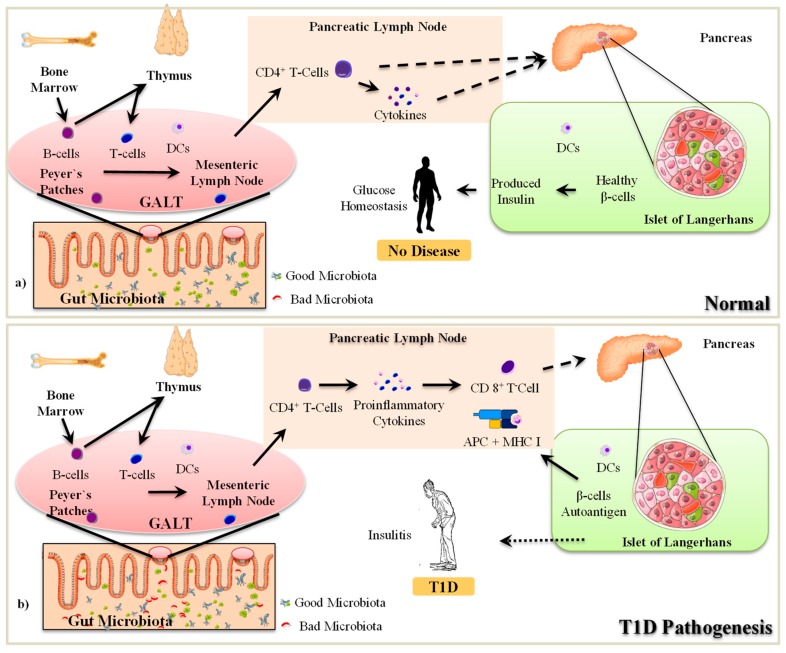
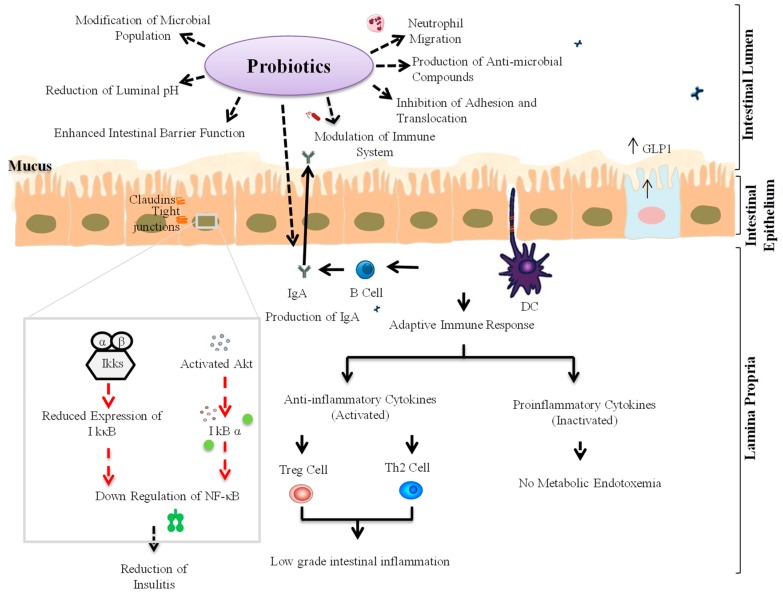
Type 1-diabetes (T1D) is an autoimmune disease characterized by immune-mediated destruction of pancreatic beta (β)-cells. Genetic and environmental interactions play an important role in immune system malfunction by priming an aggressive adaptive immune response against β-cells. The microbes inhabiting the human intestine closely interact with the enteric mucosal immune system. Gut microbiota colonization and immune system maturation occur in parallel during early years of life; hence, perturbations in the gut microbiota can impair the functions of immune cells and vice-versa. Abnormal gut microbiota perturbations (dysbiosis) are often detected in T1D subjects, particularly those diagnosed as multiple-autoantibody-positive as a result of an aggressive and adverse immunoresponse. The pathogenesis of T1D involves activation of self-reactive T-cells, resulting in the destruction of β-cells by CD8⁺ T-lymphocytes. It is also becoming clear that gut microbes interact closely with T-cells. The amelioration of gut dysbiosis using specific probiotics and prebiotics has been found to be associated with decline in the autoimmune response (with diminished inflammation) and gut integrity (through increased expression of tight-junction proteins in the intestinal epithelium). This review discusses the potential interactions between gut microbiota and immune mechanisms that are involved in the progression of T1D and contemplates the potential effects and prospects of gut microbiota modulators, including probiotic and prebiotic interventions, in the amelioration of T1D pathology, in both human and animal models.
Keywords: autoimmune; diabetes; diet; fiber; gut; microbiota; microflora; prebiotics; probiotics.
Conflict of interest statement
The authors declare no conflict of interest.
Figures
References
-
- Lamichhane S., Ahonen L., Dyrlund T.S., Siljander H., Hyoty H., Ilonen J., Toppari J., Veijola R., Hyotylainen T., Knip M., et al. A longitudinal plasma lipidomics dataset from children who developed islet autoimmunity and type 1 diabetes. Sci. Data. 2018;5:180250. doi: 10.1038/sdata.2018.250. - DOI - PMC - PubMed
-
- Patterson C.C., Harjutsalo V., Rosenbauer J., Neu A., Cinek O., Skrivarhaug T., Rami-Merhar B., Soltesz G., Svensson J., Parslow R.C., et al. Trends and cyclical variation in the incidence of childhood type 1 diabetes in 26 European centres in the 25 year period 1989–2013: A multicentre prospective registration study. Diabetologia. 2018 doi: 10.1007/s00125-018-4763-3. - DOI - PubMed
Publication types
Grants and funding
LinkOut - more resources
Full Text Sources
Other Literature Sources
Medical
Research Materials
