


Comparative transcriptome analysis reveals significant differences in the regulation of gene expression between hydrogen cyanide- and ethylene-treated Arabidopsis thaliana
- PMID: 30832566
- PMCID: PMC6399987
- DOI: 10.1186/s12870-019-1690-5
Comparative transcriptome analysis reveals significant differences in the regulation of gene expression between hydrogen cyanide- and ethylene-treated Arabidopsis thaliana
Abstract
Background: Hydrogen cyanide (HCN) is a small gaseous molecule that is predominantly produced as an equimolar co-product of ethylene (ET) biosynthesis in plants. The function of ET is of great concern and is well studied; however, the function of HCN is largely unknown. Similar to ET, HCN is a simple and diffusible molecule that has been shown to play a regulatory role in the control of some metabolic processes in plants. Nevertheless, it is still controversial whether HCN should be regarded as a signalling molecule, and the cross-talk between HCN and ET in gene expression regulation remains unclear. In this study, RNA sequencing (RNA-seq) was performed to compare the differentially expressed genes (DEGs) between HCN and ET in Arabidopsis. Gene Ontology (GO) and Kyoto Encyclopedia of Genes and Genomes (KEGG) analyses were subsequently performed to investigate the function and pathway enrichment of DEGs. Parts of key genes were confirmed by quantitative real-time PCR.
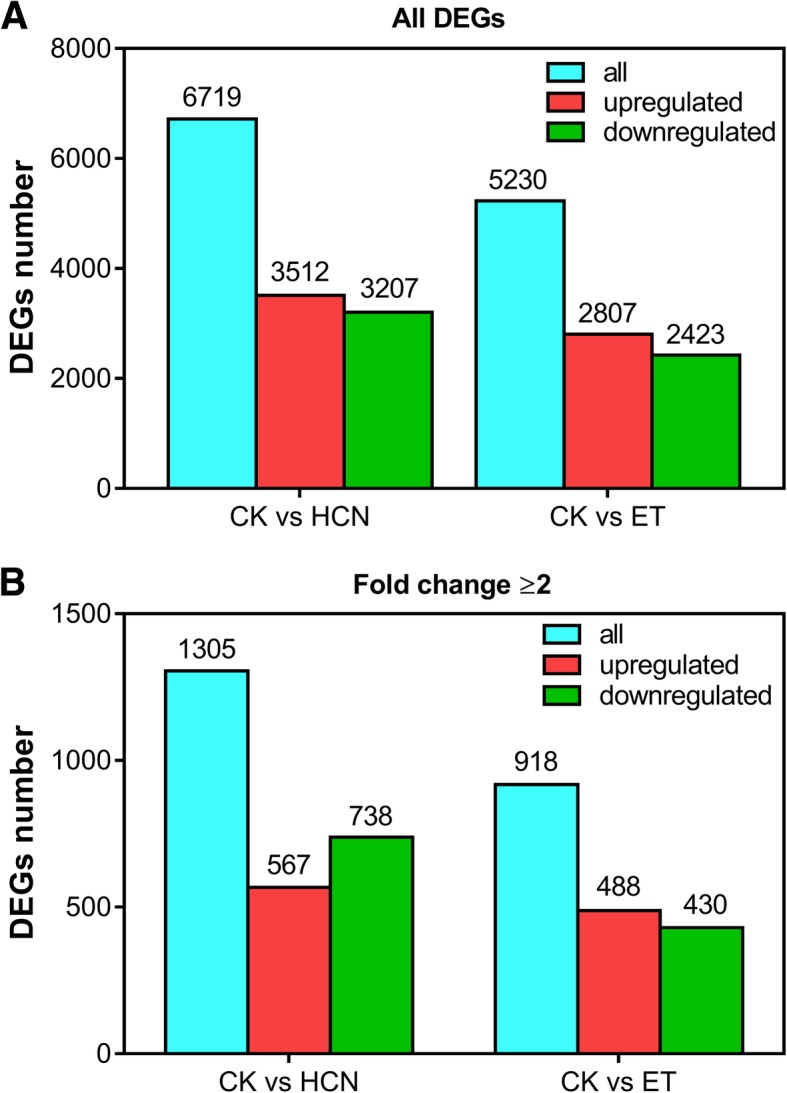
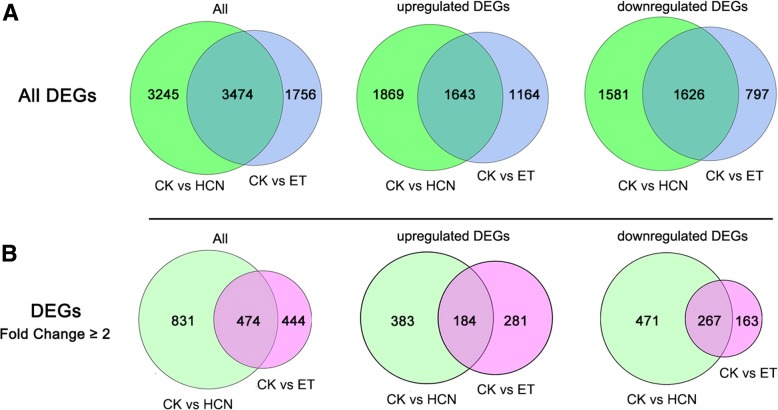
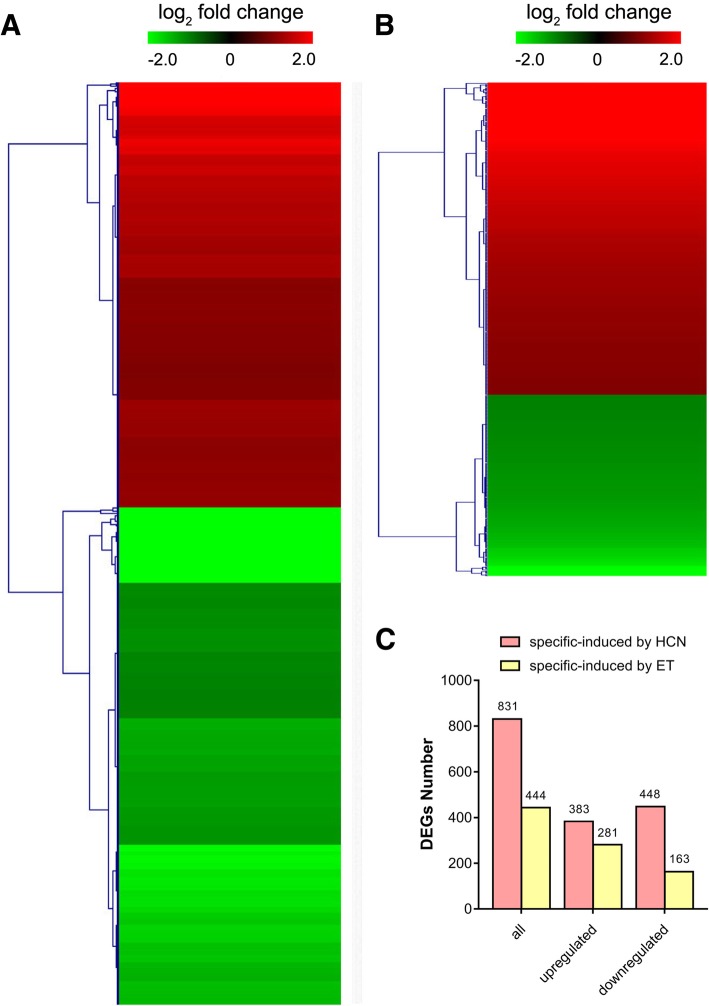
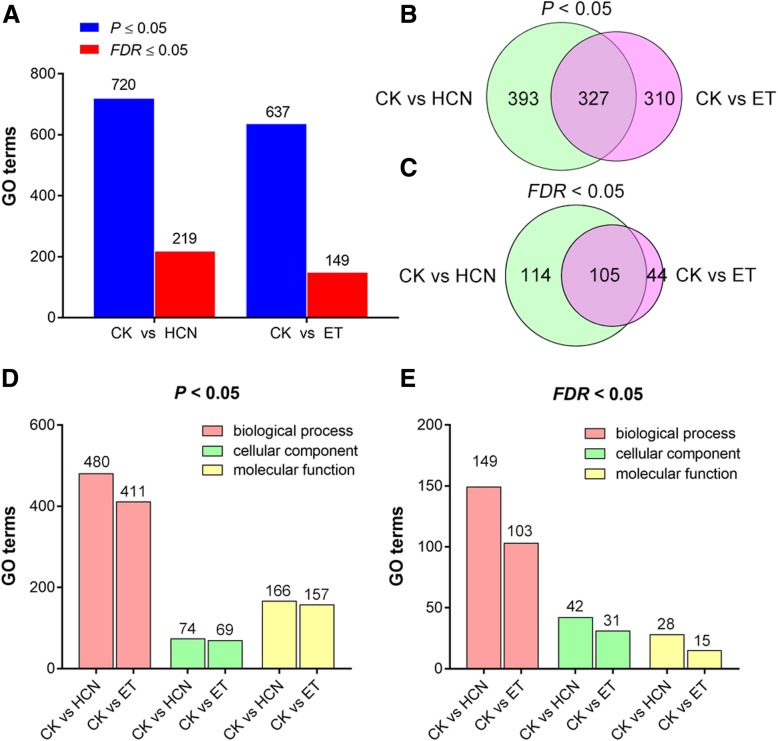
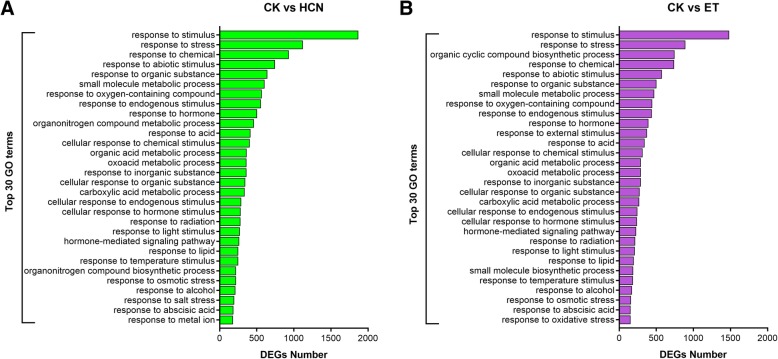
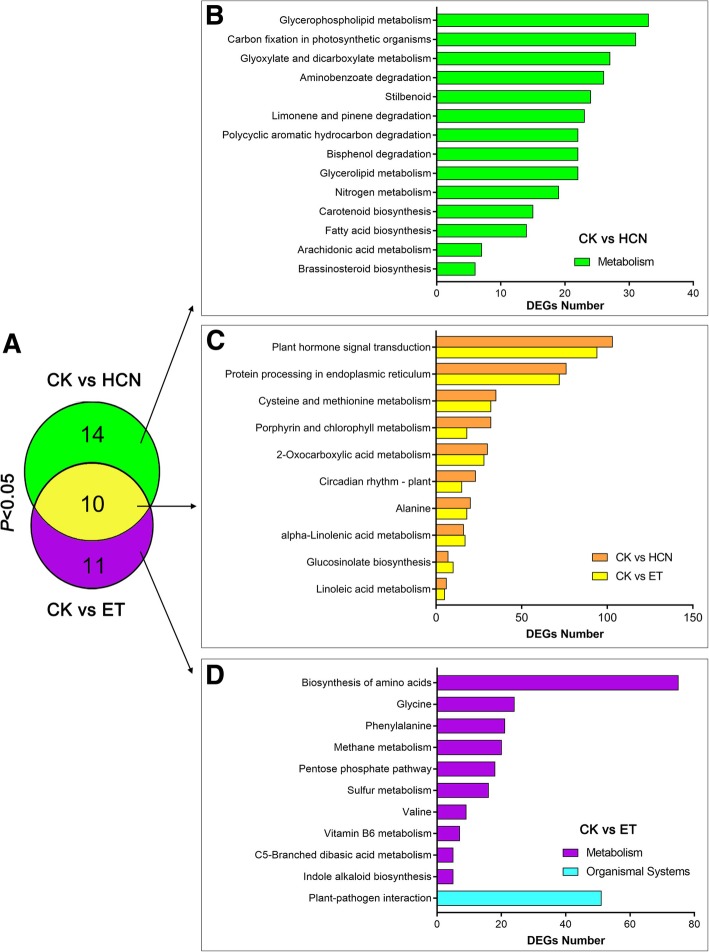
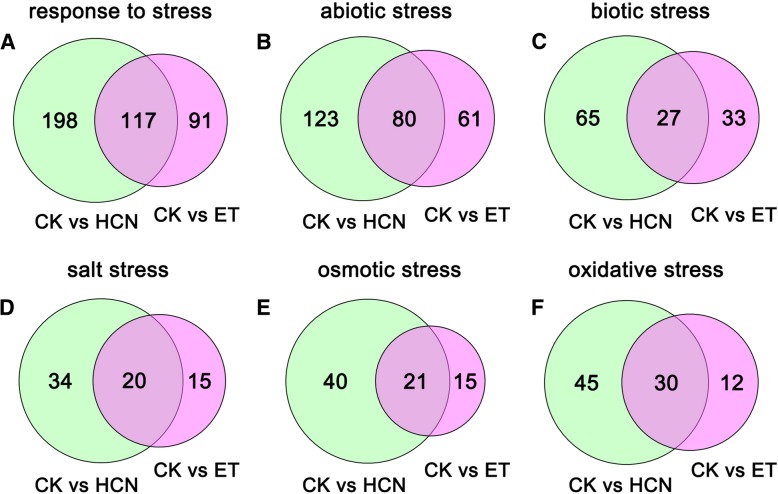
Results: The results showed that at least 1305 genes and 918 genes were significantly induced by HCN and ET, respectively. Interestingly, a total of 474 genes (|log2 FC| ≥1) were co-regulated by HCN and ET. GO and KEGG analyses indicated that the co-regulated genes by HCN and ET were enriched in plant responses to stress and plant hormone signal transduction pathways, indicating that HCN may cooperate with ET and participate in plant growth and development and stress responses. However, a total of 831 genes were significantly induced by HCN but not by ET, indicating that in addition to ET, HCN is in essence a key signalling molecule in plants. Importantly, our data showed that the possible regulatory role of a relatively low concentration of HCN does not depend on ET feedback induction, although there are some common downstream components were observed.
Conclusion: Our findings provide a valuable resource for further exploration and understanding of the molecular regulatory mechanisms of HCN in plants and provide novel insight into HCN cross-talk with ET and other hormones in the regulation of plant growth and plant responses to environmental stresses.
Keywords: Arabidopsis thaliana; Ethylene; Hydrogen cyanide; RNA-seq.
Conflict of interest statement
Ethics approval and consent to participate
Not applicable.
Consent for publication
Not applicable.
Competing interests
The authors declare that they have no competing interests.
Publisher’s Note
Springer Nature remains neutral with regard to jurisdictional claims in published maps and institutional affiliations.
Figures
References
-
- Kebeish R, Aboelmy M, El-Naggar A, El-Ayouty Y, Peterhansel C. Simultaneous overexpression of cyanidase and formate dehydrogenase in Arabidopsis thaliana chloroplasts enhanced cyanide metabolism and cyanide tolerance. Environ Exp Bot. 2015;110:19–26.
-
- Siegień I, Bogatek R. Cyanide action in plants — from toxic to regulatory. Acta Physiol Plant. 2006;28:483–497.
-
- Gleadow RM, Møller BL. Cyanogenic glycosides: synthesis, physiology, and phenotypic plasticity. Annu Rev Plant Biol. 2014;65:155–185. - PubMed
-
- Yip WK, Yang SF. Ethylene biosynthesis in relation to cyanide metabolism. Botanical Bulletin of Academia Sinica. 1998;39:1–7.
-
- Zagrobelny M, Bak S, Rasmussen AV, Jørgensen B, Naumann CM, Lindberg Møller B. Cyanogenic glucosides and plant–insect interactions. Phytochemistry. 2004;65:293–306. - PubMed
Publication types
MeSH terms
Substances
Grants and funding
LinkOut - more resources
Full Text Sources
