Review
. 2019 Mar 15;39(3):BSR20181377.
doi: 10.1042/BSR20181377. Print 2019 Mar 29.

The role of miRNAs in the invasion and metastasis of cervical cancer

Affiliations
Review

The role of miRNAs in the invasion and metastasis of cervical cancer

Jin-Yan Wang et al. Biosci Rep. .

Abstract

Cervical cancer (CC) with early metastasis of the primary tumor results in poor prognosis and poor therapeutic outcomes. MicroRNAs (miRNAs) are small, noncoding RNA molecules that play a substantial role in regulating gene expression post-transcriptionally and influence the development and progression of tumors. Numerous studies have discovered that miRNAs play significant roles in the invasion and metastasis of CC by affecting specific pathways, including Notch, Wnt/β-catenin, and phosphoinositide-3 kinase (PI3K)-Akt pathways. miRNAs also effectively modulate the process of epithelial-mesenchymal transition. Many studies provide new insights into the role of miRNAs and the pathogenesis of metastatic CC. In this review, we will offer an overview and update of our present understanding of the potential roles of miRNAs in metastatic CC.

Keywords: MicroRNAs; cervical cancer; invasion; metastasis.


Conflict of interest statement

The authors declare that there are no competing interests associated with the manuscript.

Figures
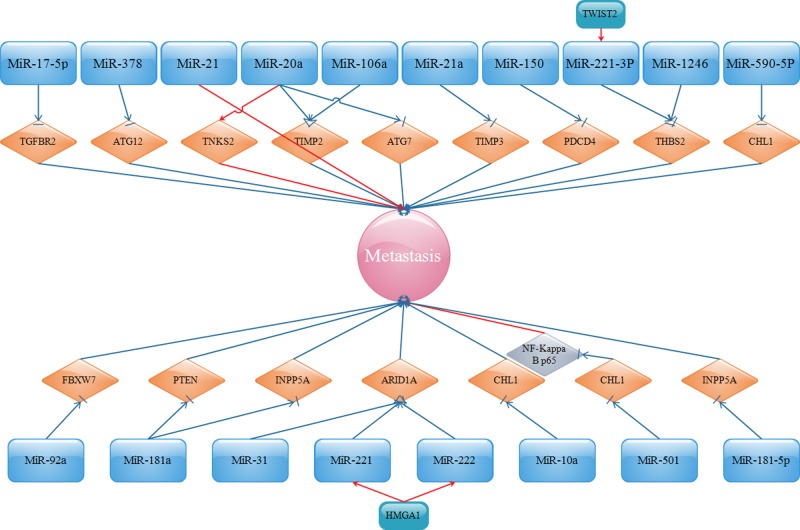
Figure 1
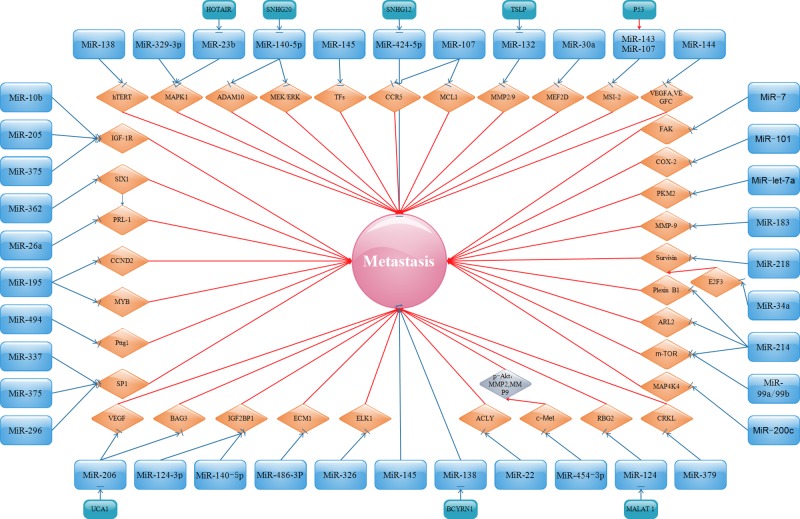
Figure 1. Oncogenic miRNAs and their targets in promoting metastasis
Figure 2
Figure 2. Oncosuppressor miRNAs and their targets in inhibiting metastasis
Figure 3
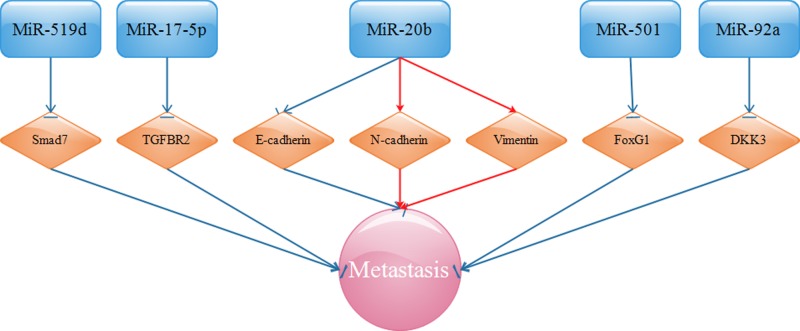
Figure 3. EMT-related miRNAs target TGF-β R2, Smad7, E-cadherin, N-cadherin, vimentin, Snail2, and FoxG1, and advance CC migration, invasion, and metastasis
Figure 4
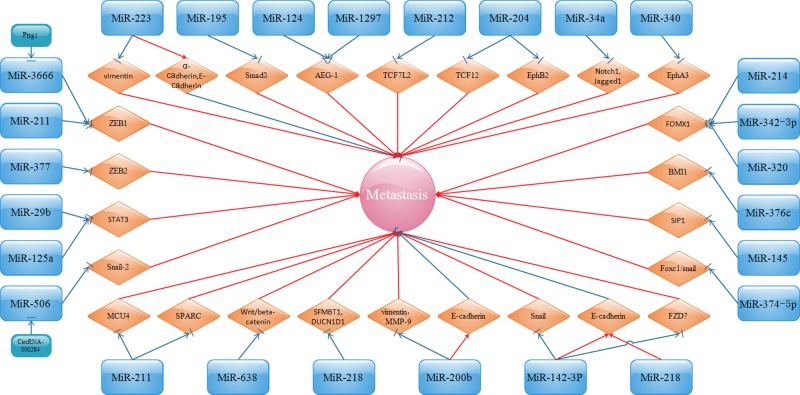
Figure 4. EMT-related miRNAs inhibit CC migration, invasion, and metastasis by targetting ZEB1/2, Smad3, AEG-1, TCF7 L2, MUC4, SPARC, Wnt/β-catenin, SIP1, SFMBT, Bcl-2, Bax, NF-κB, E-cadherin, α-cadherin, Notch1, Jagged1, TCF-12, EphB2, Vimentin, MMP-9, STAT3, FZD7, Snail, FOMX1, BMI1, and EphA3
Figure 5
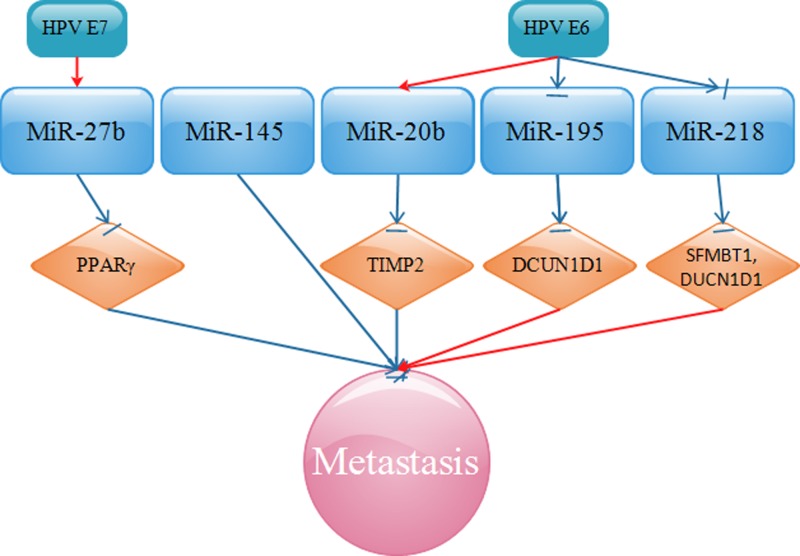
Figure 5. HPV-related miRNAs regulate CC migration, invasion, and metastasis by targetting PPARγ, TIMP2, DCUN1D1, and SFMBT1

References

    1. Torre L.A., Bray F., Siegel R.L., Ferlay J., Lortet-Tieulent J. and Jemal A. (2015) Global cancer statistics, 2012. CA Cancer J. Clin. 65, 87–108 10.3322/caac.21262 - DOI - PubMed
    1. Park S., Eom K., Kim J., Bang H., Wang H.Y., Ahn S.. et al. (2017) MiR-9, miR-21, and miR-155 as potential biomarkers for HPV positive and negative cervical cancer. BMC Cancer 17, 658 10.1186/s12885-017-3642-5 - DOI - PMC - PubMed
    1. Rabelo-Santos S.H., Termini L., Boccardo E., Derchain S., Longatto-Filho A., Andreoli M.A.. et al. (2018) Strong SOD2 expression and HPV-16/18 positivity are independent events in cervical cancer. Oncotarget 9, 21630–21640 10.18632/oncotarget.24850 - DOI - PMC - PubMed
    1. Pardini B., De Maria D., Francavilla A., Di Gaetano C., Ronco G. and Naccarati A. (2018) MicroRNAs as markers of progression in cervical cancer: a systematic review. BMC Cancer 18, 696. - PMC - PubMed
    1. Zhang H.H. and Li A.H. (2018) Long non-coding RNA FEZF1-AS1 is up-regulated and associated with poor prognosis in patients with cervical cancer. Eur. Rev. Med. Pharmacol. Sci. 22, 3357–3362 - PubMed

Publication types

MeSH terms