


Skin-Associated B Cells in Health and Inflammation
- PMID: 30833422
- PMCID: PMC6402607
- DOI: 10.4049/jimmunol.1801211
Skin-Associated B Cells in Health and Inflammation
Abstract
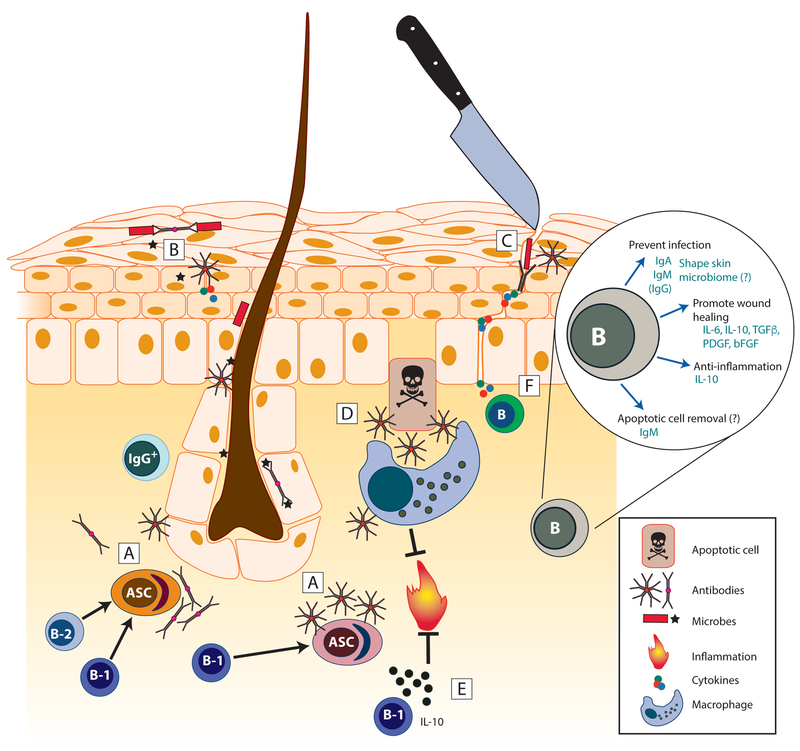
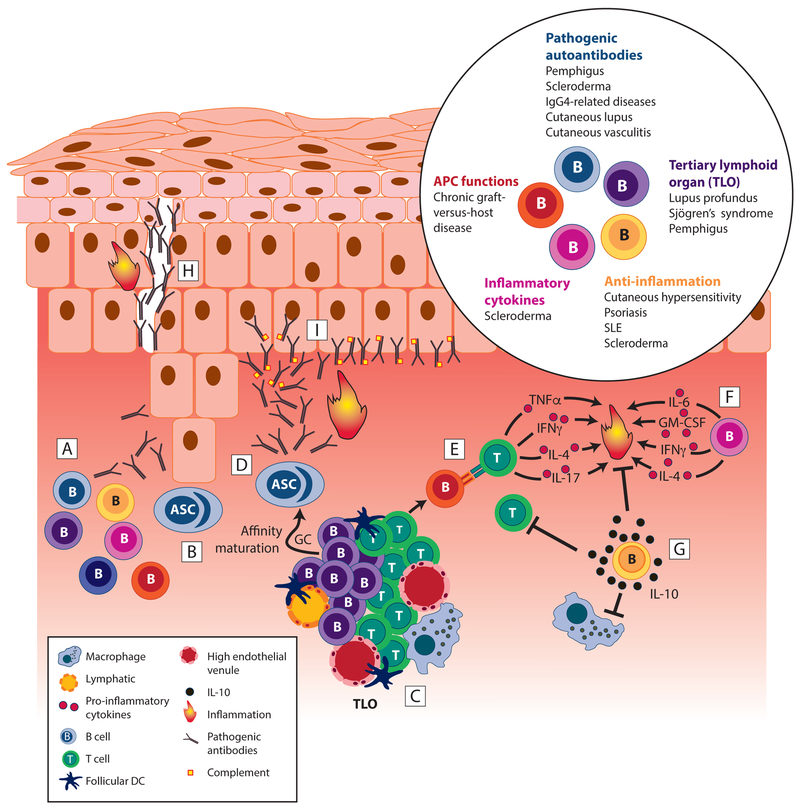
Traditionally, the skin was believed to be devoid of B cells, and studies of the skin immune system have largely focused on other types of leukocytes. Exciting recent data show that B cells localize to the healthy skin of humans and other mammalian species with likely homeostatic functions in host defense, regulation of microbial communities, and wound healing. Distinct skin-associated B cell subsets drive or suppress cutaneous inflammatory responses with important clinical implications. Localized functions of skin-associated B cell subsets during inflammation comprise Ab production, interactions with skin T cells, tertiary lymphoid tissue formation, and production of proinflammatory cytokines but also include immunosuppression by providing IL-10. In this review, we delve into the intriguing new roles of skin-associated B cells in homeostasis and inflammation.
Copyright © 2019 by The American Association of Immunologists, Inc.
Figures
References
-
- Lian CG a. M. G. F. 2015. Histology of the Skin In Lever’s Histopathology of the Skin, 11 ed Elder DE, ed. Wolters Kluwer, Philadelphia: 8–75.
-
- Schön MP, Zollner TM, and Boehncke WH. 2003. The molecular basis of lymphocyte recruitment to the skin: clues for pathogenesis and selective therapies of inflammatory disorders. J. Invest. Dermatol 121: 951–962. - PubMed
-
- Pasparakis M, Haase I, and Nestle FO. 2014. Mechanisms regulating skin immunity and inflammation. Nat. Rev. Immunol 14: 289–301. - PubMed
Publication types
MeSH terms
Grants and funding
LinkOut - more resources
Full Text Sources
