


Current and future pharmacological therapies for managing cirrhosis and its complications
- PMID: 30833797
- PMCID: PMC6397723
- DOI: 10.3748/wjg.v25.i8.888
Current and future pharmacological therapies for managing cirrhosis and its complications
Abstract
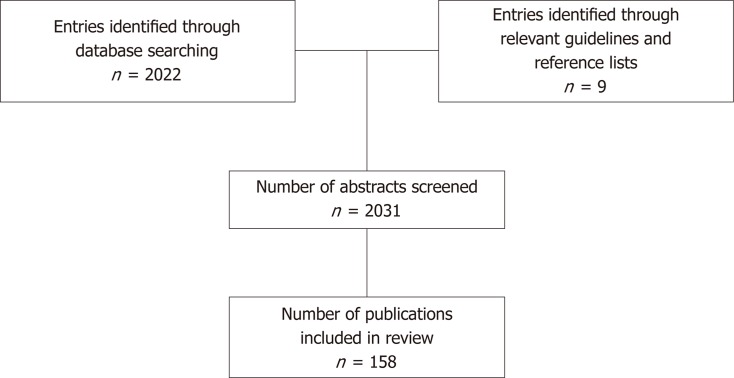
Due to the restrictions of liver transplantation, complication-guided pharmacological therapy has become the mainstay of long-term management of cirrhosis. This article aims to provide a complete overview of pharmacotherapy options that may be commenced in the outpatient setting which are available for managing cirrhosis and its complications, together with discussion of current controversies and potential future directions. PubMed/Medline/Cochrane Library were electronically searched up to December 2018 to identify studies evaluating safety, efficacy and therapeutic mechanisms of pharmacological agents in cirrhotic adults and animal models of cirrhosis. Non-selective beta-blockers effectively reduce variceal re-bleeding risk in cirrhotic patients with moderate/large varices, but appear ineffective for primary prevention of variceal development and may compromise renal function and haemodynamic stability in advanced decompensation. Recent observational studies suggest protective, haemodynamically-independent effects of beta-blockers relating to reduced bacterial translocation. The gut-selective antibiotic rifaximin is effective for secondary prophylaxis of hepatic encephalopathy; recent small trials also indicate its potential superiority to norfloxacin for secondary prevention of spontaneous bacterial peritonitis. Diuretics remain the mainstay of uncomplicated ascites treatment, and early trials suggest alpha-adrenergic receptor agonists may improve diuretic response in refractory ascites. Vaptans have not demonstrated clinical effectiveness in treating refractory ascites and may cause detrimental complications. Despite initial hepatotoxicity concerns, safety of statin administration has been demonstrated in compensated cirrhosis. Furthermore, statins are suggested to have protective effects upon fibrosis progression, decompensation and mortality. Evidence as to whether proton pump inhibitors cause gut-liver-brain axis dysfunction is conflicting. Emerging evidence indicates that anticoagulation therapy reduces incidence and increases recanalisation rates of non-malignant portal vein thrombosis, and may impede hepatic fibrogenesis and decompensation. Pharmacotherapy for cirrhosis should be implemented in accordance with up-to-date guidelines and in conjunction with aetiology management, nutritional optimisation and patient education.
Keywords: Beta-blockers; Cirrhosis; Diuretics; Pharmacology; Proton pump inhibitors; Rifaximin; Statins.
Conflict of interest statement
Conflict-of-interest statement: None declared for all authors.
References
-
- Tsochatzis EA, Bosch J, Burroughs AK. Liver cirrhosis. Lancet. 2014;383:1749–1761. - PubMed
-
- Blachier M, Leleu H, Peck-Radosavljevic M, Valla DC, Roudot-Thoraval F. The burden of liver disease in Europe: A review of available epidemiological data. J Hepatol. 2013;58:593–608. - PubMed
-
- Williams R, Aspinall R, Bellis M, Camps-Walsh G, Cramp M, Dhawan A, Ferguson J, Forton D, Foster G, Gilmore I, Hickman M, Hudson M, Kelly D, Langford A, Lombard M, Longworth L, Martin N, Moriarty K, Newsome P, O'Grady J, Pryke R, Rutter H, Ryder S, Sheron N, Smith T. Addressing liver disease in the UK: A blueprint for attaining excellence in health care and reducing premature mortality from lifestyle issues of excess consumption of alcohol, obesity, and viral hepatitis. Lancet. 2014;384:1953–1997. - PubMed
-
- Moctezuma-Velazquez C, Kalainy S, Abraldes JG. Beta-blockers in patients with advanced liver disease: Has the dust settled? Liver Transpl. 2017;23:1058–1069. - PubMed
-
- de Franchis R Baveno VI Faculty. Expanding consensus in portal hypertension: Report of the Baveno VI Consensus Workshop: Stratifying risk and individualizing care for portal hypertension. J Hepatol. 2015;63:743–752. - PubMed
